 Taking the road less traveled
 Making a Difference: This year’s Bart and Cherry Starr award recipient bleeds Green and Gold



November 9, 2026
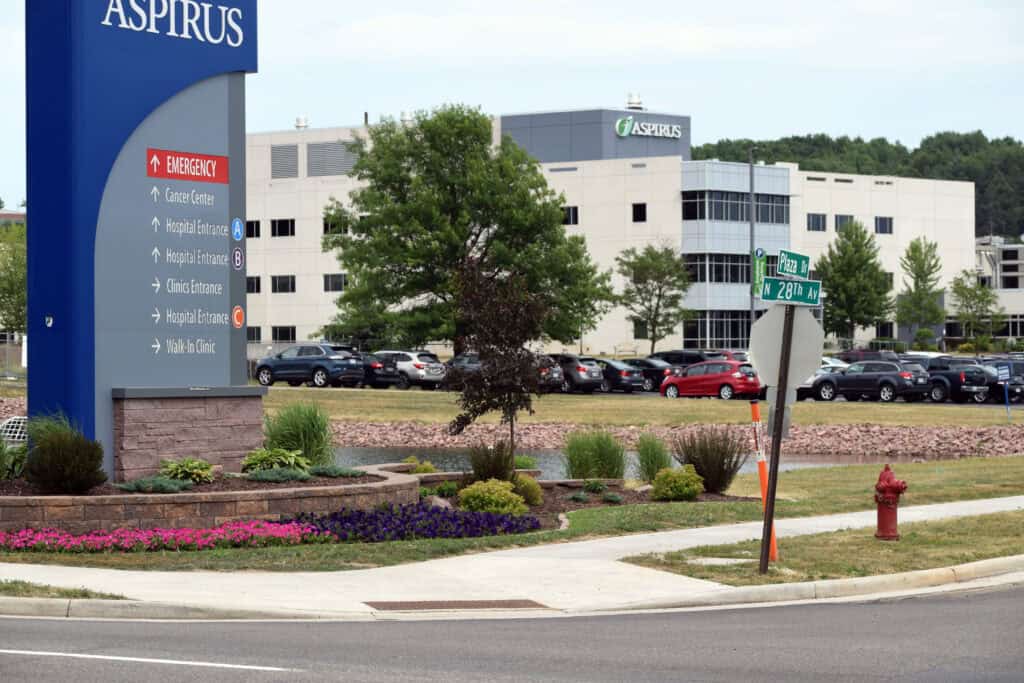
WAUSAU – Aspirus Health opened a neonatology clinic in Wausau last month, which will bring crucial follow-up care to children who might otherwise suffer unnecessarily from developmental delays, according to Pankaj Nagaraj, MD, Medical Director, Neonatal Intensive Care Unit (NICU) at the Aspirus Hospital in Wausau.
“The clinic offers follow-up services for the high-risk babies who are born in the NICU,” Nagaraj said. “The biggest risks facing most babies – especially premature babies – when they get admitted to the NICU are developmental problems, mainly things like cerebral palsy and neurodevelopmental issues.”
The clinic will provide developmental screenings that assess motor skills, cognitive development, speech, language progress, and other milestones, according to a statement from Aspirus.
Nagaraj explained developmental issues are commonly missed, or diagnoses are often delayed at the primary care level, but a neonatology clinic specializes in screenings and services that identify problems much faster, supporting a child’s overall growth.
“We schedule typically at three, six, and nine months of age, and then at a year, and again at two years of age,” he said. “These are the ages when babies need to hit certain milestones to make sure they’re developing normally. We can pick up on any significant problems during the patient visits.”
The period from birth to age 2, Nagaraj noted, is marked by significant neuroplasticity, which allows the brain to create new pathways and adapt in response to experiences and interventions, making therapy more effective compared to therapy conducted after this period.
According to the Centers for Disease Control and Prevention, about one in 10 babies in the United States are born pre-term each year, placing many infants at increased risk for developmental delays and other long-term challenges.
The new clinic will offer the latest advances in neonatology screening tests and therapies, Nagaraj said, adding that subspecialties in this area have grown tremendously in recent years and that demand for these services is growing in this part of the state.
“We’ve seen exponential growth in our NICU,” he said. “About eight years ago, we had to expand the NICU, because we did not have enough space for these babies. So, that tells you there is an increasing need – and not only for the Wausau area.”

Nagaraj added that the NICU team at the Wausau campus sees patients from across the Aspirus Health system, from Tomahawk to the north and Wisconsin Rapids and Stevens Point to the south.
“All those neonatology patients, when they go back home or get discharged, now have access to this specific type of follow-up care here in Wausau.”
The importance of follow-up
Nagaraj emphasized that when it comes to infants, follow-up care is “all about timing – as 70% of the brain’s growth happens in the first two years of life.”
“So, if you can pick up on things within the first two years, you can actually modify those behaviors – and kids do very well with that,” he stated. “But if you miss out on those markers in the first two years, it can cause irreparable harm.”
Prior to the new clinic’s opening, Nagaraj said many area NICU patients were simply not receiving any follow-up care; if patients did want to pursue these services, they had to travel to Milwaukee, Madison, or Rochester.
He said pediatricians, primary care doctors, and family practitioners are often too busy to pick up on the subtle indicators of developmental delay, but continuing to allow these oversights to occur is not acceptable.
“Before, if we saw these gross developmental delays at around 2 years of age, we had already lost so much time; intervention needs to occur much earlier,” he said. “With this clinic, I’m hoping nobody will be missed going forward.”
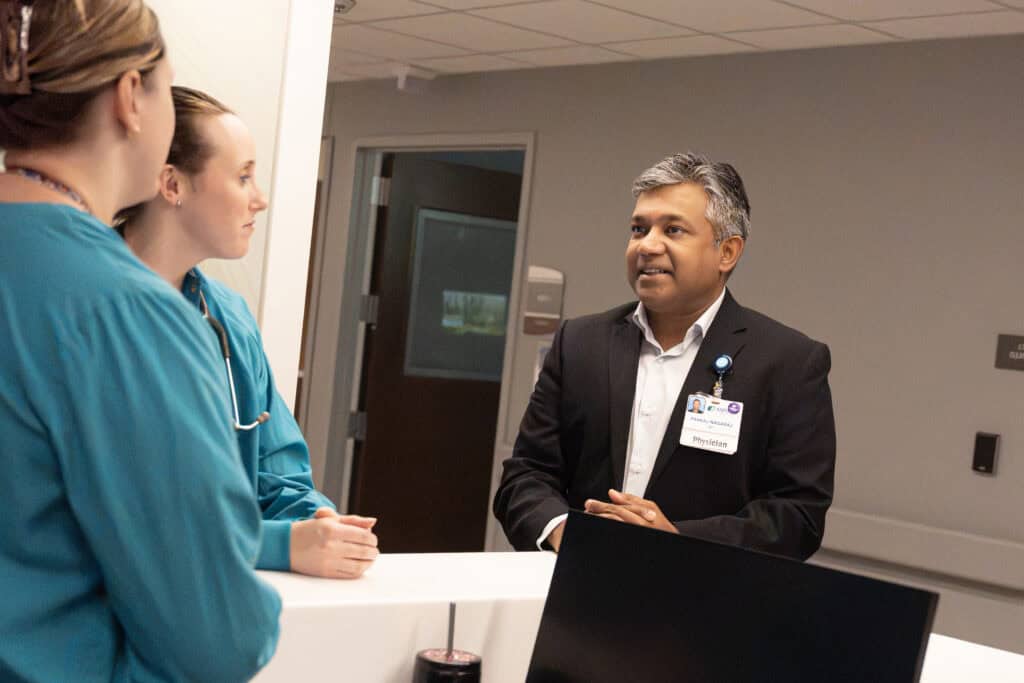
Nagaraj said the need for follow-up care became clear to him at “reunion” events the NICU staff hosts each year with families and patients.
“Often, [at the reunions], I would see them so devastated from a neurological or developmental standpoint,” he explained. “In talking with them, they would tell me their family doctor would say everything was fine, but then everything was not fine, because something a neonatologist would have found was getting missed.”
Family doctors conduct basic screening tests, involving questions – such as, “Is the child able to walk comfortably on two feet?” – that Nagaraj said don’t address more specific motor skill or other movement problems.
“We are able to fix those things…. You have to see it to believe it how – with physical and occupational therapy – unbelievable the results are with these kids.”
Without early intervention, Nagaraj said developmental delays often manifest more noticeably around ages 3 to 4, when learning and/or physical activities are more difficult than they should be for a child that age.
“We are already hearing from schools in the region due to an increase in students experiencing these delays, confirming that many kids needed an earlier intervention.”
Improving outcomes
Nagaraj said he expects to see 600–800 patients from across the Aspirus Health system at the new clinic each year, adding he’s grateful for the opportunity to continue to care for these tiny patients once they leave the NICU.
“You take care of these babies when they’re so little, but at the end of the day, it’s not so much how they do at two weeks of life, but how well they are doing at two years,” he said. “We’re able to make a difference in this critical period, resulting in better outcomes long-term. We want to help them become very productive members of society.”
Nagaraj said there’s never a shortage of special moments in this line of work.
“At the end of the day, working with babies hits differently compared to everything else in medicine, because you treat these kids like your own children, and like your own children, you want the best for them.”