 Preserving the past while serving the present, future
 River Falls brewery/restaurant/cocktail lounge in full swing


May 11, 2026
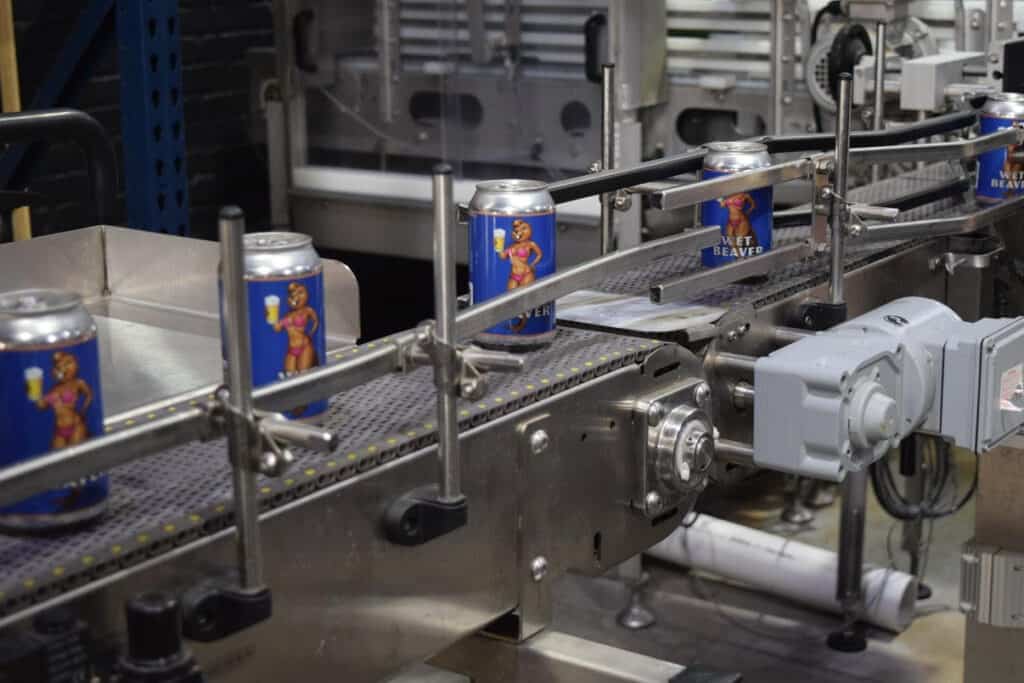
CATARACT – Wet Beaver Brewing Co. Owners Calvin and Kelsey Arendt said they spent the last year producing, marketing and distributing their flagship beer, which first hit the market last July.
But even as momentum builds for the brand and its beer, Arendt said the company stays grounded in its rural Wisconsin farming and manufacturing roots.
“I come from a family of both engineers and farmers,” he said. “Family, along with friends, are similar, like-minded individuals who are business owners or producers of some kind of product.”
Beyond that, however, Arendt said they also make it a point to stay active in the community.
One such community event, he said, is the National Tractor Pull Association (NTPA).
“The NTPA has tractor pulls across Wisconsin that bring out farmers as well as many in the local communities,” he said. “It’s usually put on by the local Lions Clubs or different organizations.”
Arendt said his affiliation with the NTPA is where the idea behind Wet Beaver Brewing originated, with the brand taking shape from experiences at tractor pulls.
“We created the brand [essentially] while spending time with friends and family,” he said. “We gathered a large group of more than 20 people, as we always attend the Norwalk tractor pulls – it is one of the oldest pulls in the state. The event is [the essence] of that small-town, fun community environment.”
Arendt said the brewery idea came from an unexpected source – something his dad was wearing.

“My dad was walking around with a sweatshirt that said something about a happy beaver,” he said. “It was pretty simple – a black sweatshirt with white lettering. Everybody was laughing [about his sweatshirt]. Someone comments, and then another person chimes in from there.”
At one point, Arendt said he remembers suggesting that “Wet Beaver Brewing Co.” would be a great name for a brewery.
“We all got a great laugh from it,” he said.
Arendt said the idea first came up in late 2020 and resurfaced a year later at the same event.
“My wife, Kelsey, designed the very first rough image [that is pictured on the label and merchandise],” he said. “We shared it with the group, and everyone got a kick out of it.”
When the tractor pull group gets together, Arendt said conversations often turn to beer flavors and potential names.
“I looked at everybody and said, ‘You know, we spend a lot of time conversing about different types of flavors and beer names – should I see how to make this real?’” he said. “And they all said, ‘Absolutely, go for it – do it.’”
From there, Arendt said the wheels of invention began to turn.
“We thought it’d be incredibly difficult to do,” he said. “We started with the easiest part, which was the idea for our brand. We went through the trademark and patent office to create a trademark – which is an incredibly difficult and painful process. We were able to acquire a trademark before any kind of [sizable] investment in the company.”
In the meantime, Arendt said they created a presence on social media, including Facebook and Instagram.
“We also started making our own merchandise featuring a really nice logo of just a beaver holding a beer sign,” he said.
Arendt said all of this laid the groundwork for the start of the business.
“We produced T-shirts for anyone who wanted them,” he said. “Our business began to grow by word of mouth. It was kind of fun pretending to be a brewery at that time, because we were still not quite established.”
Over the next five years, Arendt said the concept continued to develop.
“It was last winter after the holidays,” he said. “I just started driving to some breweries and meeting with them to see if this could be a reality. I made contact with distributors in the industry, along with folks who were [just] into brewing. I had a lot of conversations asking questions like, ‘How can we make this real?’”
Arendt said it involved a significant learning curve, including navigating state permitting requirements, obtaining a brewer’s permit and understanding brewing regulations.
Production, he said, was another major consideration.
“We had to find someone who would be willing to help us produce our beer, because it would cost [roughly] $1.5 million for the equipment [alone] to brew at a commercial level,” he said.
Arendt said their approach to production sets them apart from other beer brands and breweries.
Typically, he said, breweries build a following at their taprooms and then decide which beers to scale up based on on-site sales.
“What separates us is we came up with a brand, found someone that helped us make a beer that we wanted and we went straight to a commercial level,” he said.
A brew that stands apart
Arendt said there were naysayers in the early stages of developing the business.
“Everyone in the industry believed [our plan] was not going to work, because nobody has ever done it,” he said. “What we have been able to do is make a good beer with unique branding, while finding the right relationships.”
Arendt said the Wet Beaver Brewing Co.’s brand stands apart from the broader craft beer world.
“The craft brew world is an offering that has specific flavors, at least from my standpoint,” he said. “I wanted to create a beer that would fit a type of culture demographic [and appeal to] most of the people in the room.”
Arendt said the goal was to create something similar that people would enjoy drinking without the typical craft beer aftertaste.
“It was difficult, but we did it,” he said. “We accomplished that task, and I think that has helped with our success.”
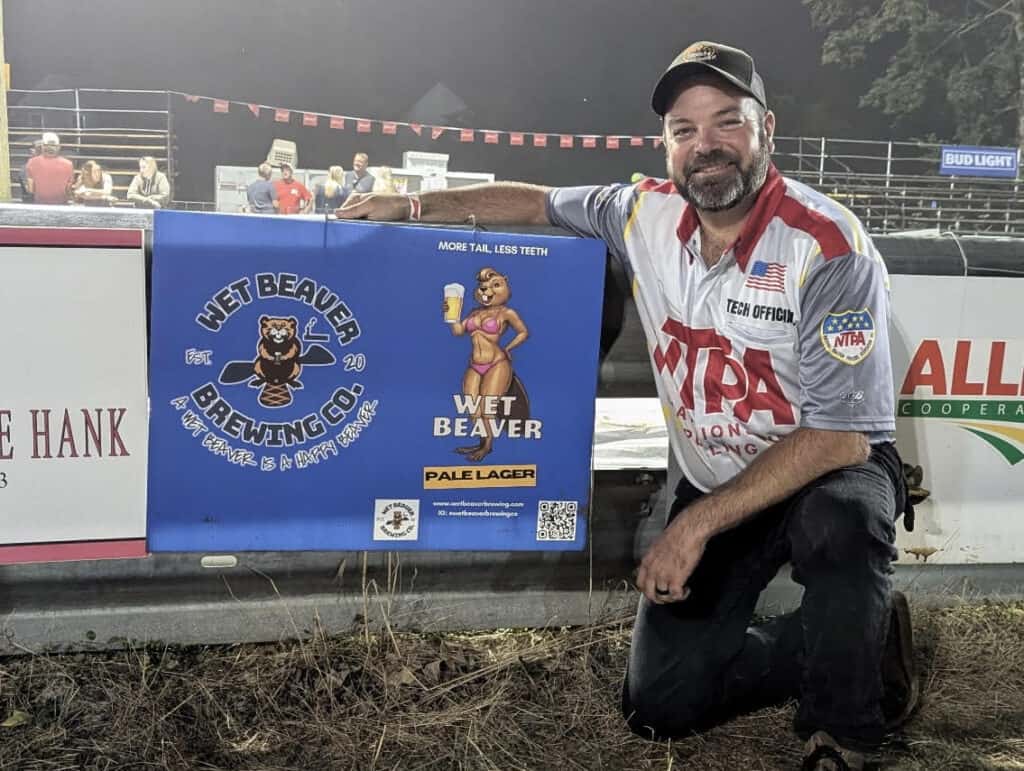
Arendt said their product targets a specific market segment, focusing on a light pale lager with a low 3.9% ABV (alcohol by volume).
“We tailor ourselves toward those individuals who are into the light beer – Budweiser-type flavor,” he said. “It doesn’t mean we are not open to creating something for a different market, which we have plans for, but we’re not there yet.”
Arendt said another key differentiator is Wet Beaver Brewing Co.’s use of humor in its branding.
“The brand itself is not too serious, with a hint of comedy offering a reasonable laugh,” he said.
A new mission
Arendt said he has been able to apply skills developed during his military service to business ownership.
“I was a tank commander in the army from 2004-17, stationed all over the country,” he said. “[I] did two deployments, one of which was the battle of Ramadi.”
Arendt said he had long envisioned transitioning into business ownership after his military career.
“I’ve always felt like I wanted to take that step toward owning a business,” he said. “Toward the end of my military career, my wife and I were actually looking at purchasing a golf course, but that was the deal that didn’t quite happen.”
At the same time, Arendt said Kelsey’s college athletics and sports management career was progressing.
“Kelsey played college softball for the University of Wisconsin-La Crosse and studied sports management,” he said. “At the time, she was on the University of Michigan Wolverines men’s basketball [management] team. We did five seasons there, followed by her position as director of basketball operations for Xavier University in Cincinnati.”
Arendt said when they moved back to Wisconsin, and he started working with his father in his injection molding company, he was looking for more.
“I always had this drive to want to do something for ourselves,” he said. “Launching the business was something we wanted to do on our own and have that kind of freedom of business ownership. Plus, we wanted to have other ways to contribute to the community. And then the business just kind of developed on its own.”
Arendt said he remembers times of feeling completely overwhelmed by the process of building a business and taking the next step – focusing instead on just getting through one task at a time.
“[Growing a business] is never easy,” he said. “We’re proud of what it has accomplished.”
Growth on tap
Arendt said they do not yet have their own storefront.
Instead, he said local establishments carry their products, and in turn, they help promote those businesses through social media and event advertising, encouraging customers to visit and try the beer.
Arendt said their distribution throughout the state is growing exponentially – with an up-to-date list of locations available at wetbeaverbrewing.com.
“We are in around 250 retail locations throughout more than 20 counties in the state,” he said. “This has all been since July 2025.”
Arendt said he credits the company’s early success to advertising, a strong social media presence, word of mouth and trusted partners, including Hillsboro Brewing.
“They’re great,” he said. “They have a great venue and have awesome people to work with. I can’t say enough. They let us use their equipment to brew our beer, and through their guidance, we’ve made it better.”
Arendt said he is constantly learning, which he considers one of the best parts of owning a business in the industry.
“I always want to be respectful of the industry,” he said. “So, I try to constantly learn as much as possible.”
The learning curve, Arendt said, has been their biggest challenge, along with the trademark process.
“What has been very critical is the fact that Kelsey and I are a great team,” he said. “She’s highly educated, and I’m more street smart. We are always working on balancing everything.”
Arendt said he enjoys interacting with people who are enjoying his beer – doing so by visiting bars that carry Wet Beaver Brewing Co. products.
He said people are often surprised that he will travel two hours from home just to visit, noting the goodwill from those visits goes a long way.
“Every other weekend, I try to go and visit a spot that’s selling our product,” he said. “I like to stop in, say ‘hi’ and thank them for selling it. It has probably been one of my most enjoyable experiences, because you walk in and there will be 10 people at a restaurant or a bar, and all of a sudden you’ll see six individuals drinking our beer. I’ll introduce myself and say, ‘I’m the owner of that beer.’”
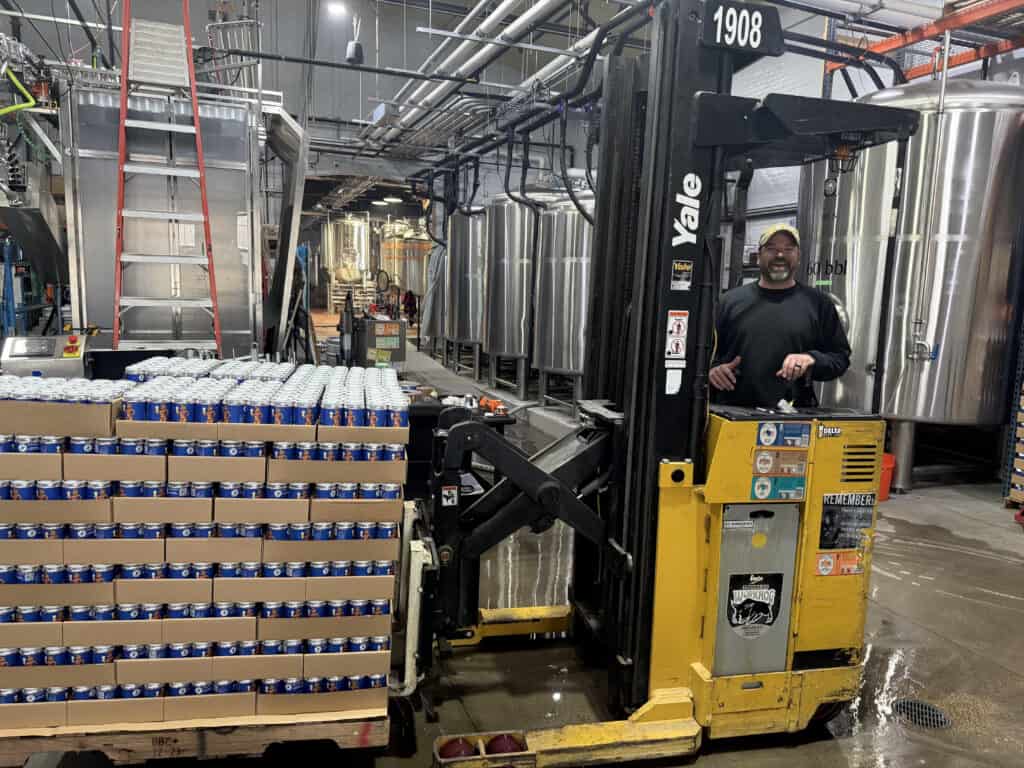
Arendt said he and Kelsey are living the American dream – describing himself as a product of the traditional American family ideal built on hard work, strong family values and the belief that opportunity is always within reach.
“It’s one you never know for sure if you can achieve,” he said. “And then something in yourself just says, ‘Well, let’s try this – let’s get this one thing done.’ Then, you accomplish that task and the next one and before you know it, you are building something you can be proud of.”
Cause driven
Committed to giving back to the community as much as possible, Arendt said Wet Beaver Brewing Co. participates in “virtually every benefit or cause” that reaches out to them.
He said they typically contribute products to help generate funds for the benefit, usually in the form of a monetary donation along with a few cases of beer and merchandise – which tends to draw a lot of attention.
“We’ve been asked to be a part of many events in the last year, and we say ‘yes’ to everyone who really asks,” he said. “We donate usually in the form of a silent auction item with Wet Beaver Brewing Co. merchandise and beer.”
The most recent fundraiser, Arendt said, supported a family dealing with childhood cancer, which he described as a cause the brewing company was proud to contribute to.