 Lifelong dream becomes reality for local woman and husband
 ‘I’ve already lived my worst days on earth’


May 11, 2026
RHINELANDER – Dave Jelinek said meeting his future wife as a teenager didn’t just shape his personal life – it also sparked the career that would lead to a Rhinelander business spanning four decades of local ownership.
“I was 14, and Robin was 13, and we started dating,” Dave said. “One day, when I met her at her house, I asked, ‘What is that piece of equipment in your yard?’ She explained her dad was a well driller. I remember when I first saw a well being drilled, I was just fascinated by the whole process.”
Dave said Robin’s father, Gus Beyer, operated a well-drilling business in Hartland for more than 30 years before relocating it to Rhinelander.
He said he worked for Beyer in high school and later, with his support, founded Jelinek Well Drilling in 1986.
Dave said business, which is celebrating 40 years in 2026, was slow but steady at first – averaging about one well per week – before picking up as other drillers retired and more people moved to the Rhinelander area.
“There was a building boom in the ’90s, and we could barely keep up,” he said. “We had to turn down requests.”
The business eventually grew to include eight employees, Dave said, prompting significant investment in new equipment to compete for larger contracts.
One of his earliest hires, he said, remains with the company today.
Though the work was demanding – often intensely so – Dave said he’s proud of what he built and the life it provided for his family.

He said his wife, Robin, supported the business in the office and would occasionally bring the kids along, making it a true family effort.
In addition to providing a good income, Dave said the business sometimes served as an excellent marriage mediator.
“We’d be arguing about something, and I’d get a call – a backhoe was stuck, or there was some other thing I had to deal with,” he said. “Later, we forgot why we were arguing or realized how silly it was.”
Changing of the guards
Once their children were grown, Dave said he decided it was time to retire, and he sold Jelinek Well Drilling to longtime employee Dave Shrader and his then-wife, Sarah – though his passion for the work never faded.
“To this day, I still have dreams about work – equipment failing when you’re trying to finish a job or some other crisis,” he said. “But I tell young people, go up north, go to a small Midwestern town. If you can get your license in a certain trade and go into business, you’ll be the happiest guy in the world.”
Sarah said she began working in the office at Jelinek Well Drilling in 2007 as part of the ownership transition, knowing she and Dave were in the process of purchasing the business.
“The Jeliniks gave us a year or so to kind of run it with them to see if that’s really what we wanted to do,” she said. “I quit my job to come here full-time.”
The couple later divorced, and Shrader stepped away from the business, and Sarah said she has served as the sole proprietor since 2020.
Sarah said the move marked a “huge shift,” transitioning from her previous career as a hairstylist to becoming part-owner of a well-drilling business – but “I loved it.”
“Change is what makes life exciting,” she said.
‘Everything well-related’
In addition to well drilling, Sarah said the business handles nearly every aspect of getting water from the well to the home.
That, she said, includes installing pump systems, as well as servicing and inspecting them.
“We basically do everything well-related other than water treatment,” she said.
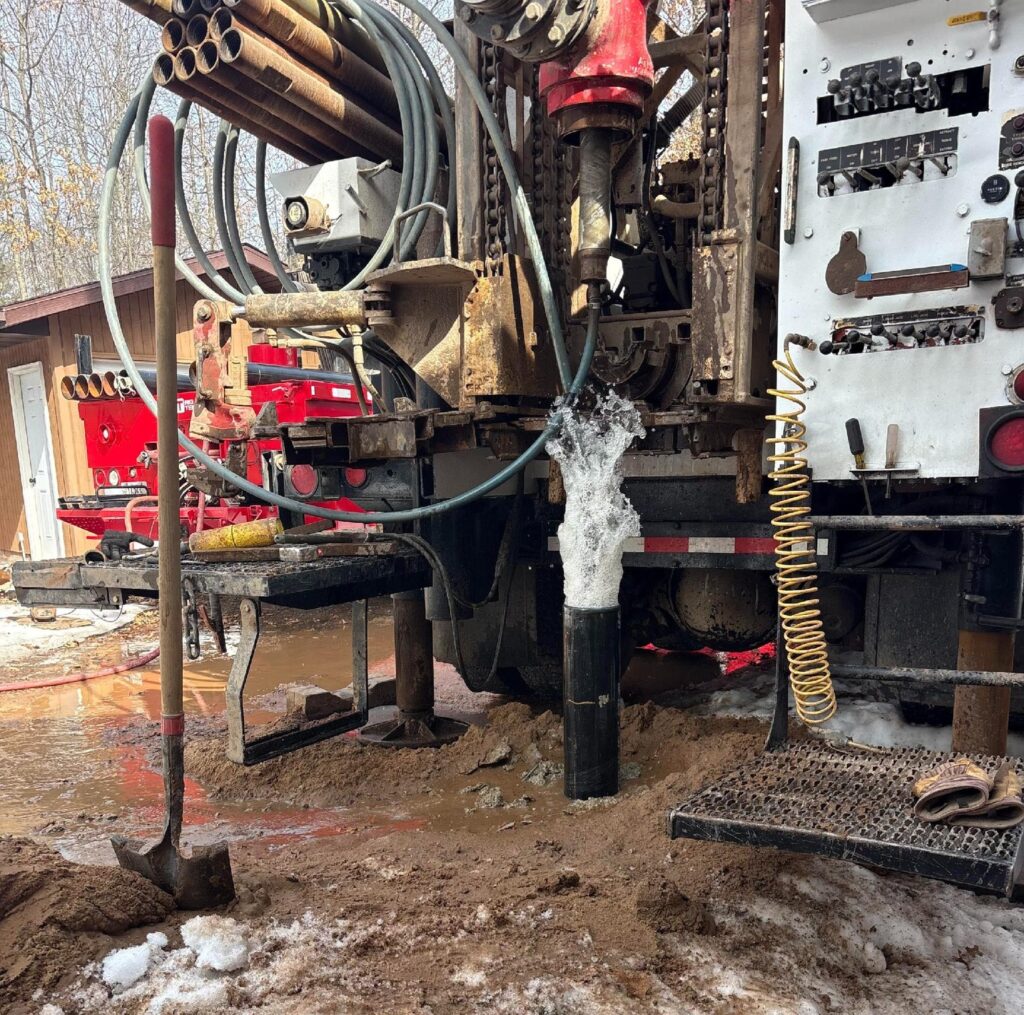
Though the basics of the business remain the same, Sarah said other aspects of it are nearly unrecognizable compared to just a decade ago.
“With all the new regulations from the DNR, things are very different,” she said. “The codes associated with the actual drilling haven’t changed dramatically, but the enforcement of the code has. It seems like the DNR is far more diligent about enforcing and creating new regulations.”
In response to increasingly stringent code requirements, Sarah said Jelinek Well Drilling has expanded its office staff to keep pace with the growing volume of compliance-related paperwork.
“It was all on me, and it was, frankly, more than I could handle,” she said.
Sarah said she credits her “amazing team” for helping her navigate the challenges of becoming the sole owner six years ago.
“I huddled with my staff, and we made a conscious choice to remain a smaller company,” she said. “A comment I make regularly is that I turn down more work than I take. For one thing, it’s hard to find employees, and this way, everyone here can still have a family life.”
Sarah said Jelinek Well Drilling is also evolving to adopt new technologies being introduced within the industry – “which will totally change the way we drill a well.”
“It’s called dual rotary,” she said.
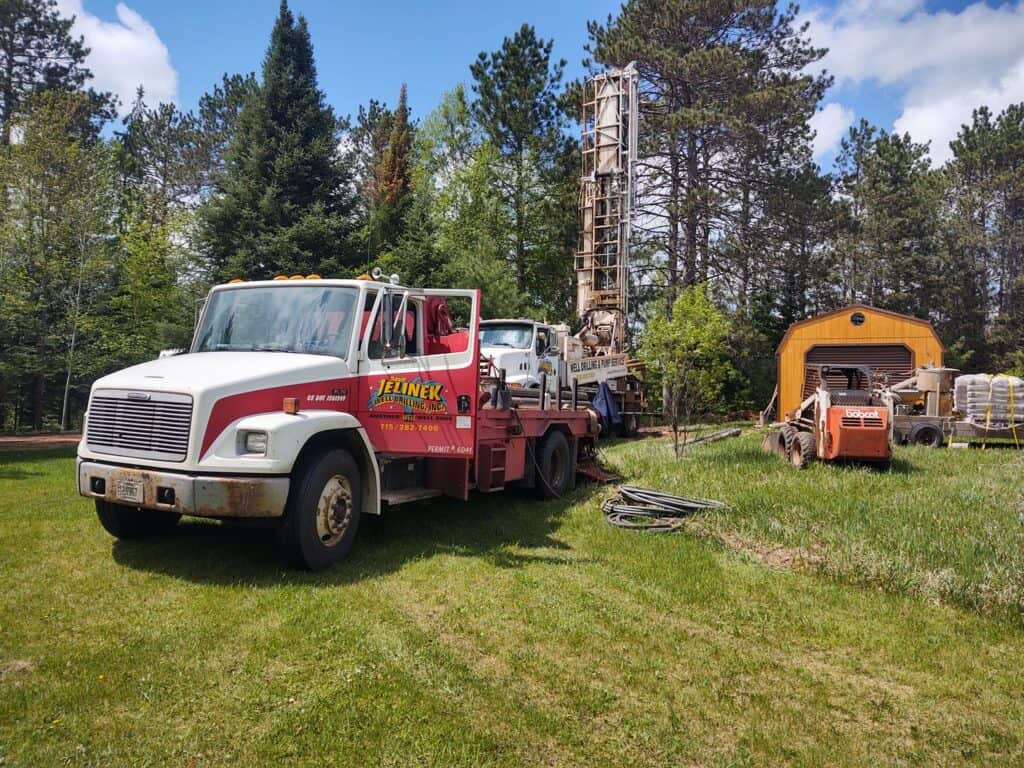
When Dave first started the business, Sarah said the work was done primarily through cable tool drilling – which is a percussion method that uses a heavy, chisel-shaped bit suspended from a cable to pulverize rock and soil by repeatedly lifting and dropping it.
She said he later bought a rotary drill, which uses a hollow drill pipe to bore holes faster and deeper.
Dual-rotary drilling, Sarah said, uses both a lower drive that rotates and advances a steel casing into the ground, along with a separate top drive that rotates a drill bit inside the casing.
She said this method is especially effective in challenging conditions – such as sand, gravel or boulders – and offers advantages over single-rotary drilling in terms of hole stability and straightness.
Sarah said Jelinek Well Drilling utilizes a two-team approach when on-site.
“There’s the drilling team, which is our licensed driller and his assistant,” she said, “and then there’s what we call the pump crew. They go in after the well is drilled and hook the well up to the house.”
Sarah said the well-drilling process involves multiple steps, each critical to the success of the project.
After a site is selected, the drilling crew, according to drillforwater.com, sets up the rig, installs casing – which is added as needed while water conditions are monitored – and begins drilling with air-powered equipment that advances the bit and removes cuttings.
Once the proper depth is reached – per the site – the well is completed with a screen or development as needed.
The pump crew then installs the system, connects it to the home and collects a water sample for lab testing before providing final reports.
Sarah said the company’s work is fairly evenly divided between individual homeowners and contractors – with a service area that includes the areas Lac du Flambeau, Manitowish Waters, Mercer, Boulder Junction, Elcho, Pelican Lake, Minocqua, Woodruff, Eagle River, Sugar Camp, Crandon, Tomahawk, Lake Tomahawk, Sayner, St. Germain and Three Lakes.
Sarah said Jelinek Well Drilling noticed a surge in people moving north during the COVID-19 pandemic, which temporarily boosted demand and helped drive additional business.
“There was a strong influx of people from the cities moving into family cabins, making them into homes and needing to replace their old point wells with drilled wells to get things a bit more modernized,” she said. “It appears that trend is slowing down.”
Passing the torch
As she begins planning for her retirement, Sarah said she has entered into an agreement for her longtime driller, who has been with the company for 12 years, to take over ownership of the business.
“We’re in a three-year transition plan,” she said. “He definitely has a different, more progressive approach to the business with bigger plans for growth.”
The Business News will follow up with Jelinek Well Drilling’s new owner once the transition is complete.
For more details about the company, head to the previously mentioned website.