AWI prepares welders for workforce – and the world
 Suick Lure Company continues to land the lunkers



May 18, 2026
MENASHA – In response to the nationwide shortage in accessible, in-home pediatric speech therapy, Heather Bancroft said she decided it was time to help fill the gap.
Families seeking a speech-language pathologist, Bancroft said, often face long clinic waitlists, insurance limits and transportation barriers.
To remove those obstacles, she said she launched Speech Treat, LLC three years ago, offering in-home visits and telehealth options to provide more flexible, affordable care.
“My services and service delivery model are super flexible,” she said. “I work with the family to make it accommodating and make it fit in their busy lives.”
As an American Speech-Language-Hearing Association (ASHA)-certified speech-language pathologist, Bancroft said she has provided therapy services since 2013 in a variety of settings, including schools, skilled nursing facilities and early intervention.
She said her mission is to provide quality care for children in rural areas, those who don’t qualify for birth-to-three or school-based services, those stuck on waitlists or those making limited progress in therapy.
Bancroft said her goal with each of her clients is to customize an evidence-based treatment plan according to the severity and nature of the child’s speech or language impairment.
She said she also incorporates creativity, a multi-sensory approach and the child’s interests into therapy sessions, encouraging the child by making therapy fun and engaging.
Bancroft said she believes wholeheartedly in the power of coaching and collaboration with parents and other members of the child’s team, in order to set functional goals that can carry across environments.

“I always want to leave the parents feeling empowered by providing manageable homework because, after all, they are the experts [regarding] their child,” she said. “I love coaching parents to know they can help their child with the tools I provide them with. I am a guide, and they are the experts.”
Embracing the call to serve others
Bancroft – who earned a master’s degree in communication disorders from the University of Wisconsin-Whitewater and holds a certificate of clinical competence from ASHA – said she also has a lifetime license through the Wisconsin Department of Public Instruction in speech and language pathology.
Though there are different paths one can take in providing pediatric speech therapy services, she said it was important to her to start her own business.
“I have worked in a variety of settings, and I decided to create a business because I wanted to be in the driver’s seat and have more flexibility and autonomy,” she said.
Bancroft said it felt like a full-circle moment for her, as she once seriously considered business and entrepreneurship in college before deciding that years of accounting and economics studies weren’t the right path.
After a trip to the college and career counseling center on campus, she said they suggested she take an assessment to find out what majors might be more suitable for her.
Bancroft said the results pointed her toward a “helping” profession.
Though she said she knew teaching wasn’t her path, that realization ultimately led her to speech therapy.
“I remember learning about speech therapy because my cousin had it when he was younger,” she said. “And then, my dad’s cousin was a speech therapist, [and I] remember… seeing the speech therapist in our school growing up. I thought that might be a good idea, and I set up some job shadows to really confirm [my interest].”
From there, Bancroft said she expanded her work beyond school-aged children to include older adults in skilled nursing facilities – broadening both her experience and reach.
“It was really fascinating to me, because the field is so wide, [with] so many different ages [and] so many different settings,” she said.
Building a strong business foundation
As she continues building her business, Bancroft said she has leaned on trusted mentors at each stage of the journey, acknowledging the learning curves that come with wearing every hat while growing a business from the ground up.
She said she isn’t afraid to ask for help and has worked with mentor Jill Shook, who supports professionals in launching private speech therapy practices.
“She was a phenomenal starting point for me,” she said. “And now, as I want to grow my business and add other types of services and offerings…, I’ve hired new coaches to help me get to that next phase.”
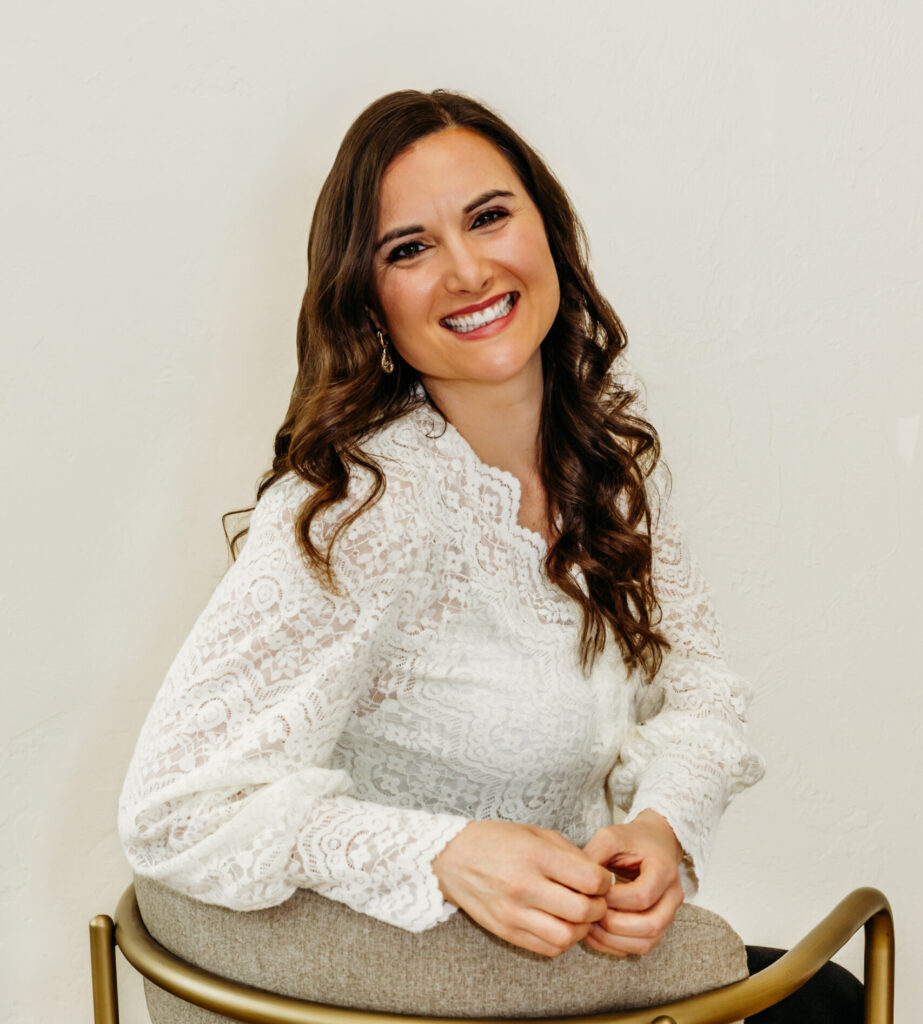
In hindsight, Bancroft said staying with a business major may have simplified things, but she also recognizes it as a valuable career lesson and has extended herself grace in pursuing entrepreneurship.
“I’m only three years deep into this business world life, I’m learning as I go, and it’s slowly coming together,” she said. “So, I’m being patient with myself, knowing that yes, I’ve been a speech therapist for 13 years, but I’ve only owned a business for three – so I’m kind of slowly gaining the skills I need in that arena.”
Offering advanced solutions for clients
To take her business to the next level, Bancroft said she recently earned her neurosomatic intelligence certification – though costly and time-consuming, she believes it will be a game changer.
The program, she said, teaches brain-based drills and nervous system regulation aimed at the root causes of stress and behavioral patterns.
Bancroft said it will allow her to combine her skills in speech and language pathology with nervous-system-focused guidance to provide more comprehensive services for the families she serves.
Her desire to pursue this certification, she said, stemmed from on-site experiences with families.
While working with children, Bancroft said she’s often seen parents who are overstimulated, overwhelmed, anxious and mentally exhausted.
This is understandable, she said, as navigating speech therapy needs can place added stress on families, especially when services have historically been difficult to coordinate.
Bancroft said the certification will help her better guide parents, empowering them to advocate for their child while also equipping them with lifelong self-regulation tools.
“They’re so taxed, they’re so overwhelmed, they’re in a survival state, and instead of thriving and feeling confident and at peace and calm…, it’s a little bit more chaos [and they’re in] fight-or-flight mode,” she said.
Bancroft said she aims to work with parents on mindset and nervous system regulation to help them stay more present and attuned to their child, allowing them to presume competence and support stronger outcomes.
She said that means shifting focus away from limitations and toward a mindset of abundance.
“Children and parents alike need to feel safe and regulated for optimal progress to occur,” she said.
Five years from now, Bancroft said she hopes to be supporting the families she serves using this certification in a tangible way.
“I want to help parents reframe limiting beliefs into empowering beliefs about their child’s abilities, as well as help them regulate their nervous system to allow for greater outcomes,” she said. “I would love to be educating [and/or] presenting, creating guides and courses in addition to providing one-to-one direct care.”
Redefining patient care
Bancroft said her busiest season is summer, when family schedules are more flexible for in-home visits.
She said she works with children with a range of communication disorders, including childhood apraxia of speech, phonological processing disorders, articulation disorders, social pragmatic disorders/autism and executive functioning skills.
Bancroft said she offers both in-home and virtual services to best meet each family’s needs.
She said the long-term goal is to develop a curriculum or published materials that blend neurosomatic intelligence with speech and language therapy, helping children build self-regulation and self-soothing skills through children’s books and play-based learning.
“Again, I feel like communication is so many things beyond speech,” she said. “A lot of the time, these children are exhibiting behaviors because they can’t express themselves, or, unfortunately, children are not regulated. They can’t access their higher levels of language and be a successful, independent communicator.”
Bancroft said this nervous system work pairs well with that approach, because a child who is not feeling safe, is dysregulated or in a survival state, is less able to engage in learning.
“They’re not going to be successfully accessing their words,” she said.
Through her work, Bancroft said she is often front and center for some of a child’s biggest learning breakthroughs.
She said she loves teaching young learners and finds fulfillment in seeing families move from fear and stress about their child’s future to gradual progress, small wins and moments of success.
Ultimately, Bancroft said that journey leads to relief and joy as children reach their highest goals.
“I love celebrating the small wins that happen every week with the children I serve,” she said.
For more information about Speech Treat’s services, visit speechtreatllc.com.