Lakeside Foods acquires Oregon-based Smith Frozen Foods
 Quality Tank Solutions building new plant, bringing new jobs


September 21, 2026
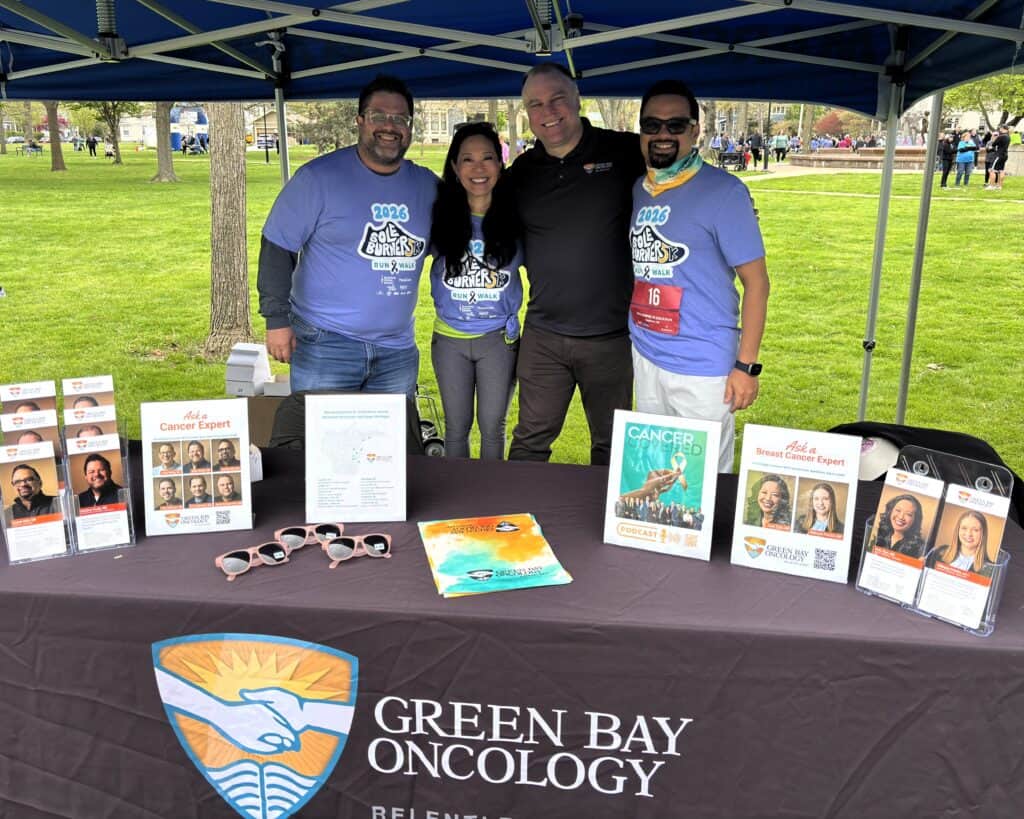
GREEN BAY – Despite the focused, considerate, detail-oriented nature of his work as President of Green Bay Oncology, Dr. David Groteluschen said he nearly overlooked a recent milestone: the practice’s 50-year anniversary.
“I don’t know if we really think about it that much, to be honest,” he said of the longevity. “Potentially, that’s why [we’ve made it] 50 years, because we just continue to move forward and provide the product we want to provide to our customers.”
Per gboncology.com, since its founding in 1976, Green Bay Oncology has grown to become Wisconsin’s largest physician-owned oncology and hematology practice, with a team of 16 physicians, 21 advanced practice providers and more than 50 employees providing care at 10 locations across Northeast Wisconsin and Michigan’s Upper Peninsula.
Contemplating the milestone, Groteluschen – who joined the practice in 2006, became president six years later and remains a practicing oncologist – said Green Bay Oncology’s longevity carries significance beyond proverbial calendar pages.
“What it means to me is providing care for the community,” he said. “It makes me proud we’ve been able to provide that care enough that we’re still here doing it, and people value it… It’s kind of remarkable.”
From a hallway to a half-century
Groteluschen said that before Green Bay Oncology was founded, Northeast Wisconsin had no comparable options for cancer care, as oncology itself was not yet common.
“At that time, the gentleman who founded [Green Bay Oncology], Dr. Paul Koch, literally had just come out of fellowship, and oncology care and cancer care was very new, not very recognized,” he said. “[Oncology was] recognized to the point that he had a fellowship, but it wasn’t really ingrained into the community. So, he basically came to Green Bay and started it.”
Initially, Groteluschen said Koch rented what was essentially a hallway at HSHS St. Vincent’s Hospital, starting the practice as a sole physician supported by a single administrative assistant.

Groteluschen said back then, “cancer was really not very treatable.”
“[There weren’t] a lot of chemotherapy medications,” he said. “Quality and quantity of life were not good in terms of treating those things, so he really started [the practice] at the beginning of cancer care in general. It just evolved from there.”
Though treatment options and studies progressed, Groteluschen said Green Bay Oncology’s core mission – “delivering care close to home” – has held strong from the start.
He said Koch would go on to build up the practice from its foundational values – recruiting and retaining “other providers as cancer care grew.”
Today, per its website, Green Bay Oncology is partnered with health systems as far south as Sheboygan, and as far north as Manistique, Michigan.
Rather than operating out of standalone clinics, Groteluschen said the practice is “symbiotic” with these hospitals.
“I don’t think you can survive in health care without partnering with other people,” he said.
Groteluschen said without growth, Green Bay Oncology could no longer exist – at least as an independent group.
Fortunately, he said, the practice has been able to keep pace, expanding its care services along the way.
“I think we’ve really taken off,” he said. “We’ve expanded from medical oncology to radiation oncology, now into surgical oncology, we have contracts with four or five hospital systems, we [treat] all hemophilia [and] our geographic area has doubled in size.”
Stability through the years
With Koch succeeded by Groteluschen’s predecessor, Dr. Jules Blank, Chief Strategy Officer Steve Slocum said steady leadership has factored into Green Bay Oncology’s continuity of high-quality care.
“Fifty years, three presidents – not too shabby,” he said. “It’s a good run for everybody.”
For an independent practice to persevere in the “dynamic,” “rapidly changing” field of health care, Groteluschen said Green Bay Oncology has had to continually readjust – “especially as cancer incidence increased, treatments increased and the difficulty of treating patients increased.”
Lest it close its doors as many private, physician-run practices have, he said improvements to Green Bay Oncology’s business model have kept it operational.
“We’re really good at having very good, business-minded people now, where their only job, every day, is to wake up and worry about oncology,” he said. “We actually started saying to the hospital system, ‘Hey, we’ll not only provide your care [and] recruit your doctors, we’ll also help you run the whole platform from an economic or business standpoint,’ because we have people who do this every day.”
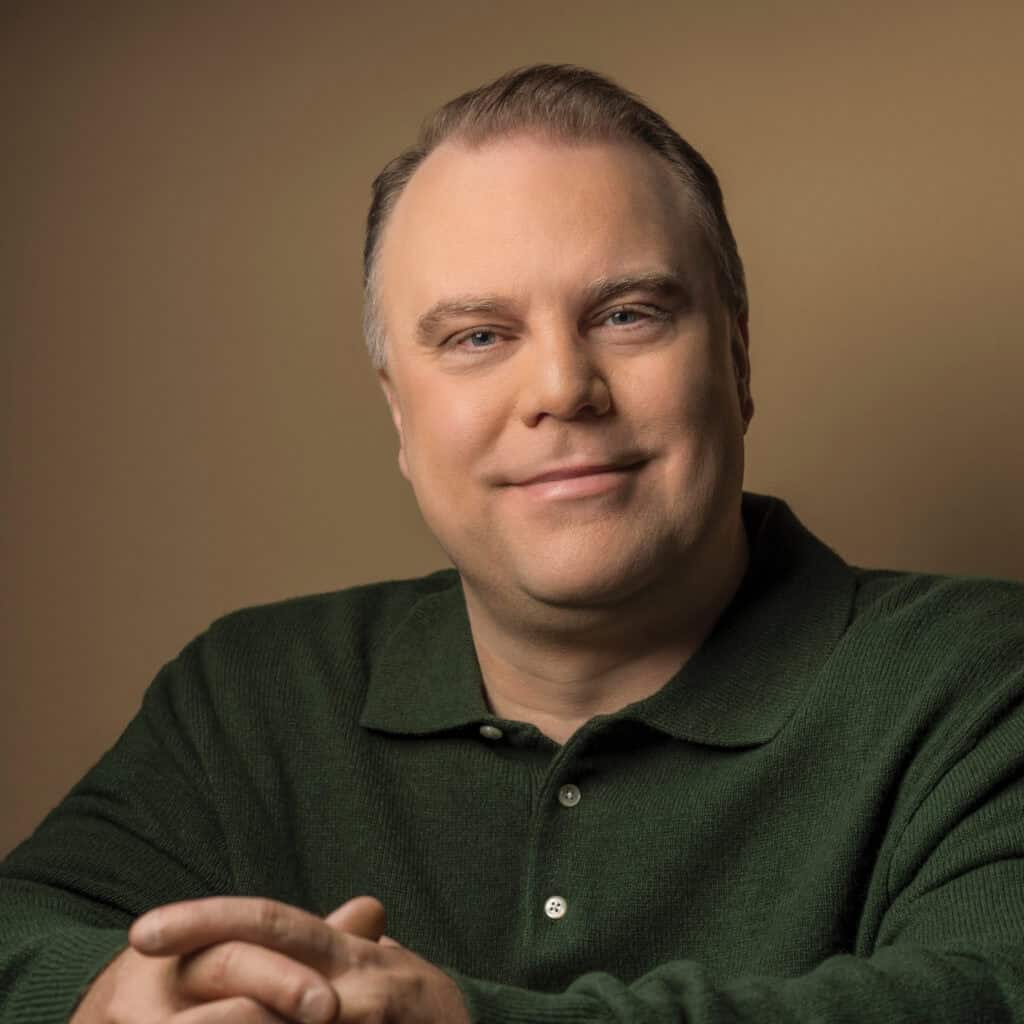
Adding further stability – and despite “an oncology medical doctor shortage of probably 3,000 physicians and growing” – Groteluschen said Green Bay Oncology remains well staffed, with a number of its physicians approaching or having surpassed 20 years with the practice.
He and Slocum said fostering a supportive culture has been “100%” central to recruitment and retention success.
“With our other physicians and partners, we’re emailing and talking on a constant basis…,” Groteluschen said. “During bad times or good times, because we’re so close-knit with each other, we’re able to persevere through those things honestly.”
This network, Slocum said, is organic but also intentional, aided by Green Bay Oncology’s internal mentorship committee.
He said the committee pairs new staff – nurse practitioners, physician assistants, doctors, etc. – with experienced counterparts.
“They’re coming into a network where there’s no competition between physicians,” he said. “It’s camaraderie, and they push each other, so they ask difficult questions and have these conversations with one another, and I think that’s extremely beneficial for them as physicians.”
Slocum and Groteluschen both said the practice’s internal support structure in turn creates a positive environment for patients and those close to them.
“It’s extremely beneficial for patients, because you’re getting a care network and you don’t even know it,” Slocum said. “You’re seeing Dr. Groteluschen, [for example], but there’s backing there that [patients] may not even see.”
Further support, perspective
Whereas Groteluschen said “physician burnout” is a genuine phenomenon – “and in our field, it’s even a higher [potential], because you’re dealing with such dynamics of emotion” – Green Bay Oncology’s support system helps its staff focus on what’s rewarding about the practice.
He said the practice’s “No. 1 goal is to treat the patients like we treat ourselves,” particularly as staff is tasked with “taking care of people in the worst times.”
“It’s rewarding to take care of people in those times,” he said. “You can have very good outcomes, but you also have very bad outcomes, and death. I still think it’s rewarding even in those outcomes, because we have to guide people through that. From a personal level, in general, it’s rewarding to take care of people and be trusted.”
Groteluschen said he also encourages a perspective of gratitude toward patients.
“If you’re going to trust us with something life-changing, thank you for doing that,” he said.
Groteluschen said he’s just as grateful to the hospitals who have partnered with Green Bay Oncology through the years and made the practice possible.
As a private physician group, he said “we’re kind of outliers.”
“We think more hospitals should work with us, because we’ve made the hospital systems that work with us very successful in terms of their patient care,” he said. “But [we’d also like] to thank them for going outside the model and working with us in a relationship where we trust each other, too.”
New logo for the next chapter
As Green Bay Oncology has created and maintained a viable model to provide care, Slocum said it has increased its services regarding blood-related disorders.
In fact, he said, “nearly 50% of our patients are hematology patients.”
As the practice has promoted its hematology services, Slocum said there has been some confusion regarding the name of the practice.
“If [patients] get referred to Green Bay Oncology [because, for example], they have low iron, they [might] say, ‘Well, I don’t want to – do I have cancer? I don’t want to see an oncologist,’” he said.
To better clarify, Slocum said the 50th anniversary presented a chance to rebrand, with the introduction of a new logo and a descriptor: “Leaders in Blood & Cancer Care.”
He said there was even some consideration to renaming the practice to better reflect its beyond-Green Bay footprint, but the team decided to stick with the name that’s earned a half-century of trust throughout the region.
Groteluschen said Green Bay Oncology has also been “recognized nationally by the National Cancer Institute as one of the 50 top groups” and as having “eight or 10 of our docs that are top 100 docs.”
National recognition is meaningful, he said, as are milestones like this year’s anniversary.
However, Groteluschen said nothing compares to the sense of trust patients grant him and his colleagues.
With both him and Slocum bracing for significant disruptions for the healthcare industry in the coming years, they said Green Bay Oncology will uphold its entrepreneurial spirit while maintaining the core values instilled by Koch.
“The one thing that will never change… is the patient-to-doctor or human-to-human relationship to treat somebody who’s sick,” Groteluschen said.
The values and connections, he said, keep him optimistic for whatever the next 50 years may hold for the practice.
Challenges to the organization and industry are in store, Groteluschen said, with stakes all the higher as “75% of the people in America are touched by cancer in some way.”
As its 50-year anniversary sees Green Bay Oncology affirming its commitment to offering independent care throughout the region, Groteluschen said he can only focus on what he can control.
“I truly believe if you don’t lose the core values of delivering care and working on trust and relationships, [the practice] will probably take care of itself,” he said.
Visit gboncology.com for more information and Green Bay Oncology’s podcast series, “Cancer Covered.”