 String cheese opens the door to authentic partnership
 Forest Lake Country Store undergoes rebrand


August 24, 2026
POUND – In a region known for its woods, water and rural way of life, one family business has been quietly manufacturing its way through nearly nine decades.
What began as a small family business in Pound 90 years ago, CAO Mollie Zeitler said, has grown into a fifth-generation manufacturer that remains in the village today.
Zeitler said Graetz Manufacturing Inc. also remains the only U.S. manufacturer of one of its founding family’s original products.
In the early days
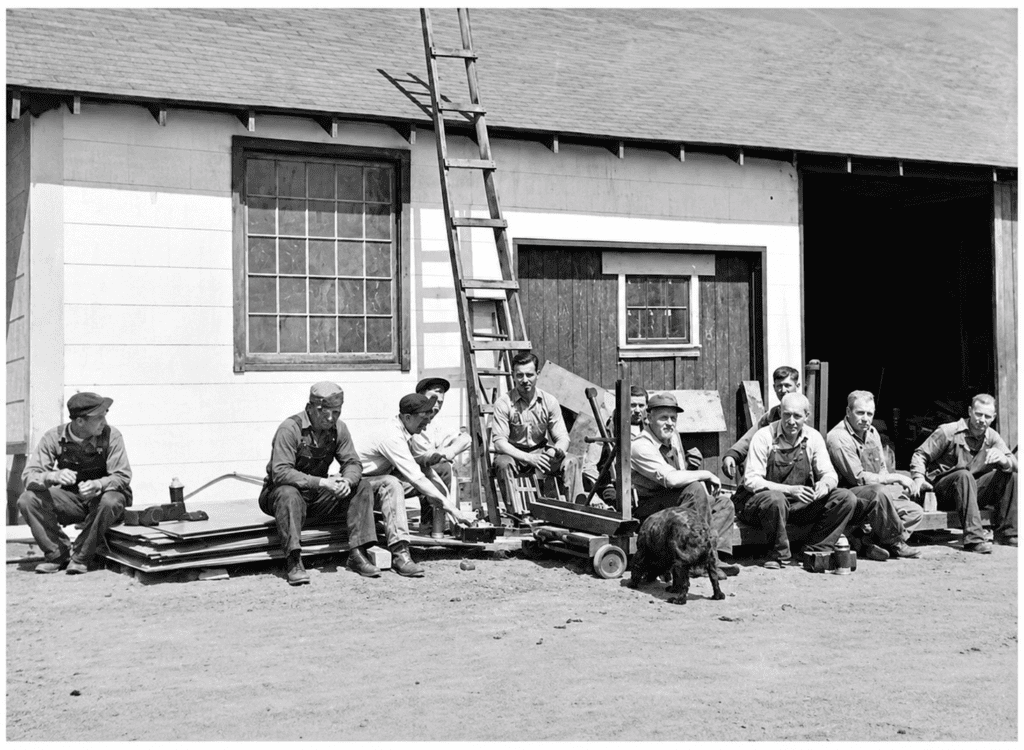
Zeitler said the company’s roots date to 1936, when Edward Graetz and his father, Clarence, opened a blacksmith shop known as C.S. Graetz and Sons.
She said the pair primarily served local farmers, either traveling to farms to make repairs or working on equipment brought to the shop.
After serving in the armed forces, Zeitler said Emmett Graetz joined his father and brother in the family business.
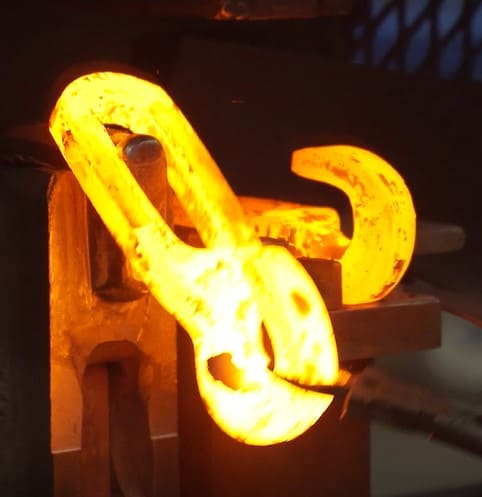
Zeitler said a sawmill was crafted in the 1930s, and in 1941, Edward invented, patented and began manufacturing the company’s first major product – a “hook and eye” barn cleaner chain, hammer-forged for superior strength, which is still manufactured and sold by the company today.
“It kind of works like a conveyor,” she said. “So, barn waste or sawdust in sawmills just dumps into it, and the hooks and paddles drag it out and dump it out of your building.”

Zeitler said that early work established the company’s roots in the agricultural industry.
“We are the only ones in the United States who make this product,” she said. “Other people do make similarly shaped links, but they are not hammer-forged, which is actually what gives them their strength and their durability. Some have lasted 35 years or longer.”
Over the years, Zeitler said other products were added to the company’s product line, such as the silage unloader and the roller chain sprocket.
Zeitler said the company entered a new chapter in 1959 when Loren and Harold Graetz joined the business and C.S. Graetz and Sons became Graetz Mfg. Inc.
More than four decades later, she said, the business underwent another major change when the two brothers who owned the company split the operation, with one taking the sawmill and the other taking the machine shop.
“It was done simply for insurance reasons,” she said. “It was too much to have all together as one conglomerate. So, both still operate, but independently.”
Branching off into other areas
In the 1980s and ’90s, Zeitler said the company expanded beyond its own product line and became increasingly involved in supplying OEM agricultural manufacturers.
Today, she said Graetz maintains longstanding relationships with several major ag implement manufacturers.
Zeitler said the long-term downturn in small agriculture prompted another significant shift for the company in 2017, when her parents, Jamie and Judy Graetz, took over the business from their parents after having worked there since childhood.
“With fresh eyes or fresh ownership, you can finally do some things you’d like to do or make some changes you’d like to make,” she said. “So, at that time, we started to tap a little more into areas like packaging, wrapping and more of the specialized job-shop work, piece parts in the industrial markets.”
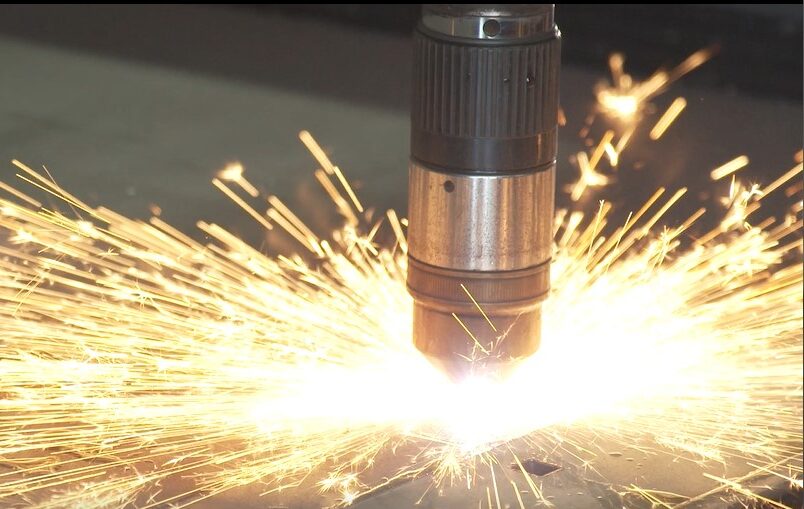
Over the past nine years, Zeitler said the company has also expanded its fabrication capabilities, allowing it to serve a broader range of manufacturing sectors – including military, marine, construction, industrial, railroad and transit, natural resources and mining, gas, oil and energy and agriculture.
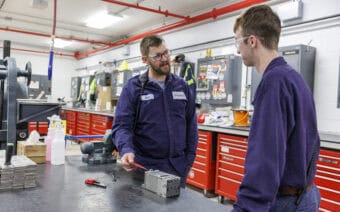
In a nutshell, Zeitler said Graetz’s capabilities span custom machining, waterjet and plasma cutting, fabrication, welding and assembly – or, as her mother puts it, “If it’s made of metal, chances are we probably make it.”
Expanding into new markets, Zeitler said, strengthened the company and helped position it for long-term stability – diversification that proved especially valuable when COVID-19 hit.
The company’s work across multiple sectors, she said, provided a “saving grace” during an uncertain period.
“By the time COVID came, we were into those areas far enough that we, along with other machine shops, began to get really busy,” she said. “There was a huge demand for tissue paper, toilet paper and those kinds of products. COVID was horrible, yes, but we could have run a second shift if we’d had the manpower up here.”
Zeitler said the company also benefited from an influx of workers who relocated from the Appleton and Oshkosh areas to their cabins up north during the pandemic.
Growth and change
Zeitler said Graetz has continued expanding into industrial production and job-shop work while maintaining its custom OEM agricultural business.
“If you think about things like spreaders and other big implement equipment as you see in farm fields,” she said, “we produce a lot of the sprockets and gears for those big machines.”
Zeitler said the size of the company and its workforce have also changed over the years.
At its peak in the 1970s, she said Graetz and its associated sawmill employed roughly 600 people.
Following the split between the sawmill and machine shop in the early 2000s, along with the decline of small agriculture, Zeitler said the machine shop’s workforce eventually stabilized at about 50 employees.
“This reduction was driven by a mix of industry shifts and gradual automation rather than mass layoffs or firings,” she said. “But today, we’re bursting at the seams. If we had 20 more people lined up to run machines, we’d take 20 more people, and we could be busy. But we’re very blessed with what we have right now, because manufacturing seems like it’s often feast or famine, but we’ve been pretty busy for some time now.”
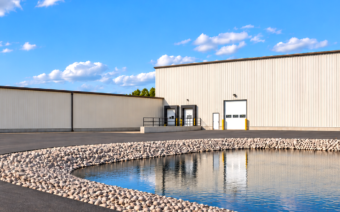
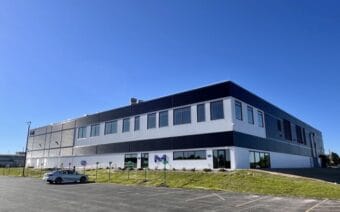
Today, Zeitler said Graetz operates across 125,000 square feet – a significant expansion from the roughly 1,000 square feet the company occupied when it began.
Looking ahead
Zeitler said the company’s growth is a reminder of how far it has come from its beginnings.
Though she isn’t sure anyone in the family envisioned Graetz becoming what it is today, she said its expansion into so many different industries would have been difficult to predict.
“I think even 15, 20 years ago, we saw the writing on the wall with small ag declining,” she said. “So, I think where we’re at now is by the grace of God… It’s still a huge portion of our business. We consider those things our blue line – our material movers, our silo unloader parts and so forth. We still manufacture those and sell them as our own product, but we’ve surpassed where we thought we would.”
And, Zeitler said it is those changes and ventures into other markets that have sustained the company and kept it relevant today.
“Plus, we’re in a manufacturing corridor and very lucky to be in Wisconsin, which is known for its manufacturing,” she said. “Of course, there are times when we could use more work, or we’re knocking on people’s doors, but there’s a lot of opportunity here.”
Though Graetz serves customers across the country, Zeitler said a significant share of its business remains in Wisconsin.
“And, I think that will always be the case,” she said. “Being able to reach out that way has brought in a lot of work for us.”
Zeitler said the company also has become more intentional about marketing to stay visible and relevant.
In the past, she said Graetz relied largely on trade shows to promote the business.
Today, Zeitler said it also maintains memberships in local chambers of commerce and industry groups such as the Northeast Wisconsin Manufacturing Alliance.
“They have really helped us with reaching new markets, because it gets us tied up with people who are doing the same things as us, or with people we can partner with,” she said. “There are so many opportunities for that, especially in Wisconsin and the U.P.”
As for employees, Zeitler said finding workers has historically been a challenge for Graetz, largely because of its rural location.
“Because of where we’re located, we really have to reach a long way to get people here,” she said. “Hiring has always been one of our biggest challenges. We have a great crew here, but we are basically always looking and always hiring because we just can’t get enough people. That’s been a challenge since 2017.”
Skilled machinists, particularly those with CNC turning or milling experience, Zeitler said, are among the company’s current workforce needs.
“[Getting] somebody who has that previous experience has proven to be quite the struggle,” she said.
That challenge, Zeitler said, has led Graetz to take a broader approach to hiring – bringing on employees with little or no industry experience, and giving them opportunities to develop their skills on the job.
“Some of them are now learning to program our CNC machines or running our milling machines,” she said. “We have no problem training somebody with the right attitude and the right desire to succeed.”
Still, with Zeitler and her brother, Nathan Graetz, expected to become the fifth-generation owners, she said she is confident in Graetz’s future.
Though the continued decline of small farms will likely reshape the company’s agricultural business, Zeitler said she sees opportunities in production, job-shop and OEM work.
“It’s unfortunate to say that small farms are probably going to continue to go kind of by the wayside,” she said. “It’s not something that we hope for, but it’s something that the trend is showing, especially with the automation of farming and the changes that all brings about.”
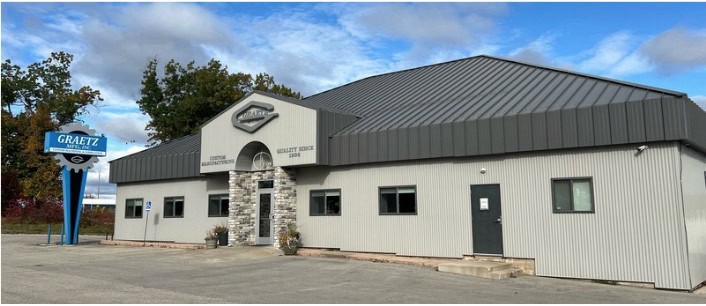
Zeitler said she sees the company continuing to branch into the production and job-shop side of the business while continuing to add more capabilities.
“We hope to be the one-stop shop for people, where they can send us their print and we’ll handle it from beginning to end,” she said. “We’ll send it out, and they’re going to see quality and an American-made product – because we are American steel and American-made with an American workforce. That’s really important to us. And in whatever we do, it’s important to us to honor God in the best way that we can.”
To mark its 90th anniversary, Zeitler said Graetz will hold a celebration Sept. 21.
The morning, she said, will be dedicated to vendors and current customers, while the afternoon will bring together business partners and retired employees for a tour of the plant and a look at how the company has evolved over the years.
Learn more about Graetz Manufacturing at graetzmfg.com.