‘Broadband access is the great equalizer’
 Voyageurs Bakehouse expands into new downtown Green Bay space


June 29, 2026
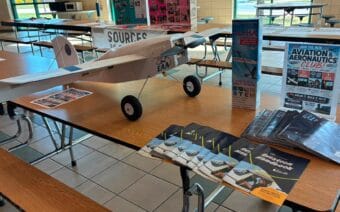
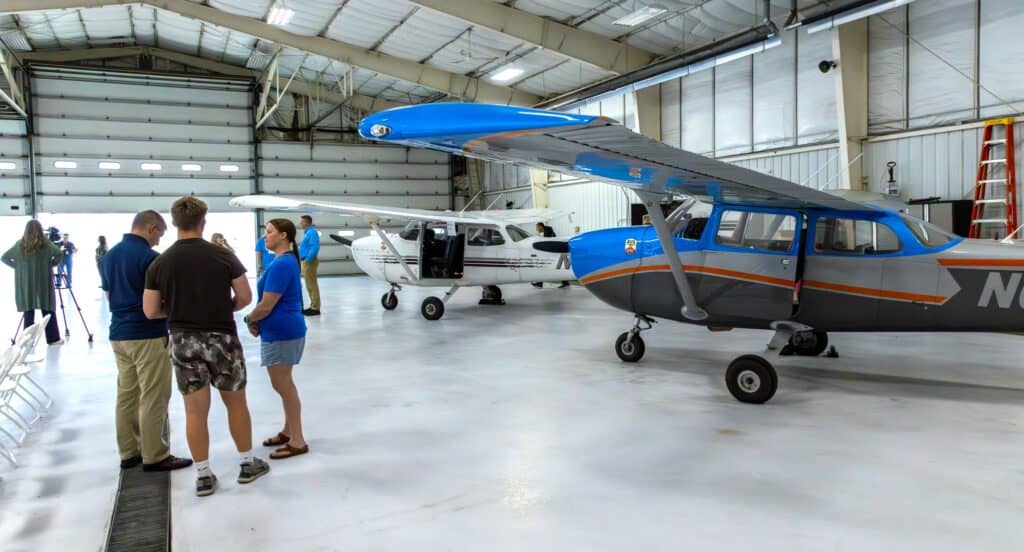
GREEN BAY – Aspiring pilots in the Green Bay area now have a more direct path to the cockpit thanks to a partnership between Aviate Flight School and Northeast Wisconsin Technical College (NWTC).
Jim Draeger, dean of NWTC’s Corporate Training & Economic Development, said Aviate and NWTC are combining hands-on flight instruction with academic training to help students seeking an aviation career – launching the region’s first Professional Aeronautics Certificate (PAC) program.
Draeger said he was “blown away” by the turnout at the mid-June open house.
“We probably had upward of 30 folks there, which I don’t think we could really ask for more than that,” he said.
Draeger said attendees represented a wide range of ages and demographics.
“Some folks came in from Clintonville, quite a few EAA people, others looking to reenter the workforce in a new career path and some young high school students,” he said.
As the region’s first PAC program, Christopher Johnson – the program architect and former professor at Embry-Riddle Aeronautical University – said the program was intentionally designed to help meet industry demand through focused training aligned to FAA certification requirements.
Johnson said the non-degree program combines classroom instruction, simulation and flight training through a structured, cohort-based model that helps prepare students to earn FAA certifications and pursue professional pilot careers.
“We built this program to leverage the structure and rigor of collegiate aviation training while aligning with NWTC’s commitment to accessible, affordable, local education,” he said.

A non-traditional approach
Unlike traditional aviation pathways that pair flight training with broader degree requirements, Johnson said the PAC program intentionally focuses on the federal licenses and flight preparation students need to pursue professional pilot careers.
“That’s one of the unique things about this program being non-degreed,” he said. “You don’t have to be out of high school – you can be concurrently enrolled as long as you’re 17. That means juniors and seniors of age are eligible, whereas they otherwise wouldn’t be until they graduate high school.”
Johnson said he works directly with high school counselors to help students earn elective credits through flight training.
Instead of taking courses like woodshop or mechanics, he said students can learn to fly, earn credit and free up space in their schedules.
“With EAA [in Oshkosh], that event also helps condition area young people to become interested in aviation,” he said. “The younger people are a very captive audience when it comes to flying.”
With the program, Johnson said students will split their time training between NWTC’s Green Bay campus and Aviate’s facility at Austin Straubel International Airport (GRB).
“Weekly instruction includes 15-20 hours of classroom learning, one-on-one instruction, simulator training and aircraft-based experience, preparing students to earn all of the FAA certifications to become professional aviators,” he said.
Johnson said FAA certifications include:
- Private Pilot License (PPL)
- Instrument Rating (IR)
- Commercial Pilot License (CPL)
Optionally, he said students can also earn additional ratings in the program:
- Certified Flight Instructor (CFI)
- Certified Flight Instructor Instrument (CFII)
- Multi-Engine Instructor (MEI)
Draeger said the partnership model offers several advantages for earning pilot certification.
He said traditional degree programs typically take two to four years, and sometimes longer.
“You’re getting that degree in a cohort model, typically,” he said. “On the other side of that spectrum, you have your private flight schools. They tend to be pay-as-you-go and take one student at a time and educate one person in one class at a time.”
The beauty of this program, Draeger said, is it combines the two different models.
“We’re taking the approach where NWTC is providing the classroom for that private flight school in a cohort model, so it’s an economy of scale approach,” he said. “We’re able to get more learning done in the classroom simultaneously so the flight school can provide more flight time in the plane. It’s a really unique approach where we’re coupling the resources of flight school with the resources of the college to make that larger impact.”
Looking at national statistics, Johnson said an independent, pay-as-you-go flight school has about an 80% attrition rate.
He said many people start but don’t finish because learning to fly is expensive, time-consuming and difficult.
“Those are three very powerful sources of influence that drive people to quit,” he said. “But when we bring the structure and the rigor of a college program, where students are fully scheduled for one license at a time, one class at a time and we keep them coming back on an attendance policy, we can flip that attrition rate to less than 20%.”
Breaking down barriers
Johnson said the program at NWTC is his 10th initiative aimed at expanding aviation pathways and reducing barriers to entry
He said airlines stopped requiring four-year degrees more than 10 years ago.
“Airlines used to require a bachelor’s degree, but they no longer require that,” he said. “They followed in the footsteps of the tech industry, where people used to have to get a computer science degree. Amazon, Facebook and Google did away with that, and now they go more toward a technical interview.”
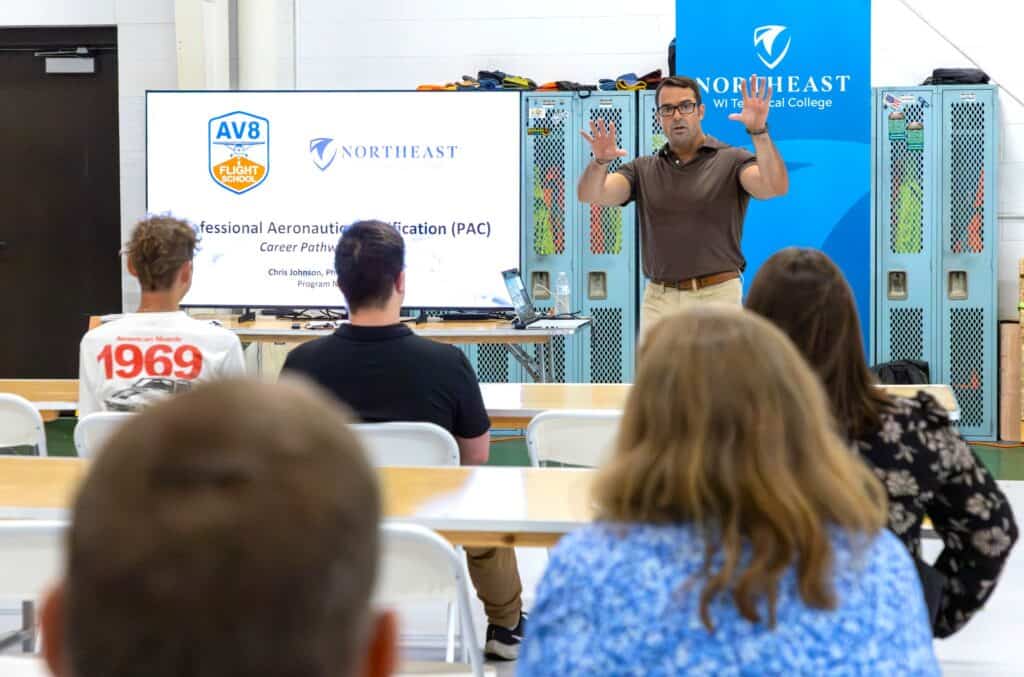
Johnson said the process for obtaining a jet pilot job has shifted toward technical interviews, with an emphasis on engine operation, aerodynamics and regulatory standards.
“A lot of flight departments require a student to fly a simulator and demonstrate their proficiency in a simulator as part of the interview,” he said. “We took that knowledge and said, ‘We have this huge workforce demand, so let’s do something about it.’”
Johnson said the program is not intended to compete with degree programs, but to complement them.
“Degree programs allow students to get federal student aid and other loan programs that a non-degreed program does not currently qualify for,” he said. “Instead of making people wait on a waitlist with degree programs, our program provides something complementary for those who basically have the financial means or can get a private loan.”
Johnson said the ability to use 529 funds factored into designing the program as a non-degree pathway, with the goal of keeping talent from leaving the state.
Multiple years in the making
Bringing the partnership to fruition, Draeger said, was a multiple-year process, which included about three years of working with Johnson.
“Chris and I were connected through some mutual colleagues, and we began exploring, developing the program and finding a way to bring it to Northeast Wisconsin,” he said. “Aviate is the perfect partner to do this with. The owners of the flight school are committed and dedicated. When all the pieces of the puzzle were put together, we were able to launch and promote this.”
With program planning complete and components in place, Draeger said classes and training could begin later this summer or early fall.
“The feedback and inquiries are surpassing expectations,” he said. “I am fully ready to launch this in August or September if we have the qualified participants. We’ve been at this for less than a few weeks, and we already have a class ready.”
Draeger said a minimum head count is five, but he thinks the program’s demand thus far will push that number to 10.
“Of course, as the program continues to grow, we’ll put together more cohorts,” he said. “Aviation is a very niche community, and specifically in Northeast Wisconsin, where word spreads very quickly, receiving the response we have – that indicates we hit the nail on the head. NWTC is responsive to industry needs. This program is a win-win for the college, its students and the aviation industry.”
With Johnson’s extensive aviation background, Draeger said he is the “perfect fit” for the program.
“Chris understands the importance and has the foresight of what we’re going to experience in 10-15 years,” he said. “When you couple that with his insider knowledge of the industry and the training and education, he brings a unique solution to the shortage we are experiencing. Chris really shows what success can look like.”
A pilot shortage
When the numbers are broken down, Johnson said the projected need to replace commercial pilots over the next 10-15 years is “staggering.”
“About 27% of commercial pilots will need to be replaced,” he said. “[The need for so many commercial pilots] is driven solely by a mandatory retirement age, which is 65 – we have an aged workforce. We have a lot of pilots in their 50s and early 60s who have to leave [soon], and that’s what makes this industry unique.”
Johnson said very few industries push employees out at a certain age, but aviation has specific laws regarding that.
“Everything in aviation is measured by flight time, so this program addresses all of that,” he said. “At a minimum of 250 hours, pilots can fly commercially. Only about 20% of people find entry-level employment at that level.”
Johnson said that might include banner towing for advertisement, completing agricultural survey work, transporting for hospitals or piloting private flights.
“Those are highly coveted jobs, and there are very few of them,” he said. “That’s why about 80% of people who come out of flight school take an additional set of courses, including myself, where you become an instructor pilot. There are five licenses all in, and then you’re gainfully employable by one of the hundreds, maybe even thousands, of flight schools in the United States.”
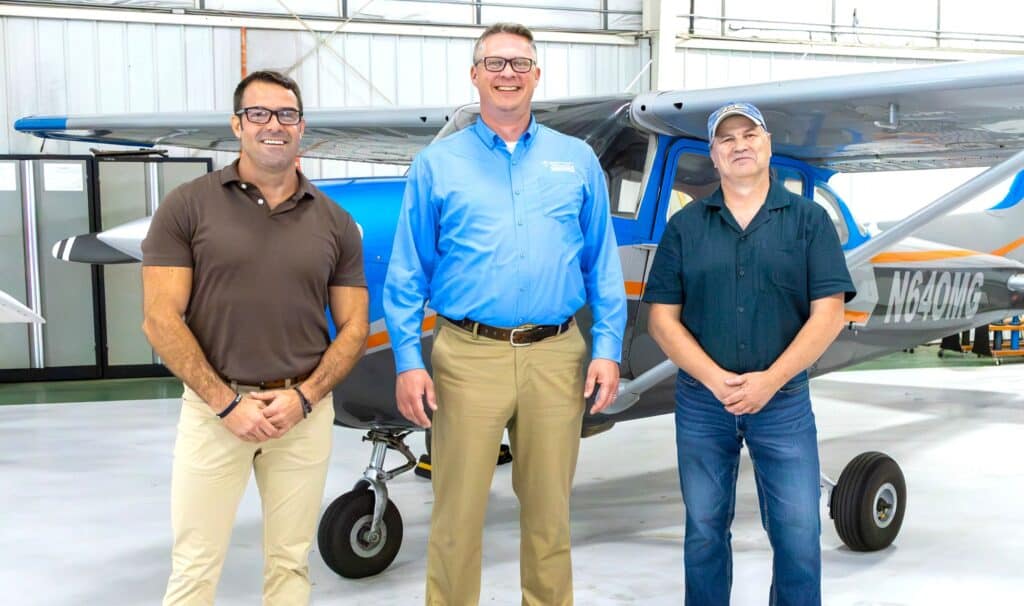
Johnson said the timeline from zero experience to becoming a commercial pilot is about 12-16 months.
Adding another four months for instructor ratings, he said the total is roughly 20 months.
“It just so happens that it takes about 20 months of full-time flying to build your time from around 250 to 300 hours to 1,500 hours, which is the minimum hour requirement to earn the highest license, which is called an airline transport pilot license,” he said. “That allows you to fly in the right seat of a jet making six figures, and then the trajectory is like a hockey stick.”
Johnson said there are hundreds of pathways to becoming a paid pilot, with airline piloting representing the greatest demand.
“When I say airlines, it includes two different types: flying people and flying boxes,” he said. “An airline would include United, American, Delta, etc., but it also includes FedEx, Amazon and UPS. That’s where the 65 retirement age begins, but that doesn’t mean you have to stop flying at 65 – you just can’t fly commercially at the airlines.”
After turning 65, Johnson said many pilots move into the corporate world.
“You can have a really long aviation career if you want,” he said. “You can jump out before you’re 65 and fly those corporate jets, or fly those beyond 65. There are hundreds of different jobs you can get. I don’t want people coming away from this program thinking they have to work for an airline – that’s simply not true.”