 Opening doors for 80 years: Wausau company celebrates legacy
 Batter up! – Nasonville Dairy rolls out new cheese curds


February 2, 2026
NEW LONDON – Fritz and Gary Bernegger, the father-son team behind Hillshire Farm, were honored last month with an induction into the Meat Industry Hall of Fame (MIHOF), cementing their legacy as pioneers of the Wisconsin meat industry.
The MIHOF, which has celebrated the visionaries shaping the meat industry since 2009, recognized the pair for turning Wisconsin meat innovation into a nationwide brand.
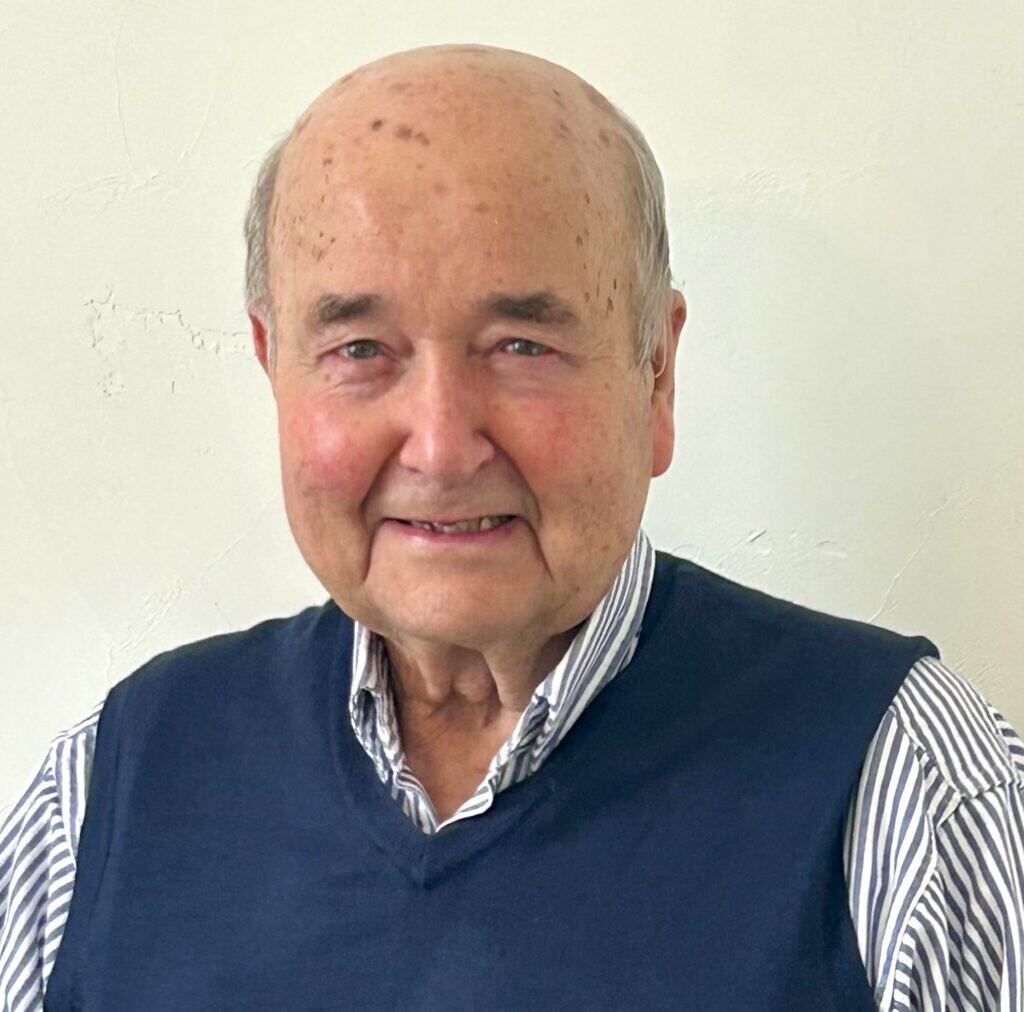
Gary Bernegger said the MIHOF induction was quite the honor.
“I never expected this,” the 90-year-old Bernegger said. “I subscribe to an industry publication, and I saw they put out a call for nominees, so I nominated my dad for induction. Unbeknownst to me, my kids added my name. It was a complete surprise to me.”
Bernegger said once you’re nominated, it’s up to past members of the hall to elect who they feel is worthy of induction.
“You’re elected by [those in the] industry who know something about what you’ve done – or should know something about it,” he said. “The whole family flew down to Atlanta. The biggest thing to me is when I look back at past nominees, there are some pretty impressive names there. To be at least considered in that crowd makes you stop and think a bit.”
According to the MIHOF website (provisioneronline.com/meat-industry-hall-of-fame), examples of past inductees include Jimmy Dean (Jimmy Dean Sausage Company), Donald J. Tyson (Tyson Foods), Ray Kroc (McDonalds), Dave Thomas (Wendy’s), Col. Harland Sanders (Kentucky Fried Chicken) and Oscar G. Mayer (Oscar Mayer).
“Most people probably don’t realize there is a national meat hall of fame, but there is also a Wisconsin meat hall of fame,” Bernegger said. “My parents went in first, and then I think I was elected in 2005.”
A century ago

Bernegger said his father, who passed away in 1988, emigrated to the United States in 1926 from Salzburg, Austria, where he was an apprentice sausage maker.
The move to America, Bernegger said, “was on a lark” – a spontaneous decision.
“A friend of his in Salzburg said to him one day, ‘Fritz, let’s go to America. I saw this picture of a pretty girl sitting on a fence eating an orange. I think we should go and check that out,’” he said.
Though his dad’s friend didn’t stay in America, Bernegger said his dad did.
“My dad apparently saw an opportunity or something he liked, so he decided to stay for a while – he really never went back until after World War II for trips,” he said.
When he first arrived, Bernegger said his dad worked for several meat companies across the Midwest, including various companies in Minnesota and Wisconsin, before relocating to New London after hearing about an opportunity.
“He and a partner leased the meat counter from a grocery store – they didn’t own [it] and weren’t a part of the grocery operation, but they leased the meat counter,” he said. “That was basically their start.”
By that time, Bernegger said his father and his business partner had accumulated about $1,500 each and put their savings toward buying out the grocery store.
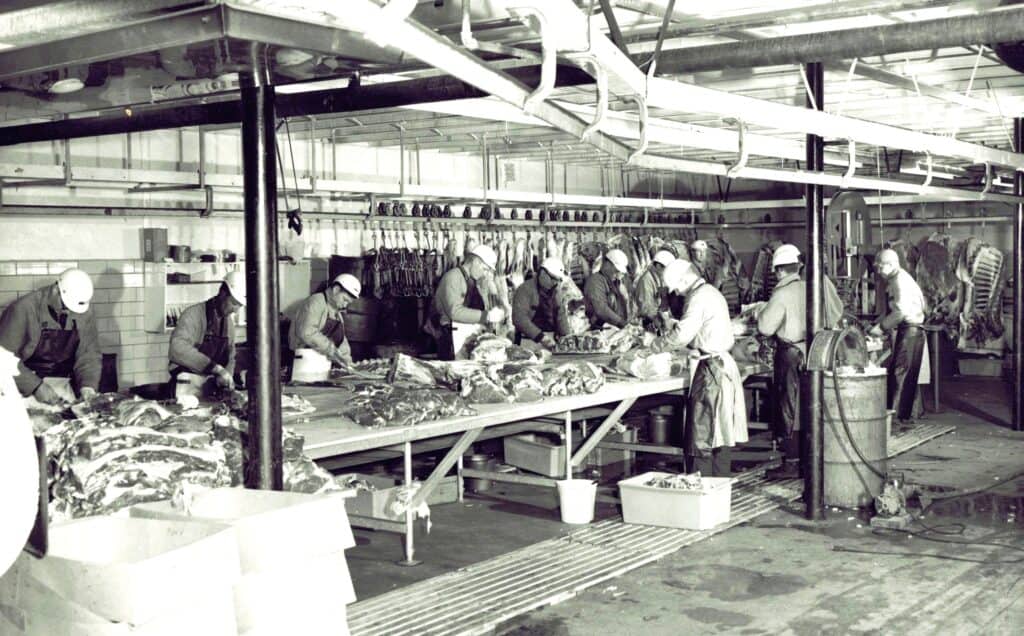
“They needed raw materials,” he said. “In those days, you didn’t buy raw materials from some other packer – you slaughtered your own.”
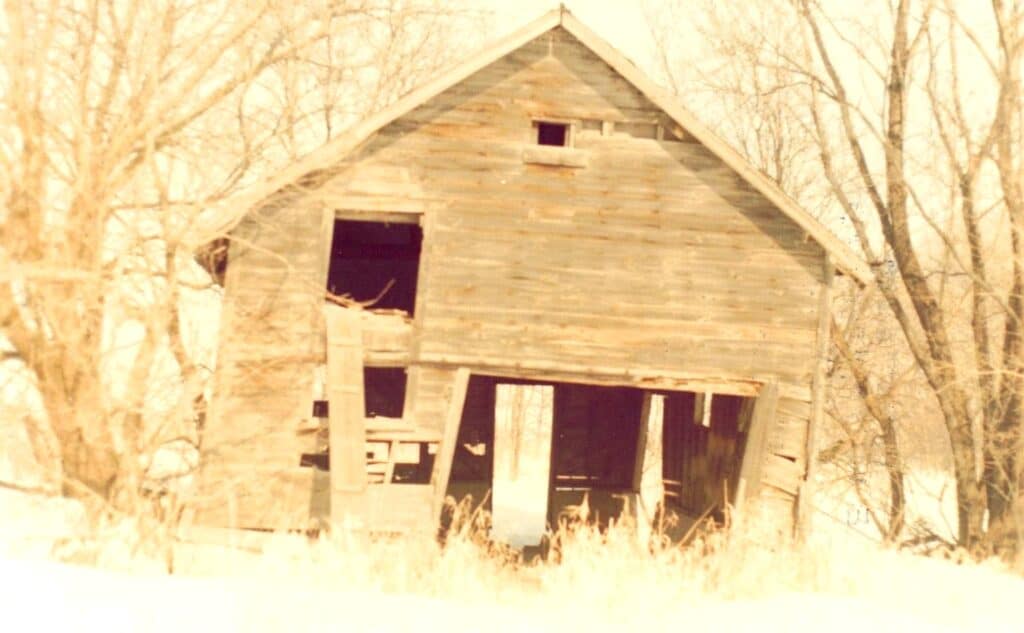
In the early days, with no building of his own, Bernegger said his father would buy heifers from local farms and butcher them right on the barn beams.
He said he still likes to chat about the old stories his father used to tell him.
“There is a story about hanging a hog on a limb of a tree,” he said. “The limb broke, and the hog fell into the scalding barrel, making quite a mess.”
Eventually, Bernegger said his father accumulated enough business and capital to build a one-room slaughterhouse on the shores of Mud Lake.
“The building is no longer there,” he said. “When that New London bypass was built, they took the building down.”
Bernegger said floods at Mud Lake on the day he was born in March 1935 convinced his father to relocate his work to higher ground.
“That encouraged him to think of getting out of there and building something bigger,” he said. “They bought land off the lake, up on the hillside. Because I was born and my dad was now a father, he needed to better the family’s situation.”
Bernegger said the “new” plant’s hillside location originally inspired its name: Hillside Packing.
“Eventually, there were legal problems with someone else having the name, so the name was changed to Hillshire Farm,” he said. “By that time, I was involved. I’d say the [name change] worked out pretty well.”
Early memories
Bernegger said his earliest memories of Hillshire go back to his high school days, helping out after school and on weekends.
“I got the high-ranking job of cleaning stockyards,” he laughed. “There was an old-timer there named Bernie, and Bernie and I were sent to clean the stockyards. When we got out there, Bernie said, ‘We’ve got to have a system.’ We cleaned with wheelbarrows, and Bernie’s system included both of us shoveling and me wheeling – that was his system.”
Bernegger said he has long joked that he was born into the business.
He said his first introduction to the meat industry came when he was six months old, tagging along to the plant with his parents.
Bernegger said his mother was helping his dad, but when he started crying as the cows came in, she struggled to manage both him and the animals, and one of the cows got loose.
“That was my first introduction to the meat business,” he said.
After graduating from high school, Bernegger said he attended Marquette University in Milwaukee.
“When I was at Marquette, I ended up rooming with [former Green Bay Packers President] Bob Harlan,” he said. “Since this hall of fame thing has come up for me, I think it’s pretty obvious that Bob is going to be in the NFL Hall of Fame someday. Here were two guys who roomed together in an attic on 13th Street who ended up someplace they never dreamed of. The attic apartment had no air conditioning, no shower and had a cracked bathtub. I think we both came out of it pretty well.”
Bernegger said he always knew he’d come back to New London and work at Hillshire after college.
“After Marquette, I had some active duty – I had served in the Air Force Reserve – to perform first, but then I came back and went right to work at the plant,” he said. “I did most of the jobs there – during summer vacations, or eventually, before I went into the office, I cut myself a few times. I also drove some truck routes.”
Into the 1970s… and beyond
Hillshire’s rapid growth in New London led to its 1971 acquisition by Consolidated Foods Corporation (now Sara Lee), at which point Bernegger said he became president and CEO.
“There is a certain mystique about food products being produced right at the farm,” he said. “Hillshire was a farm – we had cattle and hogs at times, so it was legitimate. They opted to keep the name, so we became one of 10 companies of the Sara Lee Meat Group.”
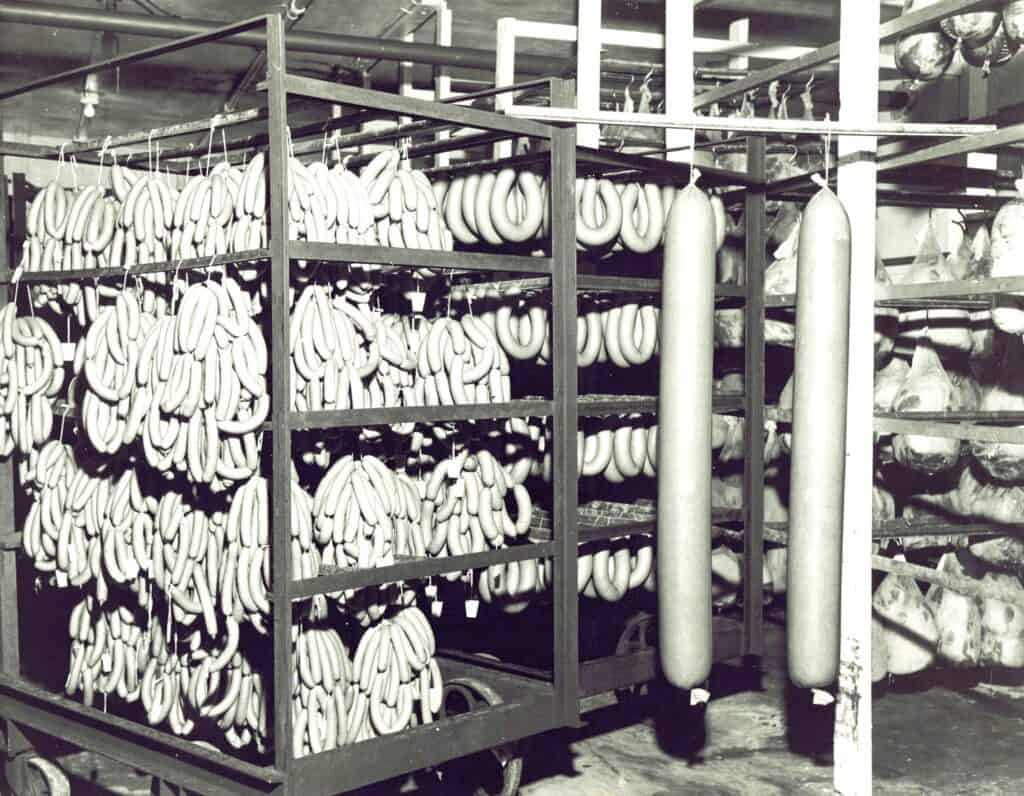
Priding itself on quality and consistency, Bernegger said Hillshire Farm focused heavily on natural casing sausage, becoming one of the largest producers of it in the world.
He said the company’s entry into the natural casing smoked sausage category promoted the production line into national prominence.
Bernegger said he was promoted to and served as corporate vice president of the Sara Lee Meat Group from 1985-90 and to Sara Lee corporate development from 1990-92.
Companies under his supervision, he said, included Hillshire Farm, Kahns, Gallo Salami, Peck Packing (Emmbers Brand), Galileo Sausage and Gibbon Packing.
Remaining active in the industry throughout his 60-year career, Bernegger said he served as a director for both the International Natural Casing Association and the National Independent Meat Packers Association.
“As an independent consultant from 1992-94, I recruited a meat industry team for Epstein Engineering to start Constar Meat Packing in Starachowice, Poland, which was the largest meat packing plant in Europe at the time,” he said.
Quality employees = success
At one point, Bernegger said Hillshire employed 1,600 people in New London.
“With natural casings, a lot of it is hand labor,” he said. “They don’t lend themselves to machine production, so we utilized a lot of women from all over the area. New London only had a population of 5,000, so you didn’t have that many employees.”
Though it’s less than that now, Bernegger said the company still has a strong presence in its community of origin.
Hillshire’s employees, he said, deserve a lot of credit for what the company accomplished.
“When we were acquired by Consolidated Foods, we had the capacity to produce natural casings,” he said. “At that time, there were other companies out there that basically owned the smoked sausage market. Consolidated Foods needed somebody to reply to that, so I firmly believed we were acquired to be their entrance into smoked sausage natural casings.”
Bernegger said Hillshire came out in the end as a No. 1 market share and a billion-dollar brand.
“I think we were doing $16 million annually when we were acquired,” he said. “I always wished my dad had lived to see the day the brand became a billion-dollar brand.”