Renovo Health offers affordable health care through traditional options
 Wisco Branding: Amplifying voices, connecting with community


May 18, 2026
FOND DU LAC – At Precision Balancing Group, President Ryan Hilbert said the work begins long before a technician ever steps into a mechanical room.
Hilbert said it starts with relationships – with owners, engineers, contractors, facilities and others, and it’s built on trust, transparency and a commitment to doing the job right.
That belief, he said, is captured in the company’s guiding principle: “Balancing Strong Relationships.”
At Precision Balancing Group (PBG) in Fond du Lac, Hilbert said relationships aren’t a byproduct of the work – they are the work.
He said they shape how challenges are identified, how deficiencies are addressed and how teams collaborate to deliver buildings that perform exactly as intended.
Founded by Hilbert in December 2020, PBG – according to pbgtab.com – specializes in HVAC testing, adjusting and balancing (TAB), a highly technical but often unseen service that plays a critical role in energy efficiency, indoor air quality, occupant comfort and in healthcare environments, patient safety.
“The best work is often the kind you don’t notice,” he said.
When systems operate as designed, Hilbert said people rarely think about airflow, water flow, pressure relationships or ventilation rates.
Spaces, he said, feel comfortable, equipment runs efficiently and buildings simply work.

However, Hilbert said achieving that outcome requires precise measurement, unbiased verification and a willingness to address problems head-on – even when doing so isn’t easy.
Verifying performance, not assumptions
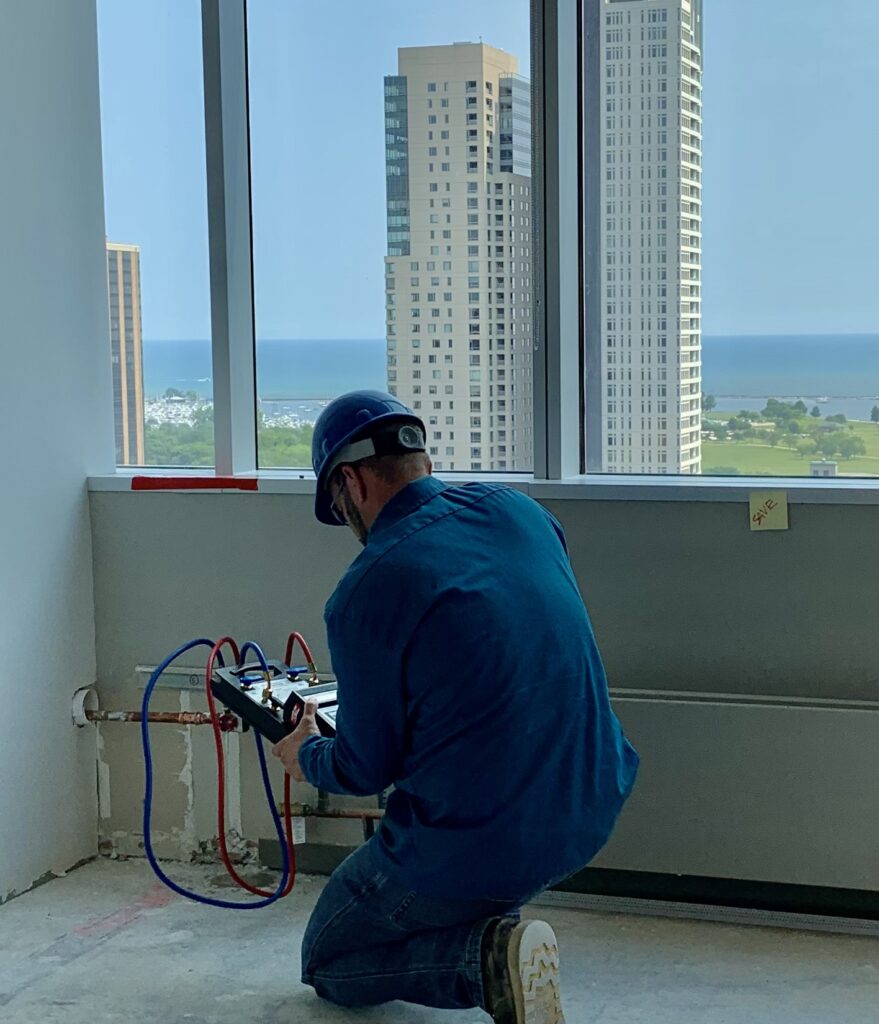
Hilbert said TAB is not a vague quality check or a paper exercise, but rather a field-measurement process performed after installation is complete, using calibrated instruments to verify that air and water flows throughout a building meet an engineer’s design specifications and comply with NEBB-specific procedural standards.
Every commercial, industrial and institutional building (everything but a house), he said, requires some form of balancing.
During construction – whether it’s a new building, addition or remodel – Hilbert said TAB is required by building code to verify ventilation rates, fresh air intake, exhaust and overall system performance.
“It’s our job to read these devices and make sure the HVAC system is performing as the engineer designed it,” he said.
Hilbert said that verification serves multiple purposes – reducing energy waste, eliminating hot and cold spots and ensuring systems are not working harder than necessary.
For owners, he said it means lower operating costs and longer equipment life, and comfort and consistency for occupants.
But in some environments, Hilbert said the “why” goes far beyond comfort.
In healthcare facilities, he said the stakes are even higher.
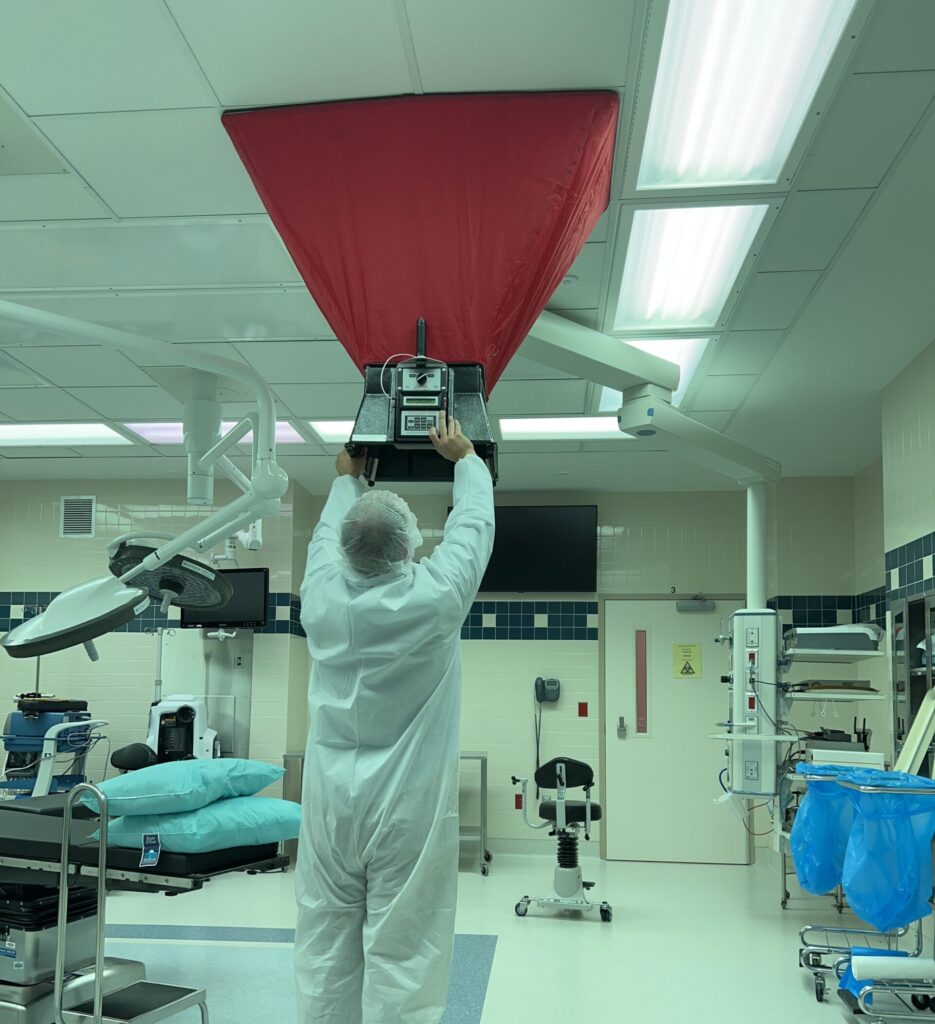
“When you get into hospitals, it’s not just airflows and water flows anymore,” he said. “All of a sudden, you have differential pressures and humidity levels taken into consideration.”
Operating rooms, for example, Hilbert said, must maintain positive pressure, forcing clean, filtered air outward beneath doors to prevent contaminants from entering.
Failure to maintain those relationships, he said, can introduce serious risks, including mold growth or infection pathways during surgery.
“The big one that supersedes everything is patient safety,” he said.
Because systems wear over time, Hilbert said many hospitals and healthcare providers routinely commission third-party verification.
He said PBG regularly evaluates critical rooms to demonstrate due diligence and ensure environments remain safe.
Even outside healthcare, Hilbert said he recommends periodic verification.
Wear and tear, broken components or silent failures, he said, can go unnoticed until they show up later as rising energy bills or air quality complaints.
But prevention, Hilbert said, is always a smart approach.
“There’s nothing wrong with ensuring everything is working as it’s supposed to,” he said. “There is value in preventative maintenance.”
Independent, unbiased and willing to speak up
Hilbert said one of PBG’s strongest differentiators is its independence.
As an independent TAB contractor, he said PBG has no financial interest in selling equipment or covering for upstream mistakes.
Hilbert said its role is to deliver unbiased data and verified performance, even when that means identifying problems others would rather ignore.
That independence, he said, underpins the company’s core message, rooted in unbiased data, verified performance and safer environments because PBG is performing third-party testing.
But Hilbert said it’s also about doing the right thing.
“Somebody spent their money, and we owe it to them to do it right,” he said.
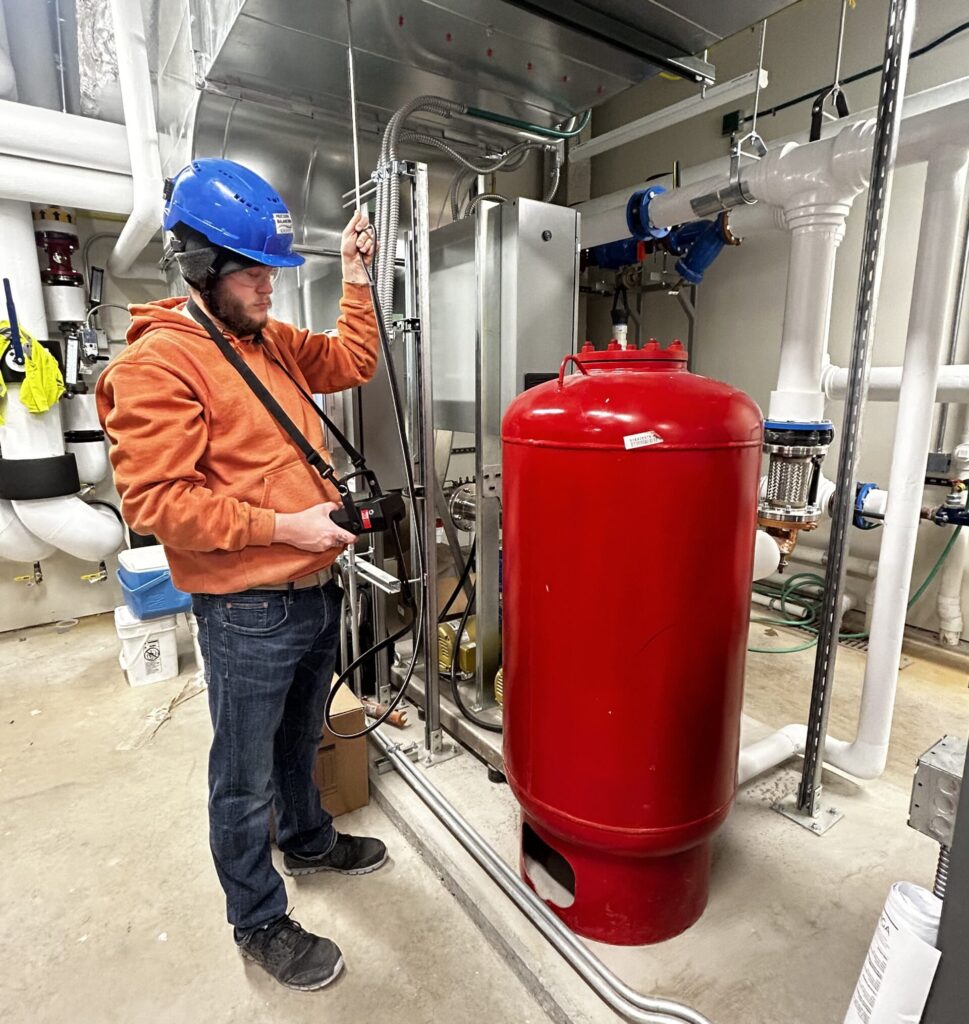
When deficiencies are found, whether they stem from installation issues, design flaws or field changes, Hilbert said PBG brings them forward, works with contractors and engineers and pushes for resolution.
“[Team members] bring it up to the engineer to be fixed, because we care about the job and we care about the product,” he said.
Choosing to be part of the solution
Hilbert said he launched PBG after spending 18 years in the trade, when he realized career advancement wasn’t in the cards at his former employer.
Early in his business journey, he said he also noticed a recurring industry problem: TAB firms arriving late, flagging incomplete work, issuing backcharges and leaving contractors frustrated.
Hilbert said he chose another approach.
“I decided to have the attitude to be part of the solution versus part of the problem,” he said. “What we sell is relationships.”
Hilbert said PBG technicians are trained to start with what’s ready, proactively communicate issues and collaborate with contractors.
He said that philosophy permeates the company culture and onboarding process.
“It’s about teaching technicians that success isn’t just technical accuracy – it’s how problems are handled,” he said
Growth built on trust, expertise
What has followed, Hilbert said, is rapid, sustained growth for PBG.
From a one-person operation, he said PBG has grown into the largest independent TAB firm in Wisconsin, with nearly double the technicians of its closest competitor.
Today, Hilbert said, the company employs 15 team members, spanning field technicians and office support.
Financially, he said the climb was steep and steady.
After a challenging first year proving the PBG name, Hilbert said backlog climbed from $80,000 to $800,000 in just months, then over time reached multi-million-dollar annual volumes.
Today, he said the company maintains a backlog hovering around $4.5 million with projects primarily in Wisconsin and the Chicago area but extending across the Midwest, nationally – including projects in Utah, Ohio and Missouri – and even internationally.
Hilbert said this growth has been fueled by PBG’s reputation for competence, transparency and care, and by a workforce that is among the most certified in the state.
“PBG is NEBB and TAB certified, holding more certifications than any other contractor in Wisconsin,” he said.