The Bassball Cages is ready to rock in Ashwaubenon
 Mad Dog & Merrill: Fired up for 15th season


December 29, 2025
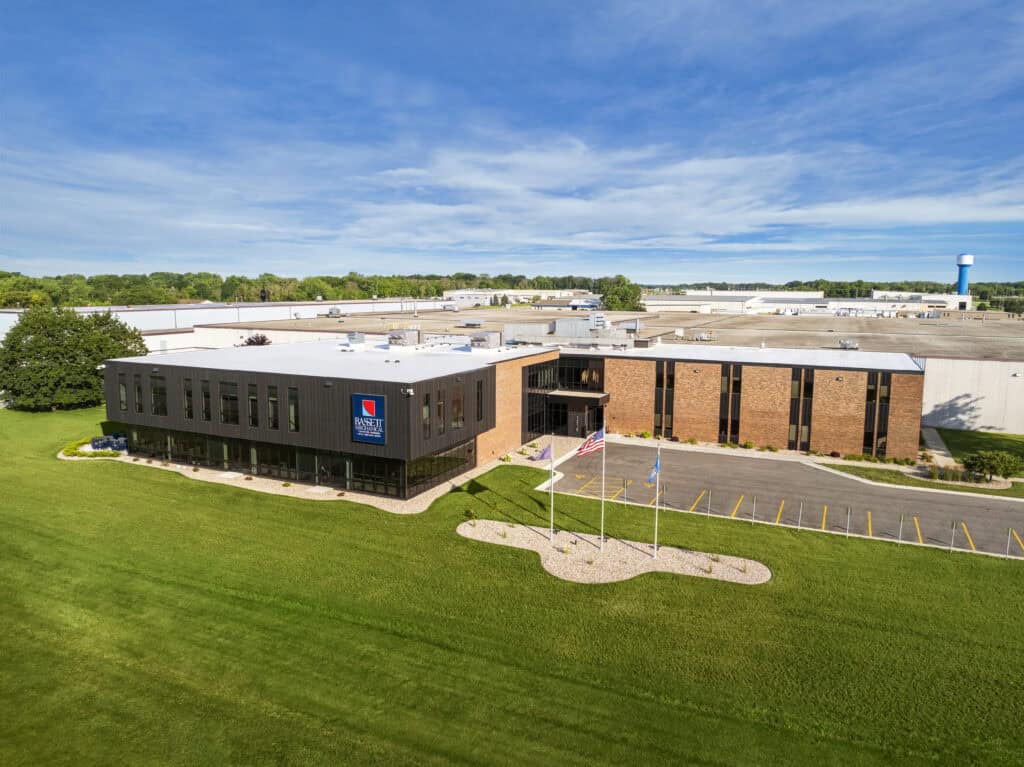
KAUKAUNA – Bassett Mechanical recently announced the expansion of its pipe-fabrication capabilities at the company’s Kaukauna site.
Tyler Petersen, vice president of fabrication and field operations, said leaders at Bassett – a full-service contractor for the industrial refrigeration, HVAC, plumbing, controls and metal-fabricating markets – identified the need about five years ago.
Petersen said the progression toward an expansion began when the company transformed its traditional CAD drafting department into a virtual design and construction department in 2020.
Bassett, he said, focused on using construction and design technology, in turn, increasing the amount of prefabrication they were doing for their own mechanical contracting installations.
It worked out so well for Bassett, Petersen said, that company leadership soon recognized they were having growing pains in four key areas, including material handling, material storage, material flow through cutting and cleaning and drawing package and documentation.
To improve the efficiency in those areas, Petersen said Bassett needed to make investments in the facilities, new equipment and additional technology.
Over the course of two years, he said they increased the yard space with additional racks and invested in a new CNC pipe profiler, which had an integrated infeed/outfeed capability.
Petersen said Bassett also added overhead cranes, overhead doors and a new vertical band saw, so associates can feed material from outside in the yard through the walls of the facility.
In addition, he said the Bassett team implemented a paperless workflow for issuing drawings and tracking progress and documentation.
“By recognizing that we need to process this work more efficiently and focus on those key areas,” he said, “making those investments [and] making those changes significantly improved our efficiency and our capacity.”

Once that was accomplished, Petersen said company leadership decided they were ready to take on more pipe-fabrication work, beyond what Bassett traditionally did for its own mechanical contracting installations.
The strategic investment, he said, allows Bassett to not only support the growing volume of mechanical contracting projects in-house but also approach new opportunities by offering pipe-fabrication services directly to their metal-fabrication customers.
Investing in new equipment, technology, additional space
Petersen said the new CNC plasma pipe profiler, with its integrated material infeed/outfeed system, and the new bandsaw and exterior conveyor system, will enable the Bassett team to safely and efficiently handle materials outside the facility, while seamlessly routing them into production for cutting and processing.
As part of the company’s long-term strategy to establish itself as a leader in fabrication solutions, he said it has also expanded its production footprint by 10,000 square feet.
This additional space for pipe fabrication, staging and loading, he said, is a critical investment.
Incorporating new multi-process welding machines, weld positioners, tool boards, carts and cranes, Petersen said, equips Bassett’s skilled tradespeople with the tools they need to work efficiently, safely and at scale.
Furthermore, Petersen said the expansion allows for continued growth, enabling the company to take on larger, more complex projects while maintaining the high standards their customers expect.
“Our strategy has been to move as many direct labor hours through the shop as possible without increasing indirect costs,” he said. “By focusing on pipe fabrication, we’re improving consistency and reliability in our equipment usage. It’s also better for our workforce.”
Improving safety, workflow
Petersen said the physical space expansion led to hiring additional employees to support it, including key roles in business development, project management, pipe fabrication, quality control and more.
The virtual design and construction (VDC) team, he said, has also taken on expanded responsibilities, supporting project detailing, programming, routing to the shop floor and keeping consistent work flowing through the pipe shop.
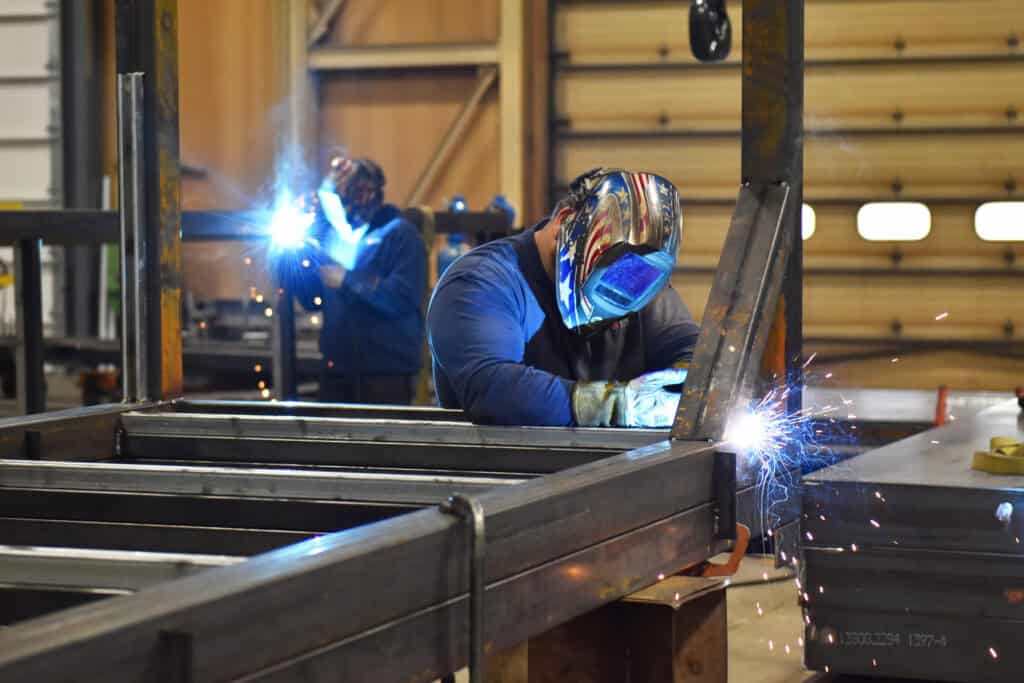
Prior to proactively pursuing pipe fabrication work, Petersen said Bassett experienced peaks and valleys in the pipe shop based on its mechanical contracting workload.
It was important, he said, to keep the equipment running and keep associates working, while also training apprentices on pipe fabrication work.
Petersen said the expansion improved safety for employees as well.
“If I just look at the mechanical contracting aspect of our business, our associates [who] work in the shop are exposed to fewer hazards than are found on the job sites out in the field where we’re doing these installs,” he said. “You have to deal with heights, weather, environment [and] material handling with rigging and chain falls [when working outside the facility], as opposed to overhead trains and forklifts [when working inside the facility].”
Moving that work from the field to the shop, Petersen said, reduces the size of the crew needed for the installation.
“It [also] reduces the number of people we have exposed to those elements on the job site throughout the duration of the project,” he said.
Petersen said the increased space and new equipment have also improved safety within Bassett Mechanical’s Kaukauna home site as well.
“Inside the shop, improving our material handling reduced the amount of traffic inside our facility,” he said. “We don’t have all these trucks backing in through garage doors. We don’t have to climb on top of trucks. We can contain a lot of the dirt [and] the debris and the fumes from cutting into a dedicated area, with collection on the equipment and also some clean-air investments to keep the fumes down.”
As part of the company’s ongoing commitment to innovation, Petersen said Bassett Mechanical has transitioned to a fully electronic workflow across its fabrication operations.
This shift, he said, enhances department communication, streamlines project tracking and reduces reliance on paper-based processes.
Prior to the transition, Petersen said if the company were doing pipe fabrication, they needed to release pipe spools – individual fabrication drawings for each pipe assembly being built.
These pipe spools, he said, make up a larger installation and can total several thousand drawings – all of which had to be printed, sent to the shop floor and organized into binders.
As the work moved through the shop floor, Petersen said fabricators were required to record the heat numbers for the materials used on each pipe spool, while welders documented their weld numbers on the corresponding weld map.
“You think of having thousands of drawings, or hundreds of drawings out on the shop floor – that’s a lot of paper that’s moving throughout the facility, and that’s a lot of people manually writing down exactly what they’re doing,” he said. “And there’s really no visibility to where that project stands. You have to physically go out there and look at it to say, ‘Are we 50% done? Are we 75% done?’”
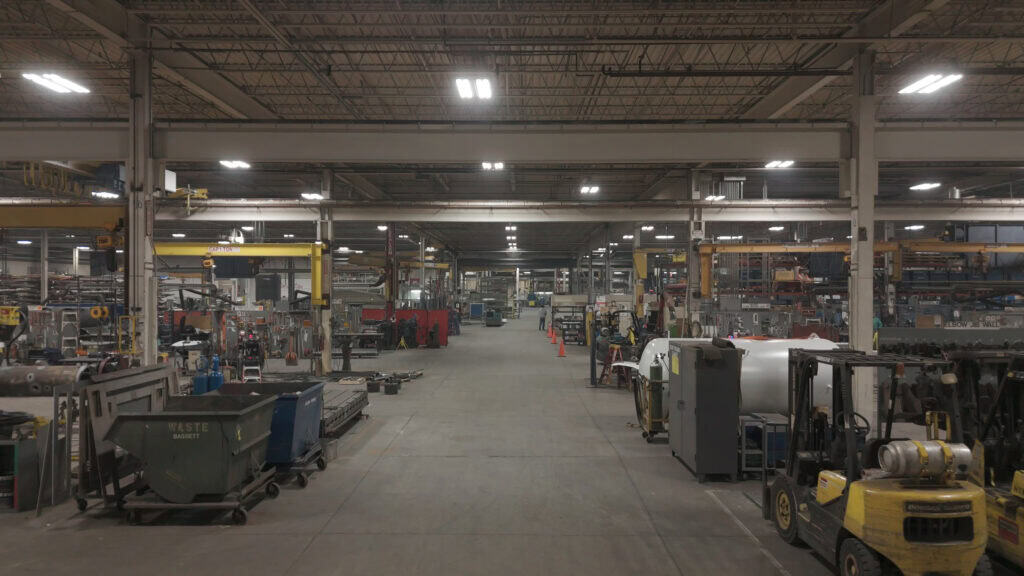
Petersen said necessary information about a project’s process wasn’t readily available until the materials in the package were complete and it came off the floor.
Now, with the shift to a digital workflow, he said associates carry iPads that show their assigned tasks for the day as soon as they clock in.
“All of those pipe spool drawings… are now visible on their iPads, and as they complete their work on the iPad, it tracks the heat numbers of the materials,” he said. “It tracks what’s complete, it tracks who welded what and all of that is logged and updated every five minutes, so at any time, anybody in the office – a project manager, myself [or] a foreman – can see what percentage of each package is complete.”
Petersen said the system also creates an electronic record of who completed each task, making it easy to share that information with customers and store it directly in the job folder without processing paper documents.
By integrating digital tools for scheduling, documentation and quality control, Petersen said Bassett has improved accuracy, accelerated turnaround times and advanced workplace sustainability.
Embracing the potential for future growth
Looking ahead, Petersen said the company plans to construct a 12,000-square-foot addition this spring, which will expand its total fabrication space to 19,000 square feet.
This, he said, will enable Bassett Mechanical to pursue more work inside its facility and take on larger projects.
Petersen said company leadership believes these investments do more than increase capacity – they also provide a consistent and reliable workload for associates, optimize facility utilization and strengthen the company’s ability to deliver high-quality projects on time.
By maintaining control over their fabrication environment, he said the company will be better positioned to meet the demands of its mechanical contracting customers – with precision and confidence.
“I think there’s a lot of potential for future growth,” he said.