 New batting cage facility steps up to the plate in Ashwaubenon
 Connecting newcomers to the community, one link at a time


September 7, 2026
NORTHEAST WISCONSIN – Northeast Wisconsin’s chambers of commerce are finding that staying relevant takes more than ribbon cuttings and networking events.
As businesses face tighter budgets, changing workforce needs and new challenges such as artificial intelligence, chamber leaders say their organizations are redefining their roles and finding new ways to deliver value.
Those differences can be seen in how chambers are responding to membership pressures, supporting small businesses, addressing workforce needs and tackling broader regional issues.
Some are narrowing their focus.
Others are expanding it.
All are looking for ways to demonstrate their value.
De Pere focuses on the basics
For the De Pere Area Chamber of Commerce, President and CEO David Vander Bloomen said that has meant taking a hard look at its own operations.
Vander Bloomen said the chamber’s decision to downsize, announced earlier this summer, was a difficult but necessary response to declining member retention.

He said he is now the chamber’s sole employee.
“I was told when I started this position two and a half years ago that chambers lose an average of 10% a year,” he said. “Our percentage this year was much higher than that.”
Vander Bloomen said some members cited budget pressures when leaving the chamber, while others were forced to close their businesses.
“Also, when you see the trickle-down effect of many businesses working virtually, I think that finally started impacting our area,” he said.
Vander Bloomen said a primary concern for smaller chambers like De Pere’s is market saturation.
“For example, there are three chambers in Brown County,” he said. “So, if I’m a new business coming into town and have a limited budget with two larger chambers to choose from, but I can only afford one, that now takes away from the others.”
Vander Bloomen said this battle for marketing dollars is affecting smaller chambers across the country.
“The national trend is membership rates are going down, but non-membership dues for event attendance and sponsorships are going up,” he said. “So, that tells you people still want to be involved, but they maybe just don’t want a membership due to paying every year. They’d rather put their money where it’s directly more impactful to a specific cause or specific event. And we’re seeing similar things.”
For De Pere, Vander Bloomen said the pressure has raised a broader question: how can a smaller chamber continue to provide value when businesses have more options for where to spend their dollars?
Vander Bloomen said chambers need to do a better job working together, particularly on a regional level.
“Why are we not doing a more regional approach to events? Education? Sharing community resources?” he said. “I think as trends in the chamber world change, we all need to be open to some of those possibilities.”
For now, Vander Bloomen said the De Pere Chamber is focused on “getting back to basics,” cutting events that are too costly or require too much staff time.
“As much as I hated having to make the staff decisions we did, if it allows us to reduce our costs for the time being to get back to where we were before, I don’t think that’s a bad thing,” he said.
For now, he said De Pere’s answer is to narrow its focus, reduce costs and concentrate on the services that provide the most direct value to members.
The challenge, he said, is convincing businesses that chamber membership provides enough value to justify another annual expense.
Regional chambers play different roles
While De Pere is responding to tighter resources by narrowing its focus, Fox Cities Chamber President and CEO Becky Bartoszek said she sees collaboration and adaptation as ways chambers can broaden their value.
Though some Northeast Wisconsin city and regional chambers have overlapping territories, Bartoszek said their missions and roles in the business community are distinct.
At the same time, she said she agrees collaboration will be critical as chambers compete for increasingly limited business dollars.
Bartoszek said the Fox Cities Chamber – which, according to its Q2 Economic Development Report, is the state’s largest community chamber – is part of the Northeast Wisconsin Chamber Coalition with chambers in Green Bay, Oshkosh, Fond du Lac and Waupaca.
“We meet regularly and talk about how we can help each other, collaborate and share best ideas,” she said.
But collaboration alone, Bartoszek said, isn’t the answer.
She said chambers also need to anticipate how the needs of their members are changing and respond before they become bigger challenges.
The rapid rise of AI, Bartoszek said, is one example of the changing needs chambers must be prepared to address.
“Even five years ago, no one was focusing on AI [like they are now],” she said.

Bartoszek said the chamber responded by forming a task force two years ago to identify best practices for using AI, eventually drawing chamber CEOs from across the U.S. to Appleton to learn from her staff.
The same approach, she said, applies to identifying more immediate member needs, which the Fox Cities Chamber tracks through a weekly member survey.
When recruitment and retention emerged as key concerns, Bartoszek said the chamber responded by creating its Connect Free program.
“We brought in somebody from the national level and asked, ‘How can we move the needle without competing with all of the big capital campaigns that are happening across our region?’” she said. “We know darn well nobody’s graduating from college thinking, ‘I want to go where I can find the biggest Best Buy.’ They’re looking for that unique quality of life that’s driven by small business – cool boutiques and fun restaurants and other great places to go.”
Bartoszek said Connect Free gives small businesses with five or fewer full-time employees, nonprofits with 10 or fewer full-time employees and all freestanding restaurants free chamber memberships.
“Because we know that as we help that small business sector, we’re helping to drive quality of life,” she said.
Bartoszek said nearly 1,100 small businesses have joined the program, inspiring chambers across the country to inquire about and launch similar programs.
Smaller chambers keep focus local
Jamie Harvey, who joined as executive director in January, said the Fox West Chamber of Commerce – which focuses on businesses and nonprofits in Hortonville, Grand Chute, Greenville and Fox Crossing – has added 40 new members this year, bringing its total membership to 166.
“We’d like to get to 200,” she said. “We’re not that big, but we kind of like it that way.”
That smaller footprint, Harvey said, allows Fox West to stay closely connected to the businesses and communities it serves.
That local focus, she said, has helped drive membership growth as the area continues to expand.
To help those businesses connect, Harvey said Fox West is launching new events this year.
“When people show up over and over, they find new people to grow with,” she said. “Those relationships can lead to new opportunities.”
Harvey said Fox West is also expanding its focus to include workforce development.
“The Greenville-Hortonville area is really about to explode,” she said. “There are three different subdivisions about to be built, which will bring in jobs. We are working closely with the local school districts to help students see what opportunities are available here.”
Harvey said chambers need to stay attuned to changing member and community priorities, something she sees as a particular strength of smaller chambers.
That hyper-local focus, she said, can mean responding to needs that might not fit neatly into a broader regional agenda.
“Downtown Hortonville’s main street is getting ripped up, so those small businesses are struggling,” she said.
In response, Harvey said the Fox West Chamber will host “Hortonville Halloween on Main Street” this year to help them recover.
“We’re going to have two big stages, fire dancers, stilt walkers…,” she said. “We want to get all the area communities involved and get everyone there.”
Getting creative to support members with hiring needs
Though she acknowledges some overlap among chambers in the region, Lara Fritts – who joined the Greater Green Bay Chamber as president and CEO last December – said she does not view other Chambers as competition.
For the Greater Green Bay Chamber, Fritts said that distinction comes in part from its regional focus, particularly around economic growth, talent and leadership development.
“Each chamber brings a unique value to the businesses and communities that we serve,” she said. “It’s important that each organization plays to its strengths.”
Echoing Bartoszek and Vander Bloomen, Fritts said chambers have a stronger voice when they work together on regional issues.
“As a collective, we make a greater impact,” she said.
Fritts said she also sees an ongoing need for chambers – large and small – to adapt to changing times and broaden their focus beyond the member visibility that traditionally defined their work.
“I think chambers today have to be impact organizations,” she said. “For example, our mission is really evolving from just providing programs – which are valuable – and connections – which are even more valuable – to being much more intentional about the outcomes we create for our members and regions.”
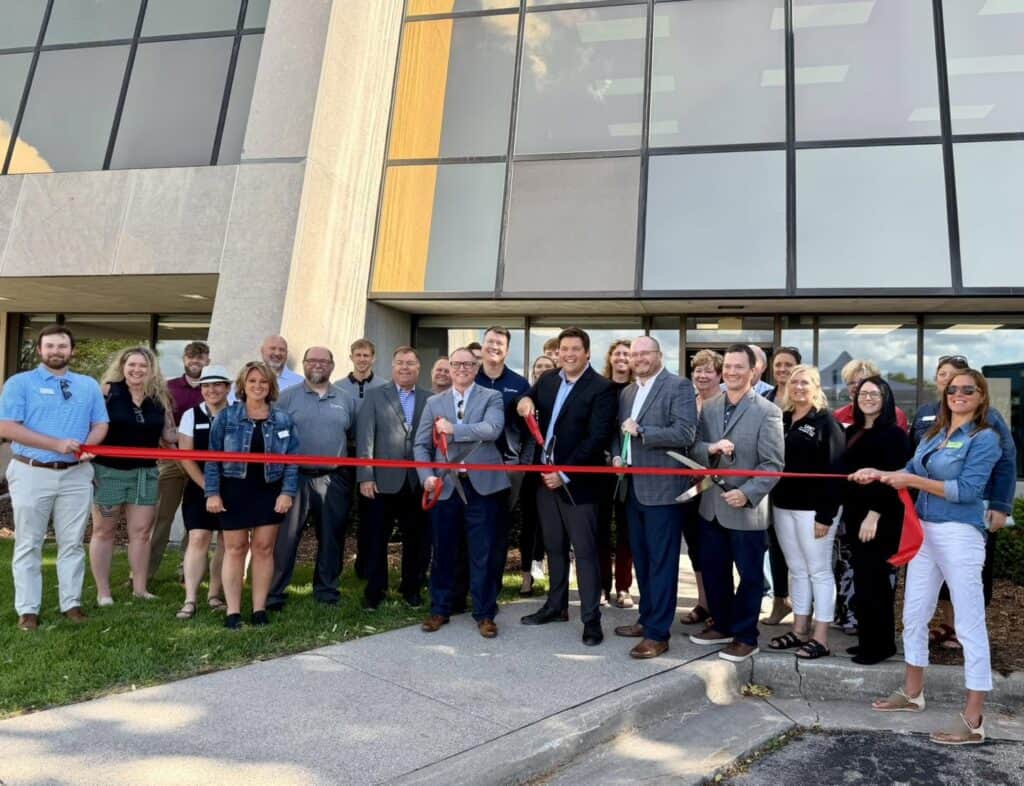
For the Green Bay chamber, Fritts said that means focusing on the growth of the region’s economy.
“It means enhancing our local talent and retaining it here in Northeast Wisconsin,” she said. “Ultimately, this work makes an impact on our community. It involves engaging our businesses, developing leaders and advocating for the business community.”
Fritts said talent attraction is one of the clearest examples of chambers expanding beyond their traditional role of promoting member businesses.
The Greater Green Bay Chamber, she said, has responded with a program designed to help members showcase the region to potential hires.
“If a company has an executive or another employee they’re looking to recruit to Green Bay, we have a concierge program for them,” she said. “We take them on a curated tour of Greater Green Bay, showcasing the wonderful attributes we have here based on what their interests are. We also have a networking program where people new to the area connect with each other.”
Fritts said another newer focus for the Green Bay chamber is extending its leadership development work beyond the organization and into the broader community.
The effort, she said, reflects the chamber’s broader role in connecting employers, educators and community leaders around long-term workforce needs.
“We have an advisory board called Partners in Education,” she said. “It’s made up of all the superintendents of our regional school systems, as well as the chancellor of the University of Wisconsin-Green Bay.”
Fritts said the initiative focuses on strengthening K-12 and higher education while aligning education efforts with the needs of local industries.
She said it also focuses on building a talent pipeline to ensure local employers have access to qualified workers and giving employers a voice in shaping education programs around future workforce needs.
Fritts said these initiatives are vital as the workforce is facing a record number of retirements.
“We’re building leaders from eighth grade all the way up through to career-level individuals,” she said.
Constantly adapting
For all the changes underway, the traditional chamber functions aren’t disappearing.
Bartoszek, Fritts, Harvey and Vander Bloomen agree that ribbon cuttings, networking “After-Hours” events and other chamber traditions remain important, with member promotion continuing to be a cornerstone of their missions.
What is changing, they said, is what happens beyond those traditions.
Bartoszek, Fritts, Harvey and Vander Bloomen said chambers must be prepared to adapt quickly to changing needs – whether driven by AI, workforce challenges or a torn-up Main Street – to help their members stay competitive.
In a crowded market, the answer may not be doing more, but doing what each Chamber can do best – whether that means serving a specific community, supporting small businesses, developing talent or tackling issues that cross municipal boundaries.