 Green Bay Austin Straubel takes flight with top honors
 Black & White: An ode to the sustainable black and white Holstein cow


December 1, 2025
STURGEON BAY – Iraqi veteran Jacob VandenPlas said farming became an unexpected path to healing after returning home with a traumatic brain injury and PTSD.
“After two years of that, the impact it made on my life – eating healthy food, getting my hands in the ground – was transformational,” he said. “At that point, I said, ‘We need to tell others how to do this.’”
Though VandenPlas said farming wasn’t originally in his plans, an environmental science class at the University of Wisconsin-Green Bay and a chance drive past a farm for sale opened the door to a calling he hadn’t anticipated.
“I was working at the shipyard and going to college full-time, and the first assignment [in that class] was to watch a documentary about King Corn on Netflix and then go two weeks without eating or drinking anything with corn in it,” he said. “Talk about an eye-opener – it made me think that maybe we should make our own food.”
On his daily commute, VandenPlas said he noticed a sign for a 40-acre property with greenhouses.
Within weeks, he said he and his wife purchased the farm, and by March 2018, they fired up the greenhouses and began planting.
“The thought process moved from not only bettering things for my family but also for my military brothers and sisters,” he said.
VandenPlas said the farm, originally established as an LLC, transitioned into a nonprofit in 2020 to serve veterans through DC Farm for Vets.
“DC Farm for Vets helps veterans break ground right in their own backyards, learn cultivation and grow enough food to feed themselves and their families,” he said. “It’s ‘where the rubber meets the road.’”

Focused on veterans of all military branches, as well as emergency medical services personnel (including EMTs, police officers and firefighters), VandenPlas said DC Farm for Vets operates as a rehabilitation farm offering education and hands-on programs in areas such as regenerative agriculture, sustainable chemical-free production, livestock care and managing cherry and apple orchards.
He said the common denominator throughout is “growing while healing.”
VandenPlas said he is focusing on tapping into the earth as a healer and lifesaver.
“The nonprofit organization’s work takes many forms, from harvesting nights to the establishment of Victory Gardens, to the camaraderie that happens when participants combine forces on farm projects such as installing fencing,” he said. “There are also plenty of other touchpoints in between.”
Growing while healing
Victory Gardens, VandenPlas said, also connect veterans to a longtime American tradition, as they were introduced during World War I.
“Traditional Victory Gardens are 50 feet by 25 feet and enough space to grow three-fourths of the food a family of five needed for a year,” he said. “Being able to bring that back is pretty cool.”
VandenPlas said creating and maintaining Victory Gardens provides veterans with a practical, structured and peaceful daily routine within a defined space – one that not only yields healthy food but also delivers a range of additional benefits.
“You don’t need a lot of space to grow a good chunk of food… taking something from a seed, taking care of it and processing it into food – the process itself is therapeutic,” he said.
But VandenPlas said a full garden isn’t a necessity to reap the benefits if a veteran or EMS professional has limited space.
He said even planting and tending to perennials – such as thyme or chives – as part of a property’s landscaping or container pot gardening can deliver benefits as well.
“We just need you to grow something, taking it from a seed to food,” he said. “Just the process itself is therapeutic. I don’t care if it’s planter pots on a patio or a full-on farm, we want veterans growing stuff.”
Beyond engaging in agriculture, VandenPlas said through planting, tending, harvesting and maintaining the farm, veterans and EMS professionals build a sense of community that supports them in managing PTSD, traumatic brain injuries, depression and other challenges.
Moreover, he said, access to healthy food can play a meaningful role in the healing process.
“I can promise you, and through experience, if you’re at least eating good food and feeling good, you’re in a much better place to [manage] mental health,” he said. “Having said that, the yield far surpasses that impact.”
With veteran suicide rates estimated at 17.5 per day, according to the U.S. Department of Veterans Affairs – and some sources suggesting even higher numbers – VandenPlas said the farm’s programs operate with a data-driven sense of urgency.
“When including single-vehicle accidents, drownings and overdoses, it’s really 40-44 veterans a day,” he said.
Food and fellowship
Most Thursday nights during the growing season, VandenPlas said veterans gather at the farm for harvest parties – where activities range from building sheep fencing and processing vegetables to taking classes on making maple syrup or learning to cook.
He said the itinerary for these parties is very flexible, reflective of the fact that farming is “done by the seat of your pants and has to work around Mother Nature.”
“Some weeks, two people show up for activities – other weeks, it’s 50,” he said. “The scene is always the same – the farm’s circular driveway is the center point, featuring maple trees [and] lights strung overhead in the farm’s front yard where people gather.”
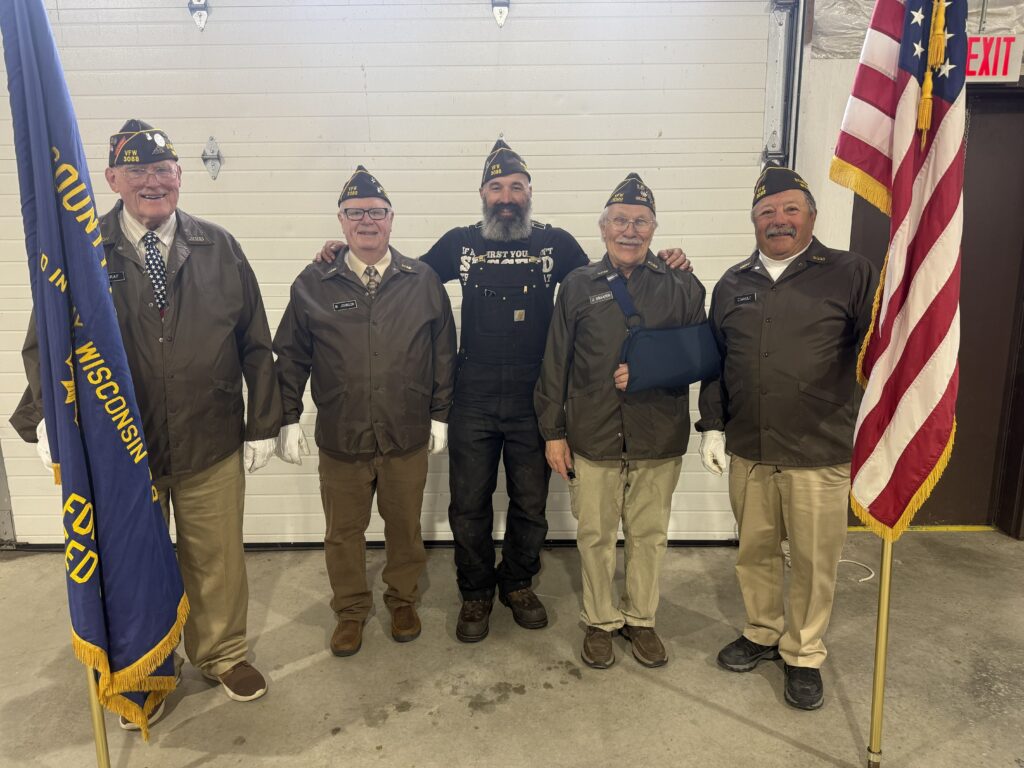
VandenPlas said a propane stove in the yard serves as a makeshift classroom, where veterans and Veterans of Foreign Wars (VFW) guests learn to harvest zucchini, make zoodles and prepare purple pesto.
“Hands-on learning, including cooking, is essential,” he said. “I promise you, just because you give infantrymen a stack of veggies doesn’t mean we know what to do with them.”
VandenPlas said veterans, EMS and a host of community members cook together, talk, laugh, share stories and struggles.
He said it’s no coincidence that this is also where trust and camaraderie grow.
“When I look across the crowd, every single one of them has at least one memory with me… that’s what keeps me going,” he said.
During the past four years, VandenPlas said he estimates the farm has touched the lives of thousands of veterans, be it through gardens, classes, volunteering, school transplant fundraisers or simple conversations that begin with – “I want to learn to grow something.”
Challenges, changes in production
Though the farm continues to grow, VandenPlas said the approach has changed, with vegetable production scaled down to prioritize food for veterans’ own consumption.
“There is growing for personal consumption, and then there is growing to pay the bills,” he said. “The [latter] takes a lot of specialty equipment, and when you don’t have it, using your back isn’t economical.”
VandenPlas said the farm produced only about 2% of its usual vegetable yield this year, a reduction largely due to the loss of three of their four greenhouses in the spring.
However, despite this setback, he said they successfully carried out their full transplant program with three private schools, providing students with seedlings they could purchase at wholesale and then sell for fundraisers.
“We start everything by seed and hear feedback on how well the plants are doing and how tremendous it is,” he said. “It’s a tremendous and big program with the schools.”
Victory Gardens and a new buzz
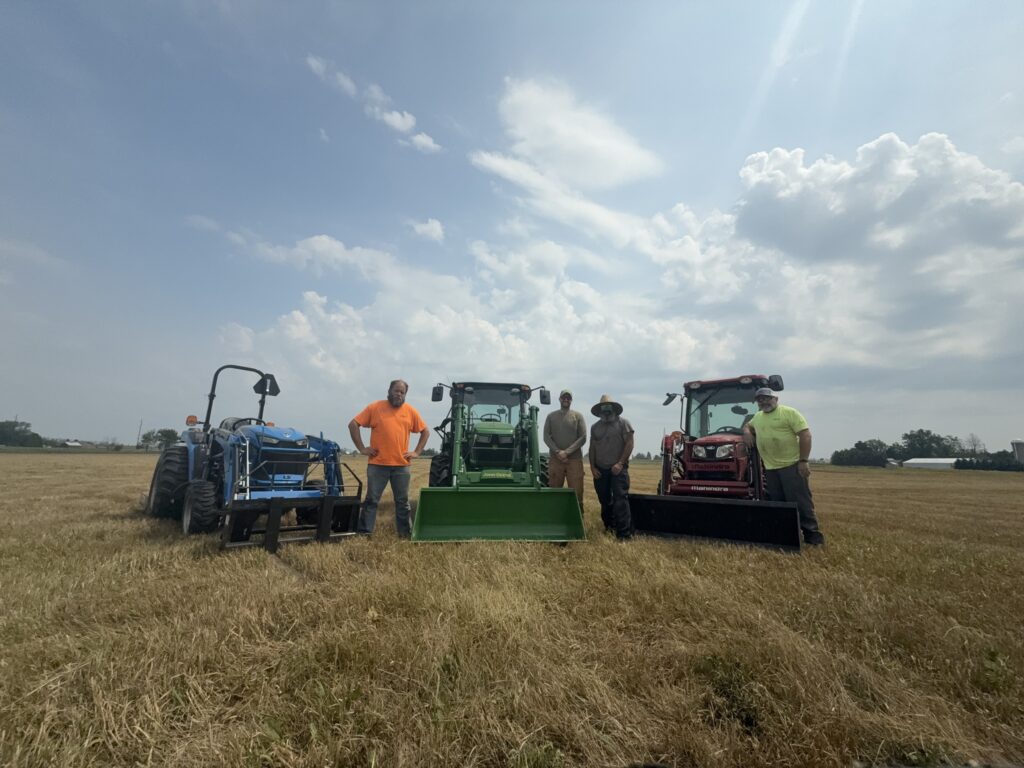
VandenPlas said much of this year’s energy was focused on establishing Victory Gardens for five veterans on their own properties, setting up a few veterans with beehives and involving participants in projects on the northern 20 acres of the farm to practice regenerative agriculture and rotational livestock grazing.
The project required fencing, which he said he was able to fund through a USDA grant that releases money in phases.
However, due to the government shutdown, USDA inspectors were unavailable to approve the next phase, preventing him from moving the project forward.
“It’s definitely throwing extra challenges we didn’t foresee, especially because I still have a deadline to finish by the end of the year, and that’s a lot of fence,” he said. “I need them to inspect the posts to make sure they’re buried deep enough and per specs before we hang the wire on them.”
VandenPlas said though the grant should fund 90% of the project, much of the labor was generously provided by veterans and EMS volunteers.
“That positioned the work as an ideal ‘team building’ exercise on the land for the veterans and others willing to pitch in,” he said. “We’re adjusting the best that we can.”
Using Mother Nature to heal Mother Nature
VandenPlas said the fencing that veterans will help build will enable rotational grazing of sheep and other livestock, benefiting the land and supporting sustainable agricultural practices.
As a farmer attuned to the land, he said he recognizes a very important difference between carbon emissions in the sky versus the carbon in the ground.
“Rotational grazing of livestock positively impacts the environment,” he said. “While carbon in the sky is arguably bad, carbon in the ground is the building block of life. The question is really not how to get to net carbon zero but how do we get the carbon in the sky back into the ground?”
VandenPlas said that can be done through changing agricultural practices.
“We can do that through rotational grazing of livestock,” he said. “It’s a matter of running sheep, cows and chickens at the right time by understanding how native grasses grow. It’s really using Mother Nature to help improve Mother Nature.”
VandenPlas said physical, hands-on farming activities like these resonate with program participants.
“Veterans help with everything – preparing for rotational grazing, brush-hogging, soil prep and planting cover crops,” he said. “Collectively, they create a sense of purpose.”
VandenPlas said military life instills a deep sense of purpose and duty, which can vanish almost immediately once service ends.
“You’re experiencing a tremendous amount of loss, but if you’re growing something, that brings that sense of service back,” he said.
Fueling the mission
VandenPlas said DC Farm for Vets operates with full nonprofit transparency – noting that equipment, seeds, irrigation systems and greenhouse operations are expensive.
While donations have long supported a large portion of the budget, VandenPlas said their importance increased this year due to reduced vegetable production and fewer sales to schools and other buyers.
“Fundraising takes a lot of work, and growing produce takes a lot of work,” he said.
This year, VandenPlas said the farm launched a contributorship/sponsorship program, encouraging supporters to donate monthly – sometimes as little as $10 a month – to keep the greenhouses running.
“Quite literally, those kept the lights on for the greenhouse,” he said.
VandenPlas said the farm’s growth has brought additional challenges, including the need for him to continue working full-time to offset inflation and the reduced greenhouse output after losing three of four greenhouses in a spring storm.
Still, he said, programs – including bee hives for veterans, school transplant fundraisers at wholesale cost, partnerships, outreach at community festivals and more – continue.
“DC Farm for Vets will undergo a rebrand in the coming year, centering Victory Gardens as the core program,” he said. “The organization plans to fundraise to provide veterans, firefighters, EMS and first responders with full garden setups, including tillers, irrigation, tools and ergonomic equipment they need to be successful.”
VandenPlas said civilians will also be able to purchase their own package to help support the program.
Leaving no one behind
VandenPlas said for him, tackling challenges is driven by the need to serve the veterans who show up week after week and the transformational power of working the land.
“We took an oath [in the military] to never leave a man/woman behind,” he said, “and when we transition to veteran life, it’s harder to be part of that community. But here, we’re able to sit together and talk about life and struggles and do it together.”
When the Door County Farm for Vets community gathers – whether for a chili cookoff or a Thursday harvest night – VandenPlas said something deeper than food preparation is happening, but rather a mission in action.
“It’s important for us to keep getting folks together and keep community-building, as that’s where the magic is made,” he said.
VandenPlas said he believes every human is inherently wired to serve something bigger than themselves.
“Watching [the veterans] grow is one of the greatest honors of my entire life,” he said.