We’ve really come a long way’ with cataract surgery techniques
 80 years, five generations, two families, same recipes


July 27, 2026
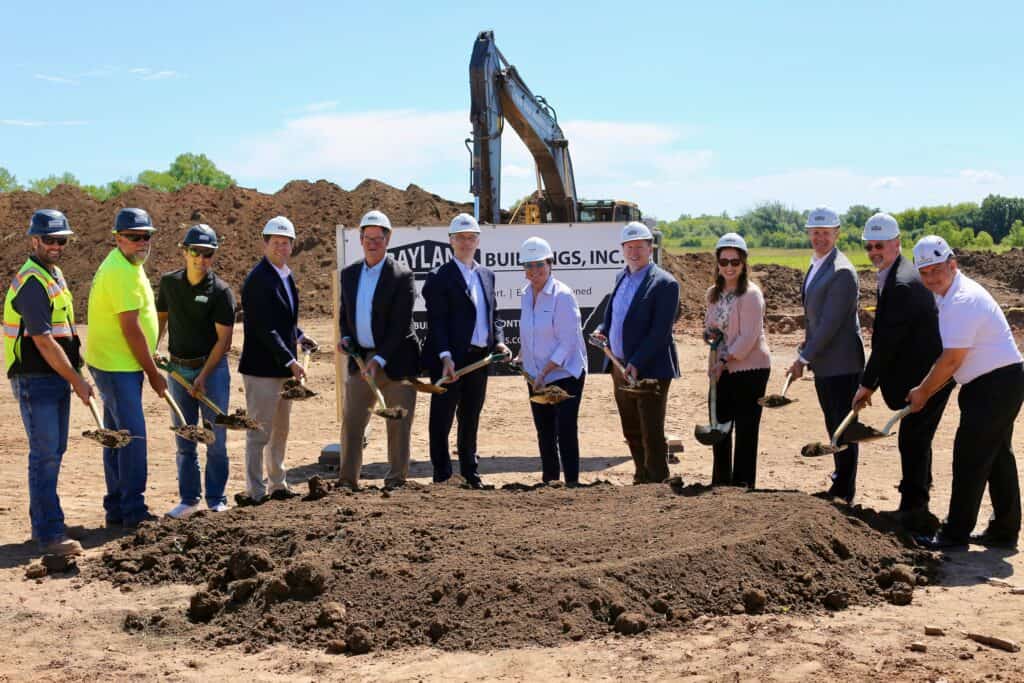
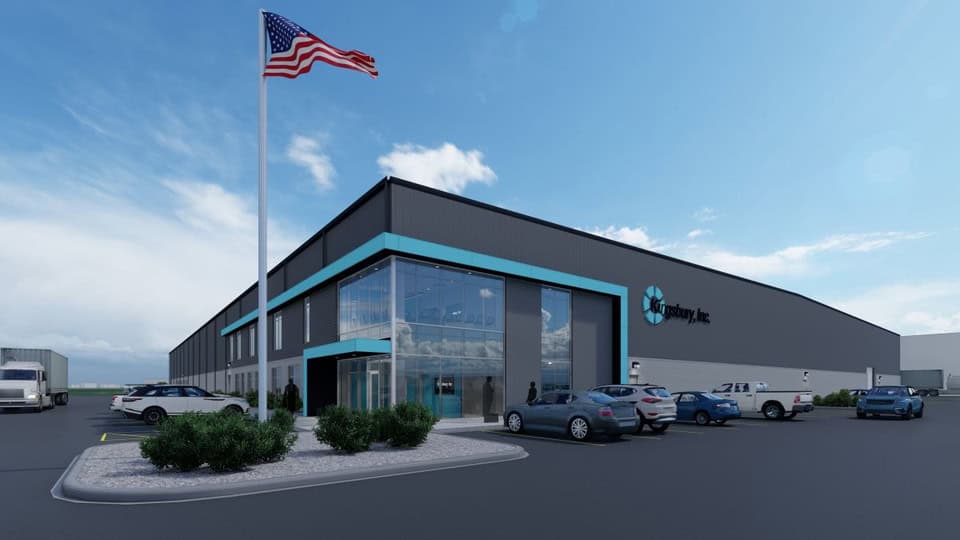
OSHKOSH – Kingsbury, a Philadelphia-based manufacturer of fluid film thrust and journal bearing technology, has broken ground on a new 120,000-square-foot facility in Oshkosh.
President and CEO Michael Brawley called the project a “historic and exciting milestone” for the company and its employees.
“This investment strengthens our ability to serve customers, improves how we operate and positions us for long-term growth,” he said.
Brawley said the new facility will consolidate two existing Kingsbury locations into one “state-of-the-art plant.”
“It will enhance Kingsbury’s manufacturing capabilities, support future business expansion and create new employment opportunities in the Fox Valley region,” he said.
Kingsbury’s Chief Financial Officer Sean O’Hara said the new facility – which is expected to be complete in spring 2027 – represents a major change in how the company operates.
“The facility is designed with upgraded technology infrastructure, enhanced material flow, expanded manufacturing space, improved safety features and sustainability initiatives that support our long-term vision,” he said. “What excites me most is the facility is being designed around the way we want to work in the future, not the limitations of our current footprint.”
O’Hara said the project is the result of more than two years of planning and collaboration across the organization.
Kingsbury’s Board of Directors and family ownership, she said, approved the land purchase and construction budget in September 2025, followed by approval of the land acquisition from the Oshkosh Common Council that October.

O’Hara said the facility will include a two-story office space, capacity for three 15-ton bridge cranes, a climate-controlled quality control lab, a Babbitt room and plans to pursue LEED accreditation.
LEED certification – developed by the U.S. Green Building Council – he said, provides a framework for designing, constructing, operating and maintaining environmentally responsible buildings and communities.
The 120,000-square-foot facility will be built on a 34-acre site at 3390 Compass Way in the Southwest Industrial Park, approximately five miles from Kingsbury’s existing Oshkosh operations.
With manufacturing operations in Wisconsin and Germany serving customers around the globe, O’Hara said the project will consolidate multiple facilities – including a separate warehouse – into a single, more efficient and modern manufacturing footprint.
“The layout will bring people, processes and resources together more effectively, creating better collaboration between manufacturing, engineering, operations and support functions,” he said. “The facility is designed to provide room to grow while creating a more efficient and connected work environment.”
A local building connection
O’Hara said the project will rely on local expertise during construction – selecting Hobart-based Bayland Buildings as the general contractor, which has experience in manufacturing facilities, food processing plants, agricultural buildings and other commercial projects.
Mitch Beilfuss, Bayland’s project executive for the Kingsbury facility, said the project is on the larger end of the company’s work in both scope and size.
“It’s not on the top end or the far extreme of our capabilities – we’ve definitely done projects this big before – but a building like this doesn’t come along every year for an individual sales guy here at Bayland,” he said. “It’s definitely a very nice project for us.”
Beilfuss said Bayland’s existing relationship with Kingsbury helped pave the way for the project.
“Kingsbury was one of Bayland’s first clients taking this unique approach,” he said. “Initially, we did an office remodel for them, some maintenance stuff, put in some overhead doors, some concrete patching, etc. Later on, we completed another office remodel for them.”
That prior relationship, Beilfuss said, built trust between the two companies and allowed Bayland to provide significant input throughout the project’s planning and design process.
As the companies discussed potential options, Beilfuss said Kingsbury initially explored expanding its current Oshkosh building with an addition.
“The [original] site was nice and flat and wide open, but for stormwater, it was really difficult to work with,” he said. “Also, trying to tie into the existing building – it’s an older building – would have been very expensive from a fire code standpoint. Structurally, the way the building was built and the way the roof was laid out, it would have also been really hard to tie in and achieve the roof heights we needed for the cranes and everything.”
After considering several options – including an addition to its existing facility – Beilfuss said he proposed a new solution to Kingsbury: building a new facility.
“For what Kingsbury was looking for, what they would stick [financially] into an addition to its existing building and what they could possibly receive for its two existing buildings, I told them it probably made more sense to build a brand-new facility,” he said. “After discussions, we obviously landed on a new building.”
Beilfuss said Bayland spent the first month after the late-June groundbreaking preparing the site – moving topsoil, digging foundations and grading the property ahead of the broader construction effort.
“After getting the foundations in the ground, we’ll erect and enclose the building before winter, and then over the winter months, that’s when a lot of the interior stuff will take place,” he said. “By this time next year, the parking lot will be paved, and Kingsbury can start moving its equipment in.”
Beilfuss said supply chain issues have improved since the COVID-19 pandemic but remain a challenge for the industry.
“With projects like this, they take some time to get up and running, so if you have a lead time issue for safety-related items, finishes or electrical, generally it’s not a big deal,” he said. “Because it takes so long to get the foundations into the ground and the building enclosed, most of those time-sensitive issues are chewed up. It’s not like we’re sitting here twiddling our thumbs waiting for a building to go up.”
A storied history
According to Kingsbury’s website (kingsbury.com), the company’s history dates back to 1912, when Dr. Albert Kingsbury’s tilting pad thrust bearing proved its reliability in a Pennsylvania hydroelectric plant.
The same unit, the website notes, operated for more than a century before undergoing its first major overhaul.
Kingsbury’s tilting pad thrust bearings, per the site, are designed to support axial loads with stability and control across a variety of rotating equipment.
Within this family, two design choices drive most selection decisions: how the load is shared across the pads and how the bearing is lubricated.
Per the website, Kingsbury’s bearings are used in hydro, gas and steam turbines, compressors, pumps, refineries, marine systems and other turbomachinery applications where reliability and efficiency are critical.
Its bearings, it further states, help enable higher operating speeds, reduce friction losses, lower operating temperatures and extend equipment life.
The company’s bearings enable higher operating speeds, reduce friction losses, lower temperatures and extend equipment life, all while improving overall machine efficiency.