 Westby Creamery announces $14 million expansion
 First-time entrepreneurs ‘baking’ it in the Northwoods


August 24, 2026
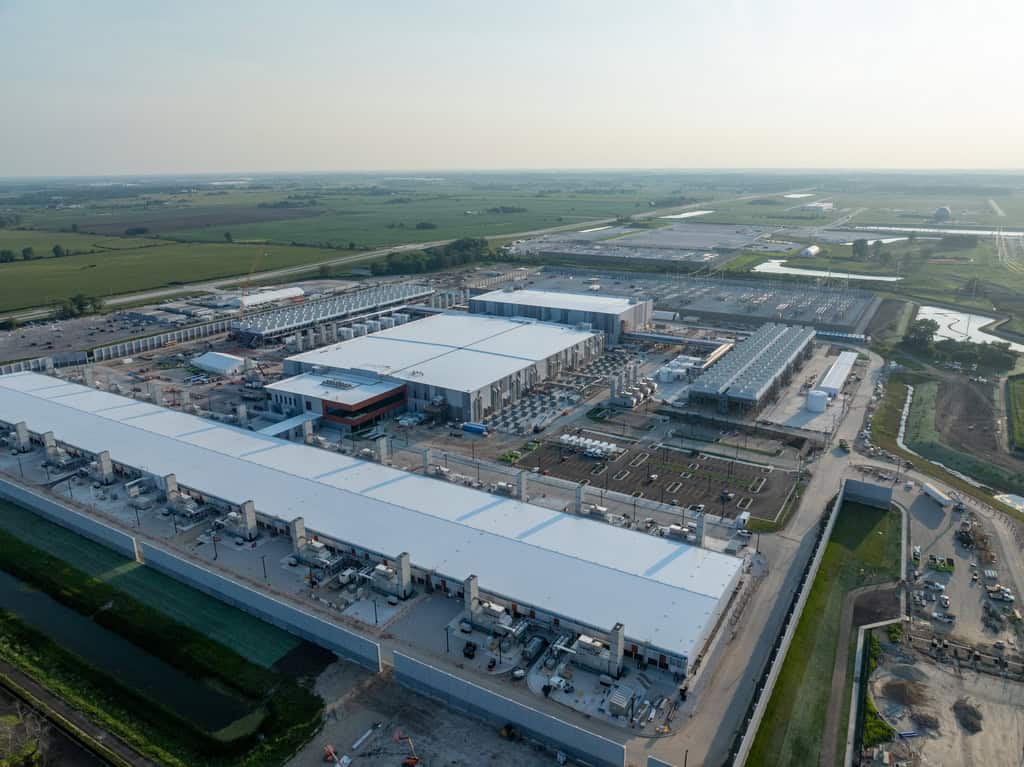
SHEBOYGAN – As construction continues in Port Washington on Vantage Data Centers’ 672-acre Stargate site for tech companies OpenAI and Oracle, the concept of a hyperscale facility has become much more real for residents of neighboring communities like Sheboygan.
Alderman Alanza Grawien said Sheboygan has not yet been approached by any companies looking to build a data center in the city, but that didn’t stop her from sponsoring a moratorium on building large data centers.
Grawien said her initiative was inspired by similar efforts in Dane County earlier this year, which ultimately led to that county’s board approving an 18-month pause on hyperscale data center development.
Sheboygan’s own moratorium – 12 months, with an option (pending further approval) to add an additional six months – was unanimously passed by the city’s Common Council in mid-July.
“There was a lot of work back and forth with our city attorney to get it crafted the way we wanted it, so it was kind of a labor of love that way…,” Grawien said. “It took us a little longer than I would have liked, because it feels like data centers are moving very fast in Wisconsin.”
At the time of this publication, in addition to Port Washington, other hyperscale data centers under construction in Wisconsin are in Mount Pleasant (for Microsoft, completed in June, but with expansions planned) and Beaver Dam (for Meta).
Statewide, in addition to Sheboygan and Dane County, municipalities that have approved data center moratoria include:
- City of Superior
- La Crosse County
- Village of Ashwaubenon
- Village of Bellevue
- Village of Greenville
- Village of Wrightstown – which also recently voted ‘no’ on a referendum asking whether the village should support or help build municipal infrastructure for large-scale data center developments in or near the community
- Town of Cassville
Amid something of a high-tech “gold rush” – with data center companies valuing Wisconsin’s temperatures and fresh water to prevent equipment and servers from overheating – Grawien said the moratorium aims to prevent Sheboygan from being blindsided by development efforts.

“I just wanted to make sure we, as a community, had time to take a look at our zoning codes,” she said, citing the complexity the “new animal” such hyperscale facilities can present, particularly for smaller municipalities.
The concept of a data center isn’t altogether new.
Forbes defines it as a “purpose-built building that runs large numbers of computers reliably, securely and around the clock,” supporting everything from data storage and network traffic to video streaming, payment processing, cybersecurity and AI development.
It’s the massive size and corresponding energy and resource usage of the hyperscale data center boom – Grawien as well as Sheboygan City Administrator Casey Bradley said – that has created novel challenges for municipalities’ zoning codes.
The vastness of the facilities, the two civil servants said, can also create anxiety among constituents.
Grawien said the magnitude of the in-progress Port Washington facility – located less than 30 miles from Sheboygan’s city limits – “made a lot of us very nervous.”
“That visual is something that drives a lot of fears here,” Bradley said.
Vantage Data Centers did not respond to The Business News’ request for comment regarding neighboring communities’ reactions.
However, in its facility datasheet, the company describes the Lighthouse Data Center – which it’s being called – as a “landmark campus designed to meet unprecedented demand.”
“That whole project doesn’t seem like it would mesh well in our community,” Grawien said. “If something like that would be knocking at our door, really, our only protection for anything like that is within our zoning code.”
Bradley said the moratorium provides a valid pause for Sheboygan to shore up its zoning code ahead of any data center propositions – “this is purely a proactive approach” – as well as foster better communication on the topic.
“We wanted to kind of reset, step back and have an opportunity to have a public discussion about what are real concerns as opposed to concerns that are based on misinformation,” he said.
Bradley and Grawien said state statutes prevent municipalities from outright banning data centers, as they are legal business entities.
Despite her taking the lead on the issue, Grawien said the goal of the moratorium is not to temporarily exclude tech companies from Sheboygan.
“This moratorium is about all of us learning together,” she said. “If a data center should come our way, what would it look and feel like? Or, what kind of things are within our control to make sure it’s a good neighbor?”
Grawien and Bradley both said they have a grasp on the potential economic growth and communal benefits data centers can offer, but with any potential business development in Sheboygan, the broader costs must be considered.
Patti Habeck – CEO of New North, the nonprofit economic development corporation spanning 18 Wisconsin counties, including Sheboygan County – said although her organization is focused on growth, data center development is a uniquely complex concept that, for some communities, merits moratoria.
“The hard conversations should be happening about this, and moratoria are one of those tools to allow the time for those conversations to happen,” she said.
Habeck and Grawien each said it’s important for the duration of a moratorium to be spent productively, rather than simply treating it as a stalling technique.
“You have to be careful with things like moratoria – that they are used correctly and they’re not just used to say ‘we’re shutting something down,’” Habeck said. “That’s why the time-bound piece of it is really important.”
What will happen during the moratorium?
Serving her first term as alder, having been elected last November, Grawien said she would describe herself as a “normal,” “working-class factory worker.”
She said the moratorium gives her, the Common Council and Sheboygan residents time to learn more about data centers without the pressure of considering an active proposal.
“I don’t want us to sit on our hands for this year,” she said. “I want us to be doing our due diligence to learn about how all these things work, together.”
Bradley said learning more now will better prepare Sheboygan to evaluate any future proposals and determine whether a partnership with a hyperscale data center developer makes sense.
Starting next month, Grawien and Bradley said the city is hosting a public series of relevant speakers:
- Sept. 9: Becky Valcq, president of Alliant Energy’s Wisconsin electric company and vice president of energy delivery
- Sept. 16: Ben Green, assistant professor at the University of Michigan, faculty associate at Harvard University and co-author of the “What Happens When Data Centers Come to Town?” report
- Sept. 23: Bridget Williams, policy coordinator for energy systems at the Great Plains Institute
- Sept. 30: Greg Johnson, senior municipal advisor at Ehlers
Bradley said the city is hopeful that bringing in a range of experts will help to address citizens’ many concerns.
“Our goal here is to have a [zoning code] policy within that 12 months, but the first step in that is public education,” he said.
Bradley said having a council willing to engage in the process helps ease tensions by giving residents a greater opportunity to feel heard.
Rather than limiting public comment to a few minutes with no opportunity for dialogue, he said the education-focused approach allows for more meaningful discussion.
“I know that oftentimes frustrates folks, so this gives a whole different opportunity and venue to have those discussions,” he said.
After soliciting community feedback as part of the speaker series, Grawien and Bradley said the next step would be at least one committee of the whole meeting, possibly more.
“The plan is to bring in legal counsel that specializes in zoning code and address concerns that came in through this process, and then have that broader discussion of how we can address these in code to make sure we’re getting as much in there as we possibly can,” Bradley said.
Grawien said Sheboygan is currently completing a full update on its comprehensive plan and rewriting its zoning code – neither she nor Bradley ventured to estimate a timeline for these processes.
Both said they’re eager for residents to articulate their data center concerns.
“I hope our residents can really engage with this and take something away that maybe changes their understanding or shapes more of their concerns and things we can actively address,” Bradley said.
Sheboygan’s approach aims to differ from that of Janesville, which he said “did an RFP specifically for a data center.”
“They went so far as publicly soliciting for it, and then it sounds like they’ve had extreme backlash now, way after the fact, not at the point of starting the process,” he said.
Bradley said a municipality can follow all procedures legally, but “you don’t know the concern is as high as it is until you start actually hearing from folks.”
Potential impacts of a data center
With Sheboygan’s significant manufacturing base, Bradley said the city already has zoning policies that apply to large companies and facilities.
“We have a lot of high-energy users with manufacturing – we have high-water users,” he said. “It just comes back to having a policy and practice in place so they’re good stewards and good partners in the community, and making sure they’re a good fit overall for the community.”
Grawien said environmental impacts, energy usage/rates, property values and lifestyle disruptions are among the concerns attached to hyperscale data centers.
“Utility rates, the infrastructure costs for the utility upgrades and then, what if… there’s some type of crash in the whole AI world, and they decide to abandon an AI data center or a large-scale data center in our area after they start it?” she said.
The responsibility of ensuring such protections for Sheboygan, Grawien said, would largely belong to Bradley, who she considers “a solid city administrator.”
“If there’s a closure, how is it addressed?” Bradley said. “Is it turning the land back to what it was prior? [It’s a necessary consideration] with big industrial projects. I’ve done this with a wind farm before, where we had a provision that they’re required to remove the windmills at the end of their project, period.”
Grawien, Bradley and Habeck all agreed that Wisconsin’s natural resources are worth protecting.
Bradley said the gravest concerns about data centers’ water usage have been “relatively dispelled.”
“But there are still concerns about PCBs and things like that, and it sounds like noise is another really big one,” he said.
Health concerns would potentially extend beyond Sheboygan, Bradley said, as the city’s water utility also provides water for Sheboygan Falls and Kohler.
“Resource consumption and noise complaints and all those things have merit,” Habeck said. “Those things have to be considered, and then the long-term effects, [studying] what it does to the water resources and that kind of thing.”
Still, Habeck, Bradley and Grawien all said they appreciate the topic’s complexity, as data centers can also bring numerous upsides to a community.
In the short term, all three said the construction of a data center would provide several years of valuable work for local construction teams.
Though Grawien and Habeck said the centers don’t create a great many jobs once operational, Habeck said those created are high-quality opportunities.
She also said regional businesses benefit from data centers regardless of where they’re built.
“We’re building pieces and parts of the supply chain and sending it out, so a lot of people, right now in Northeast Wisconsin, are being supported by the fact that the Northeast Wisconsin supply chain or manufacturing is providing components to data centers,” she said.
The reason most cited in support of data centers, Habeck and Grawien said, is the additional tax revenue, which, for one, could greatly benefit area schools.
“[The tech companies] are investing in the schools not just through the tax base but also through grants or through philanthropy, corporate responsibility,” Habeck said. “That’s what we’re seeing across the country, is there’s a lot of give-back.”
When communities are entering partnerships regarding data centers, she said municipalities can negotiate, for example, to have a new school built.
“There’s a lot of opportunity to make community needs known, and potentially have that partnership with that new business with the data center to support that,” she said.
Data centers can also serve to strengthen rural health care, Habeck said, as remote technology is increasingly leveraged in light of healthcare workforce shortages.
With Wisconsin’s overall “tight” labor market, she said data centers can help communities expand their tax bases with less reliance upon worker recruitment, nor needing to account for significant additional housing.
She said New North recognizes there’s “a give and a get” with data center agreements, and considers them “worth exploring.”
“Economic development is not just about the money – it’s about the things that make a community supportive of business and business growth,” she said.
Bradley and Grawien similarly said Sheboygan’s goal, as always, is to achieve satisfactory balance regarding any sort of business development.
Bradley said the Upper Midwest’s NIMBY – “not in my backyard” – mindset can be “a huge thing, and that’s understandable.”
He, along with Grawien and Habeck, said the conversations about data centers are all operating under the assumption that the facilities need to exist somewhere.
“We can talk about the day, maybe five or 10 years from now, when they’re smaller or there’s new technology that doesn’t require that much space or all these other things,” Habeck said. “The fact is, we don’t know that to be true today, and it’s not true today, and all we have is what we have in front of us to wrestle with.”
Still, she said New North is perceptive to what communities can experience or anticipate due to the speed and scope of tech companies’ data center pursuits.
“Pushback is what happens when you build all these as fast as we’re building them, and that’s what’s causing the angst, is not just where do we put them, but how many?” she said.
With the alternative option of building American data centers on foreign soil, Grawien said from a cybersecurity perspective, data centers represent an “industry that could possibly be good for our country.”
Still, she said she especially hopes to learn more about what’s at stake environmentally and fiscally.
“We have a beautiful state, and I’d hate to see us muck that up just to chase the almighty dollar,” she said.
What’s next?
As Sheboygan devotes its data center moratorium to education and zoning code, Bradley said industry in the city is “growing tremendously.”
Though this growth is unrelated to data centers, he said it has induced a degree of sensitivity among residents, which has seemingly exacerbated the preemptive pushback on data centers.
“What we’re seeing with data centers, I’ve never seen one single industry across the United States create the fear that this has,” he said.
Bradley and Grawien said they have encountered little support for data center development in Sheboygan, making the need for a thoughtful policy all the more important.
“I don’t know that that’s completely possible, but [we’re] at least establishing that council and staff are committed to implementing a plan,” Bradley said, “and if one of these projects were to come in, ensuring that it causes the least amount of harm we can possibly put in place as a protection.”
He said the City of Sheboygan remains “kind of in the middle on the policy side,” working to address the community’s concerns while still complying with its obligations and state law.
Grawien said “it’s a little scary” pursuing policy with so much at stake, but they don’t have a blueprint they can borrow from other municipalities that have gone the moratorium route.
“I think we’re all going to have to learn from each other…,” she said. “I kind of hope we’re not the ones who are on the hook for blazing the trail. It’d be nice if there were a blueprint we could follow, but if we’ve got to, we will spearhead it.”
Bradley said whatever may work for Sheboygan will likely not transfer to another unique community.
“I don’t know that there’s a best practice/way of doing this,” he said. “We’re all trying to explore and figure out what our community wants, where their comfort level is, and honestly, I think that answer is going to be community by community.”
Any given business development proposal, Bradley said, is likewise unique.
“You could get some [business] that meets all the policy requirements, and [city] staff just feels they wouldn’t be a good fit in the community because of their business model or how they intend to operate, and that’s something [where] we just decide not to partner with them,” he said.
Habeck, Grawien and Bradley all said data center moratoria are effective tools for ensuring municipalities intentionally pursue growth via education and transparency.
Grawien said Sheboygan residents should find assurance in the pause, as it gives the Common Council time to “make sure we do things the right way.”
“We don’t know the answers to all these things, so all we can do is make sure that at least we’re mitigating any potential harm the industry might possibly inflict on our communities, and go from there,” she said.
As the city prepares for the upcoming speaker series, Bradley said he’s “really excited to see how this works out.”
When it comes to balancing economic development, environmental concerns and land use, the city administrator said he’ll look to the elected officials’ leadership to lead the way.
“That’s what they’re elected to do, is to make those representative decisions, and we as staff execute that,” he said. “Whatever ultimately comes out of this policy discussion and [when] a policy is adopted, then that’s the lens staff will use in that decision-making process of evaluating [any proposals].”
Visit sheboyganwi.gov for more information on the upcoming speaker series.