 Sara’s Artisan Gelato set to franchise
 Emily Jacobson: ‘I’m meant to do this forever’


January 26, 2026
Many parents understand the struggle of taking photos of kids.
Trying to get them to stay still and look at the camera can be nearly impossible.
Now put yourself in the shoes of a medical provider who is asking a child to sit still for 45 minutes while they perform an X-ray or scan.
A task that can be difficult for all involved, and scary for the kid.
But what if there were a better way?
What if medical imaging could be faster, safer and less frightening for children?
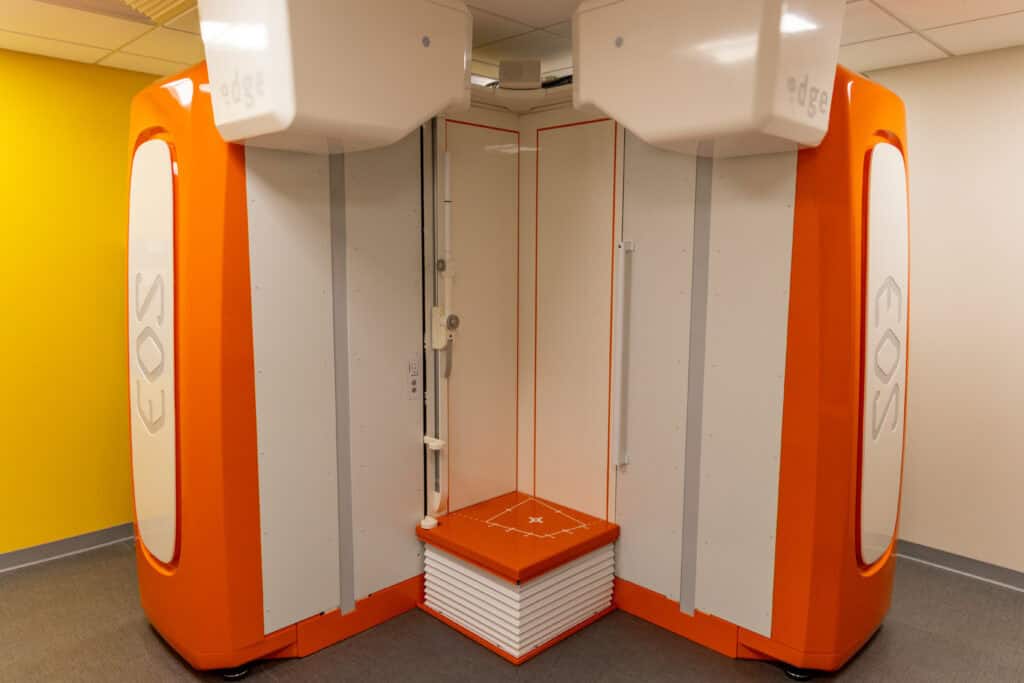
Thanks to innovative technology, like the EOS scanner and Kitten Scanner – now available at the Emplify Health by Bellin Children & Adolescent Center – children in Northeast Wisconsin and surrounding areas can take that “what if” and make it a reality.
A new standard in pediatric imaging
The EOS scanner is proving to be a game-changer for pediatric care.

Traditional spine, leg length discrepancy or hip concerns can be overwhelming, even for adults.
Patients must remain perfectly still for up to 45 minutes in a room with unknown machinery, while anxiety builds and discomfort can grow.
For young patients who are dealing with conditions like scoliosis or recovering from orthopedic injuries, this can make things even harder.
Parents and providers must carefully balance the need for accurate imaging with the young patients’ physical and mental well-being.
The EOS scanner takes a whole new approach to this process.
In just about two minutes, providers can capture 2D and 3D images while the patient stands naturally.
The scanner uses cutting-edge technology to reduce radiation by roughly 85% compared to traditional X-rays.
For children who may need many scans to monitor their health, less radiation gives parents peace of mind that their child is getting a correct diagnosis with little risk.
Emplify Health by Bellin’s EOS scanner is available to all children, even if they’re not Emplify Health patients.
Health systems can work with Emplify Health before or after surgery to make sure children are getting the best care.
Making care fun and interactive
Another new piece of technology is helping ease the emotional and psychological challenges kids may have when receiving imaging: the Kitten Scanner.
Having an MRI or CT scan can be terrifying for children.
Strange noises, confined spaces and the requirement to stay completely still can trigger anxiety even in the calmest and cooperative kids.
This unease can lead to incomplete scans or procedures that must be repeated – which aren’t ideal outcomes.
The Kitten Scanner flips the script by taking those fears and worries and transforming them into fun, understanding and empowerment.
This interactive preparation tool puts children in control, allowing them to assume the role of a healthcare provider ahead of their actual scan.
Through a guided program, patients perform scans on friendly characters, such as Robert the Robot or Ollie the Elephant.
It’s a fun, interactive way to learn what the machine does, what the sounds and colors mean, why they need to stay still and what the experience will feel like.
During their own scan, kids see and hear from the same characters they met during the trial run.
This reminds them what to do and helps them relax.
Though it’s interactive and fun, the Kitten Scanner also offers an opportunity for education and empowerment.
When children know what is happening and what they are asked to do during the procedure, it can make it more enjoyable and stress-free.
Changing the future of pediatric care
Both the EOS and Kitten scanners represent fundamental shifts in how pediatric care is approached.
Patient experience can play a major role in diagnostic accuracy, as well as the likelihood they will continue their care.
Developing a more pleasant and engaging experience for younger patients creates better relationships and opinions of receiving care while still getting accurate and thorough diagnostics.
Children who have positive, empowering healthcare experiences are more likely to become adults who actively engage with their health.
They’re also less likely to avoid medical appointments and procedures due to fear or anxiety.
This type of technology encourages early relationships with healthcare providers as sources of well-being and support, rather than discomfort.
These pieces of technology also help reduce stress and anxiety for parents.
Instead of seeing their child struggle or be scared, they see a kid who feels more in control and comfortable.
Providers can get better results more quickly, while still positively connecting with their patients.
Patient experience-focused technology can make health care less frightening and more accessible for patients of all ages.
Providing better images, safer procedures and a better experience creates a foundation for healthier communities – today, and for generations to come.