 Airport firefighting demand brings Costa Rican crews to FVTC
 90 years of signs that stand the test of time


May 18, 2026
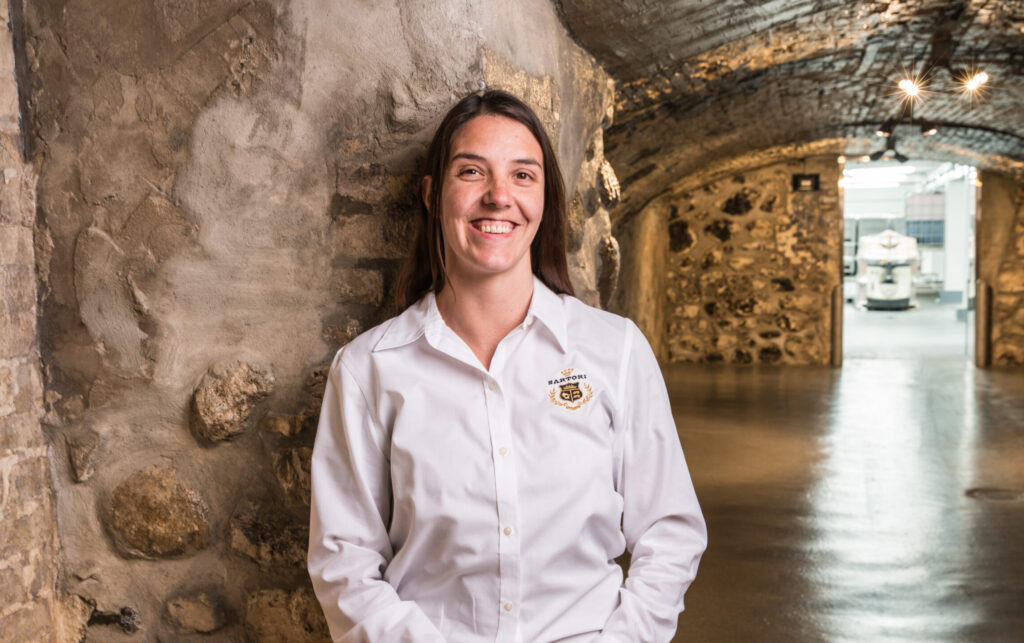
PLYMOUTH – When Erin Radtke hopped on her bike as a kid, she said she had a favorite shortcut.
She said it involved skirting around the Sartori cheese plant located just three houses away from her Antigo home.
“I used to joke about riding my bike over the milk hauler scale, and the intake operators would yell at me, ‘Kid, get off the scale. What are you doing?’” she said. “I never dreamed growing up that I would work here.”
And not only has she built a career at Sartori, but Radtke said she has advanced to the title of Master Cheesemaker – an honor only four other women in Wisconsin have earned.
Last month, Radtke was among six individuals officially recognized at a ceremony at the Baird Center in Milwaukee.
“This honor is a huge accomplishment for me, personally and professionally,” she said. “It takes a long time to become a Master Cheesemaker. Understanding and learning all the nuances of cheesemaking is incredibly rewarding, and I couldn’t be more excited to continue my craft at Sartori.”
Radtke said her mom worked at the plant when she was growing up, and she began working there in 2004 at the age of 21, when it was called Antigo Cheese, an employee-owned cooperative.
The plant per – sartoricheese.com – was originally opened by Kraft Foods in the early 1920s, with Plymouth-based Sartori acquiring the company in 2006.
Little by little

Since starting with the company more than two decades ago, Radtke said she has worked in several different departments, eventually working her way up to leadership positions.
She said this wide range of exposure to the cheesemaking process helped spark her interest in becoming a Master Cheesemaker.
“The interest and the passion really came once I started working in the plant and moving into different roles within the plant,” she said. “I started on the production floor working in packaging and converting, and then I moved into hooping the cheese [separating the curd from the whey].”
Radtke said once she started working at the vats where the cheese is produced, she immediately knew “this is what I want to do.”
She said she decided to earn her cheesemaker’s license roughly eight years after starting at the plant.
“I took a course down at the Center for Dairy Research, which was a cheesemaker fundamentals course to gain more insights into the science behind the art of the cheesemaking process,” she said.
Once licensed as a cheesemaker, Radtke said a person needs to wait 10 years before they can apply for the Master Cheesemaker program, which takes three years to complete.
She said it’s a highly competitive application process with only 10 applicants accepted each year.
Prior to acceptance into the program, Radtke said participants must make the cheeses they plan to “master in” for at least five years, while taking accompanying courses at the Center for Dairy Research.
After an applicant is accepted, she said the review process begins.
“During those three years, you’re submitting samples of your cheeses that you are mastering for evaluation – multiple samples,” she said. “They are looking for compositional consistency in your cheese. They’re looking for consistent flavor in your cheese. Then after the third year, if all of your samples pass, you’re eligible for the exam.”
Another example of the Master Cheesemaker program’s rigorous standards, Radtke said, is its on-site evaluations.
“They walk through your plant with you, just to make sure you have enough knowledge of how everything works in your plant and to witness your cheese-making abilities with some troubleshooting and problem-solving exercises,” she said.
Radtke said the program’s final step is the exam itself – which is anything but easy.
She said it typically takes about 40 hours to complete, and participants have one month to return it after it is sent.
“It was just a huge relief once I was finished with it,” she said. “And even though it takes a few weeks to get that exam back, they don’t tell you right away if you passed. They grade it and bring it before the Master Cheesemaker Board, and the board goes through your full body of work.”
‘A great fit’
Radtke said she was drawn to this career because it is anchored by a need for continuous learning.
“I love trying to understand as much as possible about the processes, the equipment and cheesemaking in general,” she said. “I want to know the whys behind things. It’s been a great fit for me, because every day is different.”
Radtke said she has earned mastery in two cheeses: Parmesan and Sartori’s BellaVitano line, which the company describes as a “creamy, nutty… love-child of Parmesan and Gouda.”
“I love making Parmesan cheese,” she said. “That’s the first cheese I started making. I think I understand it the most. The BellaVitano cheeses are special to me because we have been making them for a long time, and I think they are really good cheeses.”
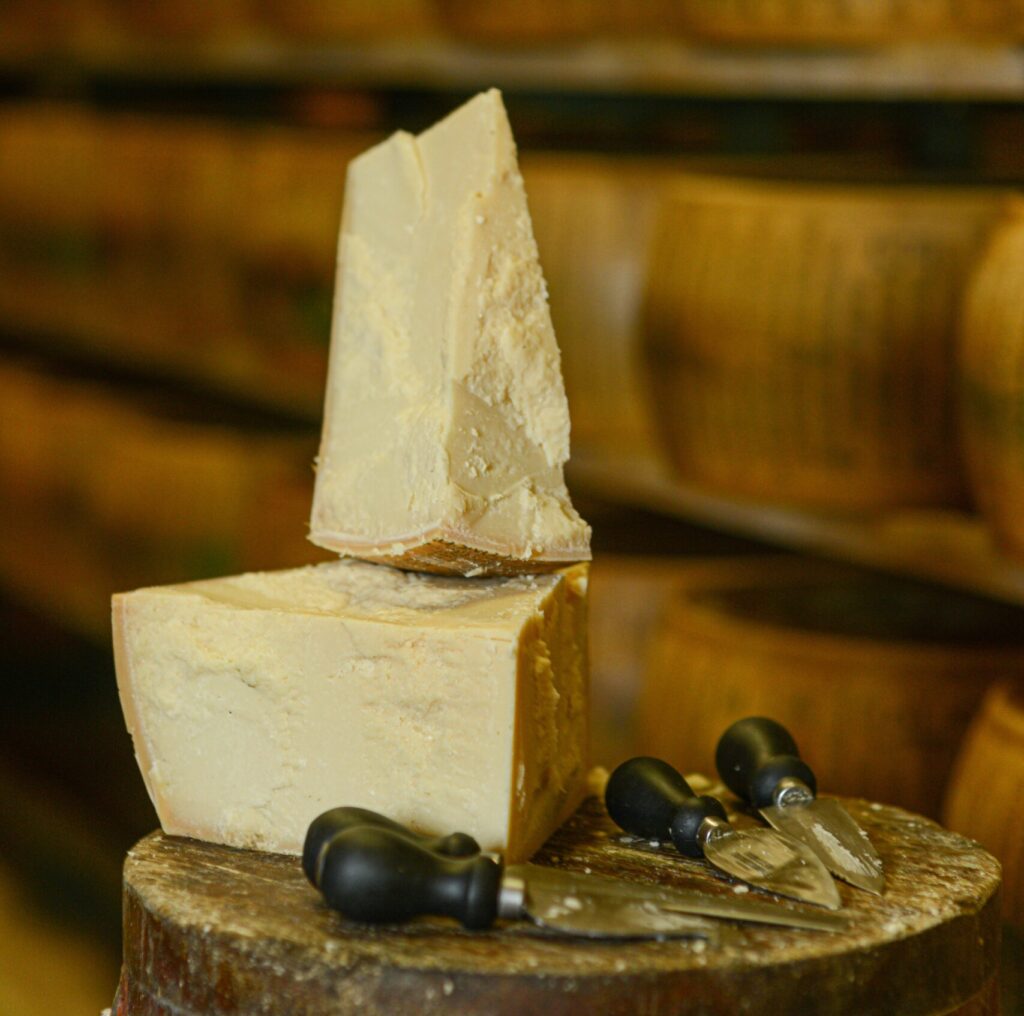
Radtke said cheesemaking, like any culinary pursuit, is both an art and a science – an intersection she finds fascinating, as it requires an appreciation for both perspectives.
“You can’t really have one without the other,” she said. “You have to have some understanding of science and art because everything doesn’t have an explanation in cheesemaking, even though you would like it to.”
Radtke said cheesemaking requires close attention to milk quality, along with ongoing monitoring of pH levels and fat and protein content.
“Everything is focused on timing: When you add rennet to set the cheese and when you’re cutting,” she said. “You’re making sure you’re doing all of those things at the right time.”
Personal, professional support
Rightfully so, Radtke said her four children are “super proud” of her, having watched her start on this journey 13 years ago.
She said she credits their encouragement, guidance from mentors and support from her employer, Sartori for helping her make it to the finish line.
“You have to have a mentor when you apply for the Master Cheesemaker program, and that person puts the medal on you on stage during the ceremony,” she said. “My mentor was Mike Matucheski, a Master Cheesemaker I worked with for a number of years at Sartori.”
Matucheski, Radtke said, was the developer behind the BellaVitano line.
CEO Bert Sartori said Radtke’s accomplishment is a point of pride for the company, calling it a “well-deserved achievement.”
“Cheesemaking has always been at the heart of our company, and Erin embodies the passion, craftsmanship and dedication that continue to move that tradition forward today,” he said.
Radtke said she has also leaned on Pam Hodgson – the second woman in Wisconsin to become a Master Cheesemaker and a colleague at Sartori – as well as Marieke Penterman, the fourth woman to earn the title and founder of Marieke Gouda, as key resources.
“Pam has been very impactful,” she said. “We have worked together quite a bit. I met Marieke at conferences and other events and have visited her farm and her cheesemaking facility.”
Radtke said she is excited to start her new role at Sartori, where she aims to serve as a “resource for team members in our plant.”
“[I’m looking forward to] becoming a mentor to others who are looking to possibly join the program,” she said.