 The Northwoods gets its first boxing training facility
 World Snowshoe Championships coming to Ariens Nordic Center in Brillion


June 8, 2026
PORTAGE COUNTY – A new mental health services business is opening its doors on the outskirts of Stevens Point later this month.
Founder Katie Tryba said its debut is the fulfillment of her lifelong dream to provide compassionate, evidence-based care that helps people heal from previous trauma.
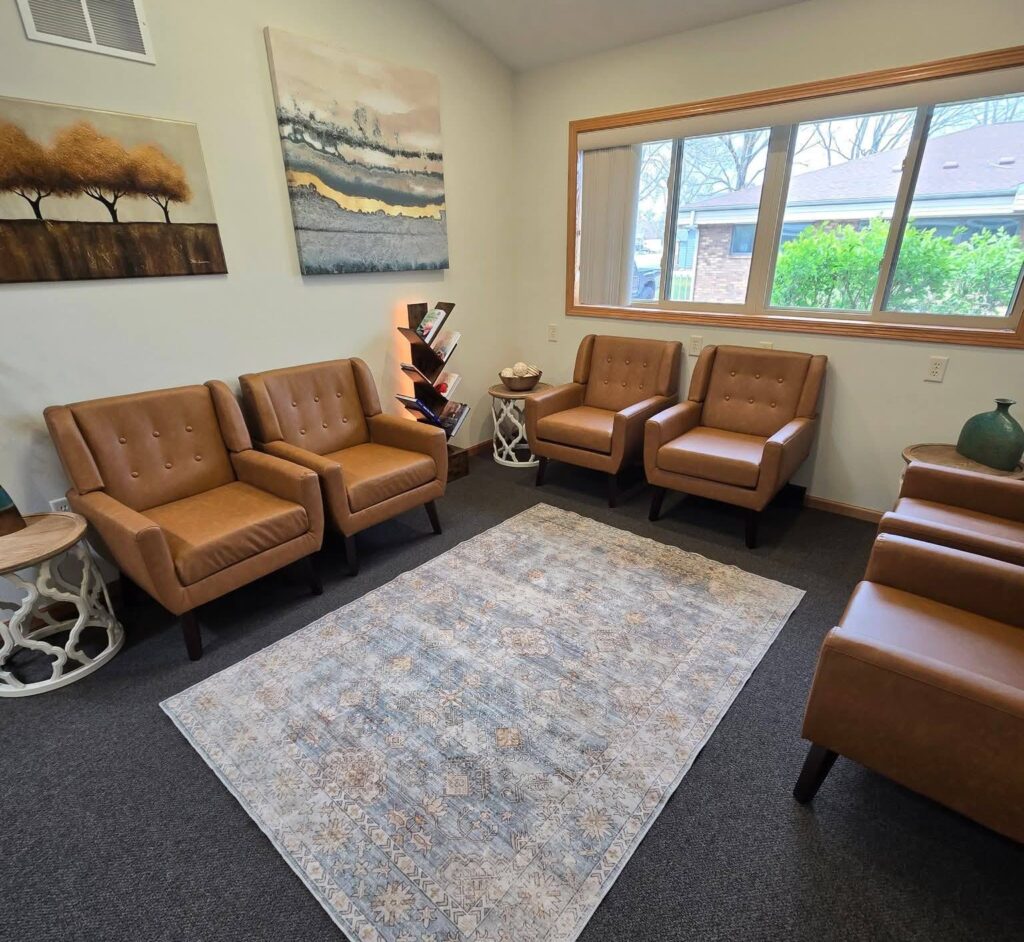
Tryba, a licensed professional counselor and clinical director at KT Counseling Center (3120 Post Road, Suite 1), said the practice’s six-office setup occupies the full top floor of a building on Post Road near Plover.
She said the center also staffs two psychiatric mental health nurse practitioners and another licensed counselor.
Tryba said the milestone represents a promise she made to her younger self many years ago.
“Having navigated a traumatic childhood, I wanted to give hope to others someday,” she said. “I had a counselor who I always felt saved my life. So, I chose this career path, which is actually more of a dream I’ve had ever since high school, to be that lifeline for others.”
Guiding principles
Before entering the counseling field, Tryba said she spent several years as a special education teacher – an experience that “served as a really good foundation” for her later career path.
“It was like real-life training,” she said. “It taught me how to diagnose really well and how to look at behavior through a more compassionate lens.”

As a special education teacher, Tryba said she learned the importance of individualizing care that is appropriate to each individual’s needs
Another aspect of her special education background that helped accelerate her success in private counseling, she said, was its strong emphasis on communication.
“I loved teaching communication and social skills and coaching parents,” she said. “I would get to go into their home once a month and show them how to work through a tantrum or practice going to a grocery store if they had a child with autism. I would help them normalize their life.”
Tryba said the teacher in her never really went away – adding that she credits much of her collaborative approach to lessons learned from educators she worked alongside early in her career.
“That’s how I feel about counseling, too,” she said. “That collaborative culture is what I want to create at KT Counseling.”
Working with special education students, Tryba said, ultimately inspired her to return to her original dream of becoming a counselor.
After returning to school to complete her master’s degree, she said she began her counseling career at New Directions in Stevens Point.
Tryba said the private practice, which had a 25-year history in the community, unfortunately closed shortly after being acquired.
“That was heartbreaking, because it had an incredible reputation,” she said. “The original owners didn’t know what was going to happen, so it wasn’t their fault. None of us saw it coming.”
Following the closure of New Directions, Tryba said she moved to the Point Counseling Center, where she worked for a while before deciding to venture out on her own.
“When I launched my new business, I found myself grounding everything in one core principle: kindness,” she said. “It sounds simple, but genuine kindness is vastly underrated in today’s world, both professionally and personally.”
Tryba said she makes a point to practice kindness in every interaction, noting that she has seen firsthand how contagious it can be.
“One small act of understanding or compassion can change someone’s entire trajectory for the day, and they carry that forward to the next person they meet,” she said.
Building connection
Following the isolation brought on by the COVID-19 pandemic, Tryba said she began noticing a common theme among her female clients.
Many, she said, were struggling with making and maintaining friendships.
“Whether they were navigating life post-college, newly relocated or working entirely online, they felt disconnected,” she said. “To [help] bridge that gap, a like-minded friend and I created a free Facebook group designed to be a safe, welcoming space for women of all ages and backgrounds to connect.”
In just a few short years, Tryba said what started as a small circle of 100 women has blossomed into a thriving community of more than 2,400 members.
That same commitment to collaboration, she said, has carried into her practice.
Tryba said she was able to quickly assemble a team of mental health professionals who wanted to step away from a more corporate model of care, which she said can sometimes overlook patients’ needs and complicate the care process.
“I feel very fortunate that they have put their trust in me and want to join me at a smaller practice,” she said. “Also, by having two psychiatric nurse practitioners here, we can operate as more of a one-stop shop for counseling and medication management instead of having patients have to make multiple stops to different practices.”
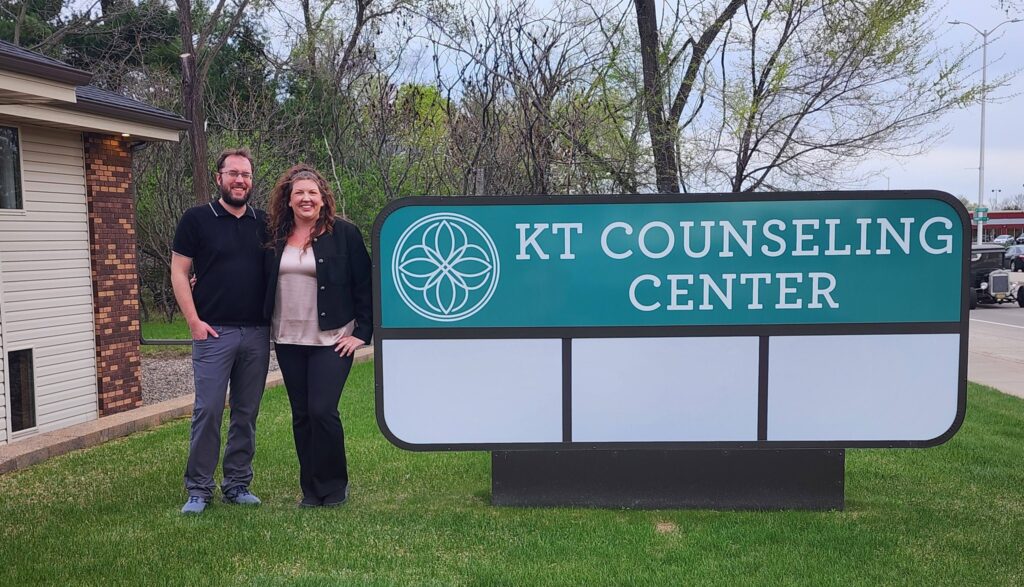
Tryba said KT Counseling Center’s team structure allows for a more comprehensive approach to patient care.
“If you want psychiatric counseling and medication, we can do that, or one or the other,” she said. “We have better access to collaboration than a doctor and a counselor located in two separate places who will probably never talk.”
Tryba said KT Counseling Center offers a combination of in-person therapy and flexible telehealth psychiatric services, with plans to expand its team of mental health clinicians.
She said her goal is to foster a culture that helps prevent burnout through a focus on caring, accountability and professional development.
In regard to her approach to counseling, Tryba said she describes it as guidance- and insight-driven.
“I’m just shining a light on habits or behaviors from another perspective that’s not biased to help them see what they need to see to figure out their story and where they need to go,” she said.
Multiple tools
Patients at KT Counseling Center, Tryba said, receive care in an unhurried environment.
In addition to traditional talk therapy, Tryba said she specializes in a method known as Brainspotting.
“Talk therapy is what you consider top down – [it] is about your conscious mind and logic, which is like the top of our brain,” she said. “We’re making sense of our feelings and trying to calm our nervous system.”
Brainspotting, Tryba said, is the opposite: bottom up.
“We’re using your body’s physical reactions and nervous system – which is the bottom – and starting there instead to release the stress, which then can help clear your unconscious mind, which is the ‘up,’” she said. “I think it’s good to have both tools.”
Tryba said she became trained and certified in Brainspotting after seeing how effectively it helped clients with severe trauma.
The therapy, she said, is based on research suggesting that memories are stored in the visual field and that specific eye positions can help access deeply held emotions that traditional talk therapy may not always reach.
“Talk therapy is fantastic,” she said. “It’s good for organizing the files in the front: our thoughts, behaviors and feelings – things we can easily access and put into words. But often, trauma that causes chronic anxiety or deep emotional pain is the file jammed in the back of the cabinet where our words can’t easily reach.”
A “Brainspot,” according to its founder, Dr. David Grand, is a physiological subsystem that stores emotional experiences in memory form.
In practice, Tryba said the therapist tracks a patient’s field of vision to locate a specific eye position that triggers a heightened emotional or physical response linked to trauma.
While the patient focuses on that point, Tryba said bilateral sounds are used to help the brain process the experience and release stored tension, supporting healing.
“Because your vision is directly wired into those deep emotional and physical processing centers, your field of vision can act like a map to those stuck files,” she said. “By helping you find a specific eye position for a ‘Brainspot,’ we can bypass the thinking part of your brain and give your body a direct pathway to process and release those trapped emotions.”
For some people, Tryba said trauma becomes normalized over time, leaving them in a constant state of overload that can strain both mental and physical health.
Tryba said her work in Brainspotting led her to speak at a regional sexual assault conference, where she discussed the therapy’s potential benefits for trauma recovery.
“That presentation turned out to be a pivotal moment,” she said. “Afterward, I was approached about turning my talk into a book chapter.”
As fate would have it, Tryba said she connected with a fellow speaker at the event who owned a publishing company based in Arizona.
“What started as a single speaking engagement evolved into a wonderful, ongoing relationship,” she said. “Ove the years, I’ve had the privilege of contributing pieces to a few of their published books, taking my local advocacy to a much wider audience.”
Learning never stops
Though the launch of KT Counseling required “countless sleepless nights,” Tryba said seeing the center come to life has made it worthwhile.
“I can honestly say I could not have done this without my husband,” she said. “His constant, unwavering support and the endless hours of work he poured into this dream alongside me are the foundation that made this entire counseling center possible.”
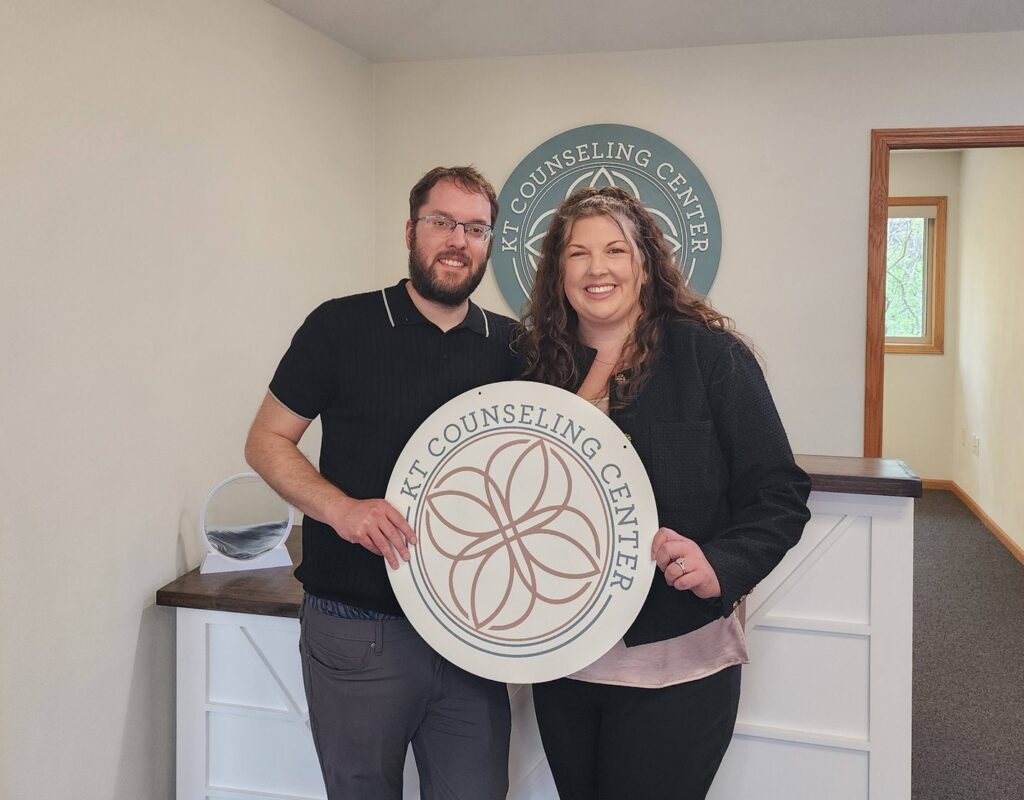
Well acquainted with how the brain works, Tryba said she credits neural plasticity, along with her strong work ethic, for helping make her dream of owning a private practice a reality.
“We are capable of always learning new stuff no matter how old we are,” she said. “I’m going to be a forever learner. The teacher side of me will make sure of that. Also, counseling is not one-sided. I’m always learning from clients, too, as I hope to keep growing to improve how I work with them.”
\For more on KT Counseling Center, head to ktcounselingcenter.com or find the practice on Facebook.