More than just clean laundry, it’s a way of giving back
 Feeding customers in a relaxed setting for 90 years



May 11, 2026
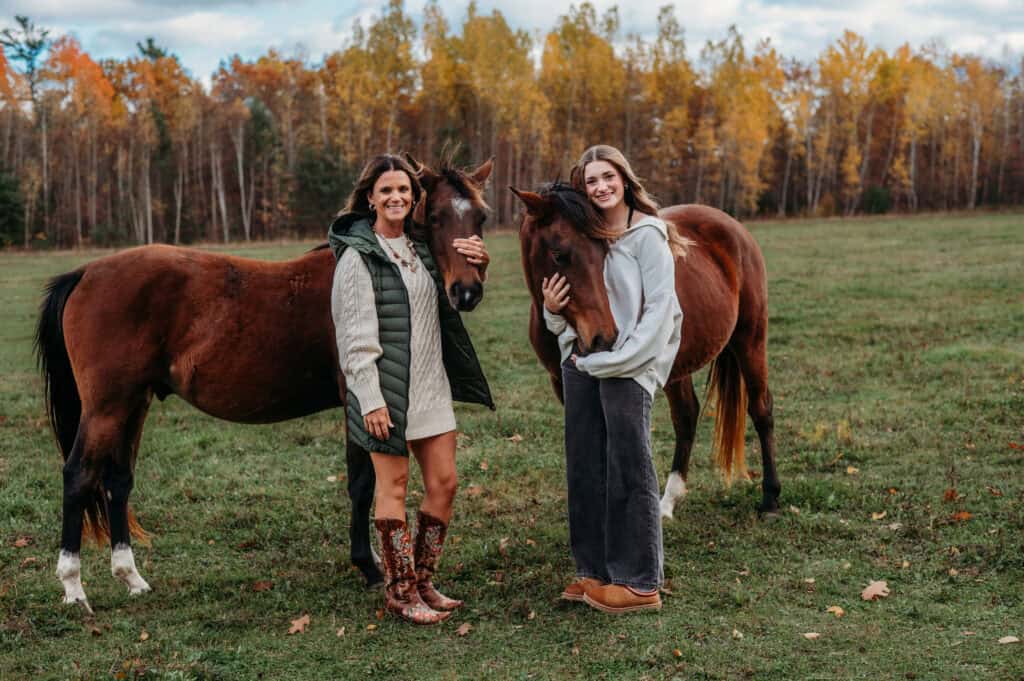
RHINELANDER – After selling her Minocqua-based dance studio of 15 years, Island City Dance, Lindsay Wiczek said she’s taking a different trail – opting for equines over chorus lines.
Growing up riding, showing and jumping horses, Wiczek said despite her passion for dance, she’d always dreamt of having a property where she could care for her own stock.
“My parents have [operated] a girls’ summer camp near the Phelps/Eagle River area, so every summer we used to have horses there,” she said. “I rode during the school year, did shows, jumping and all of that pretty much my whole life.”
Wiczek said even her decision to attend Colorado State University was driven by her interest in joining the school’s equestrian program.
Roughly three years ago – prior to selling her dance studio – Wiczek said she and her husband purchased a property in Rhinelander where she could fulfill that lifelong dream.
“I had children, the studio and family, and then it kind of came back full circle when my daughter was interested in riding,” she said. “Then, once she got into it, I kind of got back in the saddle myself, and it’s gone on from there. The dream came back around to having [horses] right out my back door.”
Now, Wiczek said she is in the early stages of establishing Wild Hearts Farm Horse & Donkey Rescue on her farm to combat a problem close to her heart, the equine-slaughter pipeline.
Though it might not feel like “it’s an at-home, local-type problem,” she said many communities face situations where horses, donkeys and other animals can no longer be cared for and they end up in the pipeline and exported out of the country.
“I got really invested and heartbroken over the whole thing, because I’m a horse girl and always have been,” she said.

Having rescued nine horses already – one of which has already been adopted – Wiczek said she’s currently self-funding Wild Hearts Farm until she decides how to officially structure and fund the organization.
“I spend a lot of my own time and money just caring for them,” she said. “The easy part, honestly, has been pulling them out of [bad] situations, but the upkeep, the maintenance and the cost involved is crazy.”
However, if the community’s initial support suggests anything, Wiczek said she sees room for the rescue in Rhinelander.
“It’s been friends, family [and] community members seeing the cause, believing in what I see and want to do and helping me,” she said. “It’s been received really well, more so than I ever would have expected.”
Finding the perfect home
Wiczek said it wasn’t until recently that she decided to sell her dance studio – first to focus more on her family, and now to dedicate time to her new cause – making it more challenging to establish a formal structure for Wild Hearts Farm.
In the meantime, she said she has hosted both on- and off-site events, appeared publicly with her rescue animals and accepted individual donations to support the effort.
“All of it basically helps me maintain [my property] and take care of them,” she said. “I found out one was pregnant, so we have a baby due in… the fall sometime. We don’t even know a very good due date, but that’s exciting. And one of my little miniature ponies has a lot of work to be done on her feet because she was neglected.”
Whether she establishes a for-profit business or a 501(c)3 nonprofit, Wiczek said Wild Hearts Farm’s primary function will be to rescue horses and donkeys, heal them and, when possible, find their new forever homes.
“Some of them aren’t ready to go, and others are older, so they’ll probably stay with me until they aren’t around anymore,” she said. “It’s just very dependent on finding the very perfect home.”
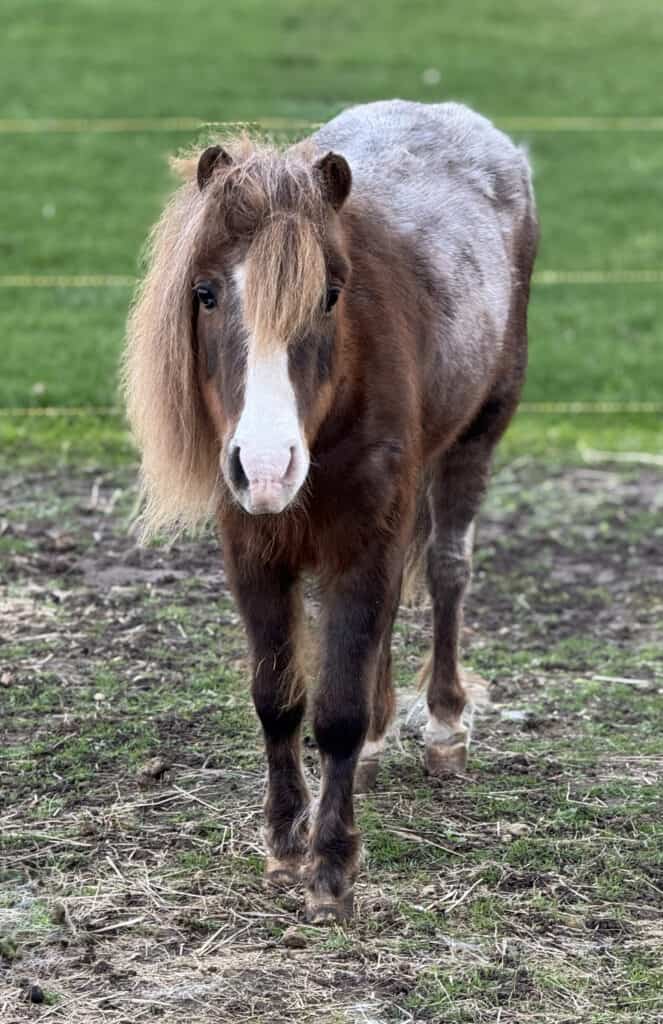
With one successful adoption under her belt – a young girl, Maci, adopting a rescue pony named Daisy – Wiczek said she’s hopeful to continue finding perfect homes when, and only when, she feels the animals are ready.
“I have only rehomed one because I grow attached, and I don’t trust people, as you would imagine,” she said. “They become your babies – you’re worried about them, you’re crying for them, you have to put one down – there are so many elements to it that are really hard, so the whole idea of adopting them out is the goal.”
‘A terrible pipeline’
Despite most rescues coming from stock auctions in Iowa, Wiczek said there’s a need for equine rehoming options locally, as well.
“I had an older couple reach out that needed somewhere for their pony to go,” she said. “So, I ended up taking that pony, and it lived at my house until it did not live anymore… There’s always an option besides sending them off.”
Having been involved in the equine show world, Wiczek said her perspective on stock auctions has changed dramatically since becoming involved on the rescue side.
“Now, it feels like it’s a big business [or] a big game where these amazing, healthy, beautiful horses – not always, sometimes they’re in rough shape – [are] ending up [in auctions] instead of finding a good home,” she said. “They just get shuffled to the next and the next, where they’re getting injured, they’re getting trampled, they’re getting ill… It’s just a terrible pipeline.”
On its website (homesforhorses.org), The Homes for Horses Coalition states that each year, “tens of thousands of American horses” are exported out of the country for slaughter.
Wiczek said proposed federal legislation titled the SAFE (Save America’s Forgotten Equines) Act – introduced in the House as of Feb. 27, 2025, per congress.gov – aims to close that loophole.
“I’ve met a lot of animal- and horse-lovers that… [are] seeing people or myself reach out and try to do something, even if it’s on a small scale,” she said. “There are a lot of cool ways to get the information out and share that there is a problem.”
A dream in the making
With the knowledge and passion to do more, Wiczek said she is excited to continue exploring how best to officially establish a rescue.
“I would love it to be a bigger thing where people want to volunteer…, but I only have so much land at my house,” she said. “It almost would require a whole other facility, a board of directors and bringing in those volunteers. All of that would be a dream.”
That dream is in the making, Wiczek said, growing at the pace her resources allow.
“I don’t have a facility – I have a hobby farm that we live on, and we open our doors sometimes for people to come and enjoy the horses… [which] supports some of my mission,” she said. “[There are] things I’ve learned along the way that I don’t have that would be really awesome to have.”
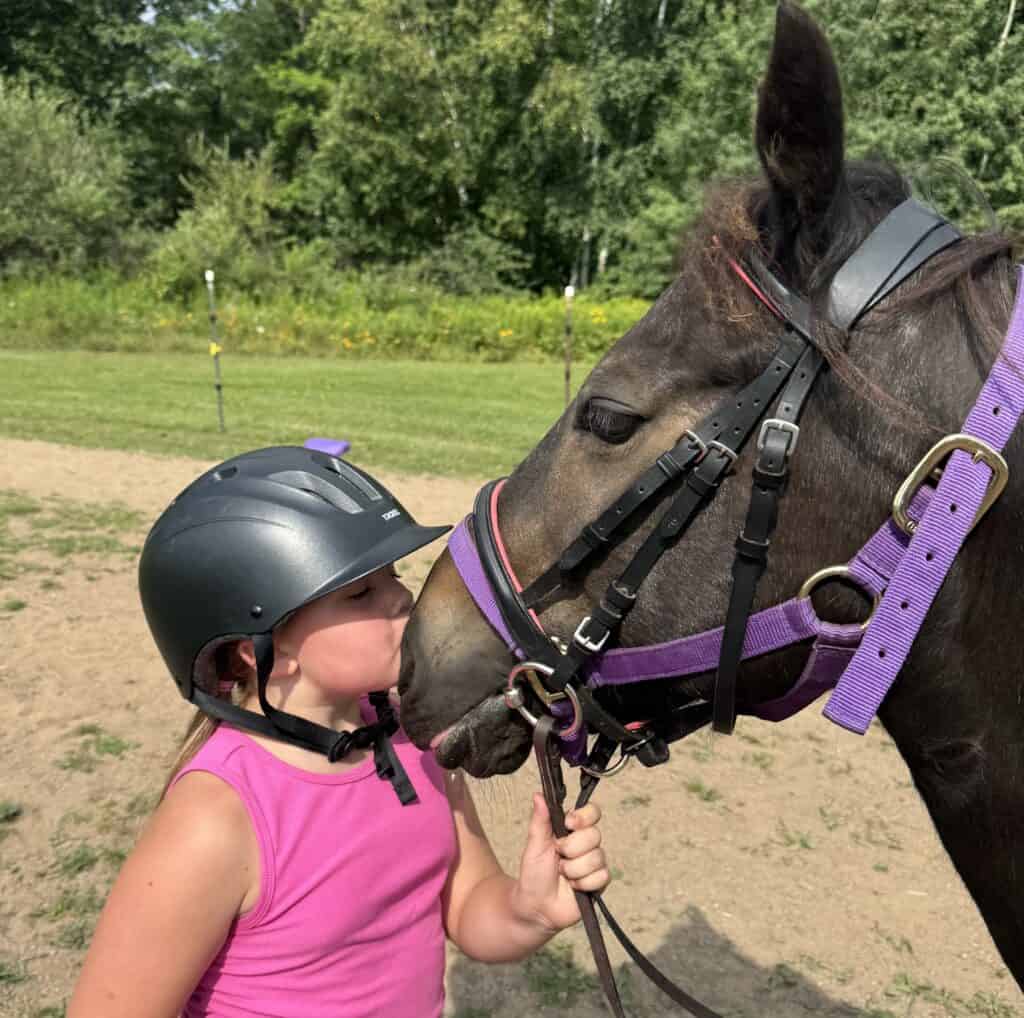
Now that she’s “hung up” her dancing shoes for her riding boots, Wiczek said she’s happy to be living on her farm full-time and to be fulfilling at least one of her dreams – having horses right out her back door.
“I have some that were six months old [when I got them], and now they’re three, so they’re growing and learning and all those things are really fun,” she said. “I would love to do more. I just have to figure out what that looks like.”
For now, Wiczek said she will continue trotting forward with what she has, while working toward gathering enough resources to formally establish an organization – already making plans for additional public appearances and events along the way.
“Maybe something will come along that allows me to add some of these great features to my farm, or maybe a different facility pops up,” she said. “I’m just kind of waiting to see where it takes me.”
For more information on Wild Hearts Farm, visit its Facebook page.