 ‘Eat, drink, live’ – a toast to new beginnings for The Blind Horse
 CWA re-United with legacy airline



April 13, 2026
WESTBORO – When she first obtained her “equine-facilitated learning” certification in 2019, UP THERE LLC Co-founder and Director Rachael Loucks said she and her husband, Rooster, intended to serve Northwoods school districts by providing students and staff opportunities for personal growth “through interactions with horses and donkeys.”
“I’m an educator by trade,” she said. “So, when I first went through this certification, I really thought I was going to be serving educators.”
However, a few years after establishing their for-profit business, Loucks said her community took them “in a different direction” – toward serving the needs of local veterans and active service members through a new nonprofit, Operation Horses Heal.
“The nonprofit is funded primarily through donations, grants and fundraising avenues,” she said, “so we can provide our services free of charge to the veteran and military community.”
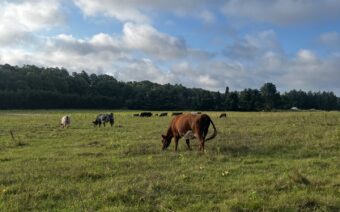
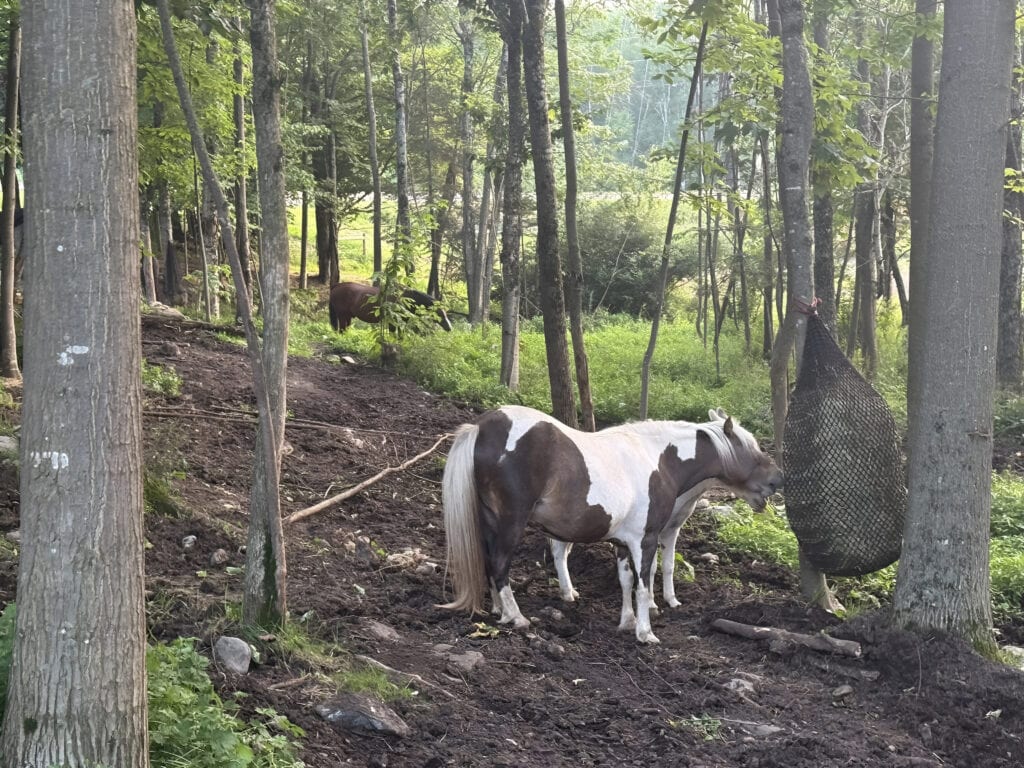
With the help of 13 volunteers – per operationhorsesheal.org – Loucks said she and Rooster have managed the two organizations, UP THERE and Operation Horses Heal, on their 29-plus-acre farm in Westboro since 2021.
“They have completely separate budgets [and] completely separate funding sources,” she said.
UP THERE, Loucks said, primarily works on contracts with Wisconsin’s Department of Health Services, providing “fee-based services” through its Children’s Long-Term Support and Comprehensive Community Services programs.
“But the participants don’t pay,” she said. “It’s funded through Medicare and Medicaid.”
And, despite the fact Operation Horses Heal doesn’t target the initial community she intended to serve, Loucks said her mission is still satisfied by the organization’s work.

“My aim was really to serve a population of people who don’t often take the time to care for themselves,” she said. “We saw [the military] community looking for something that was non-clinical as a way to support them.”
Rooster – who manages farm maintenance, horse care and on-site event management – is a former national guardsman, and because they both have military families, Loucks said they were motivated to provide their services to those communities free of charge.
“We knew the nonprofit route was the way to go for [Operation Horses Heal], so we could actively fundraise and create a space where veterans or military members or their families didn’t have to pay,” she said.
‘Immediate and direct feedback’
Loucks said both UP THERE and Operation Horses Heal are completely “non-ridden” programs.
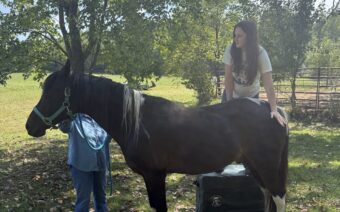
“There’s no pressure to come and complete any sort of task or have any specific skill,” she said. “Our participants, whether they’re veterans or from the civilian community in whichever program they’re coming for, they get to show up as they are, as themselves, and our horses and donkeys get to show up as they are and as themselves.”
Controlled interaction with a horse and/or donkey, Loucks said, can give participants the chance to learn things about themselves they otherwise might not in conventional social settings – such as “how they show up in groups, as a friend [and] as leaders.”
“They have the opportunity to get really immediate and direct feedback based on how these animals respond to them,” she said. “My role is really to create a safe place where people can experience interactions with horses and donkeys.”
Loucks said the programs can also provide a “second opportunity” for the horses and donkeys she and Rooster care for.
“If they’re [in] a program that’s giving riding lessons, or [is] showing or training, they may not have the capacity to continue,” she said. “So, sometimes, this is a second career for a horse.”
Managing these programs, Loucks said, is also her second career after leaving her job teaching at Northcentral Technical College to pursue equine-facilitated learning.
Loucks said she initially attended college to study animal science with an equine emphasis before leaving school after her mother’s passing.
Switching her major to education upon her return to college, she said she decided to work with horses “just for fun” – putting her dream of being an equine professional aside for many years.
Then, Loucks said an article on equine-assisted corporate retreats inspired the idea, but Rooster doubted it could work in Wisconsin’s Northwoods.
However, she said his doubts were stifled after a conversation with another organization offering a service similar to theirs.
“[Rooster is] a trucker by trade,” she said. “So, he’s trucking [one day], and he saw a social media post [from] a program very similar to ours [that needed] a trucker to help them with hay. So, we went down, helped them out, looked at what they were doing and we said, ‘I don’t think there’s really anything up in the Northwoods like this.’”
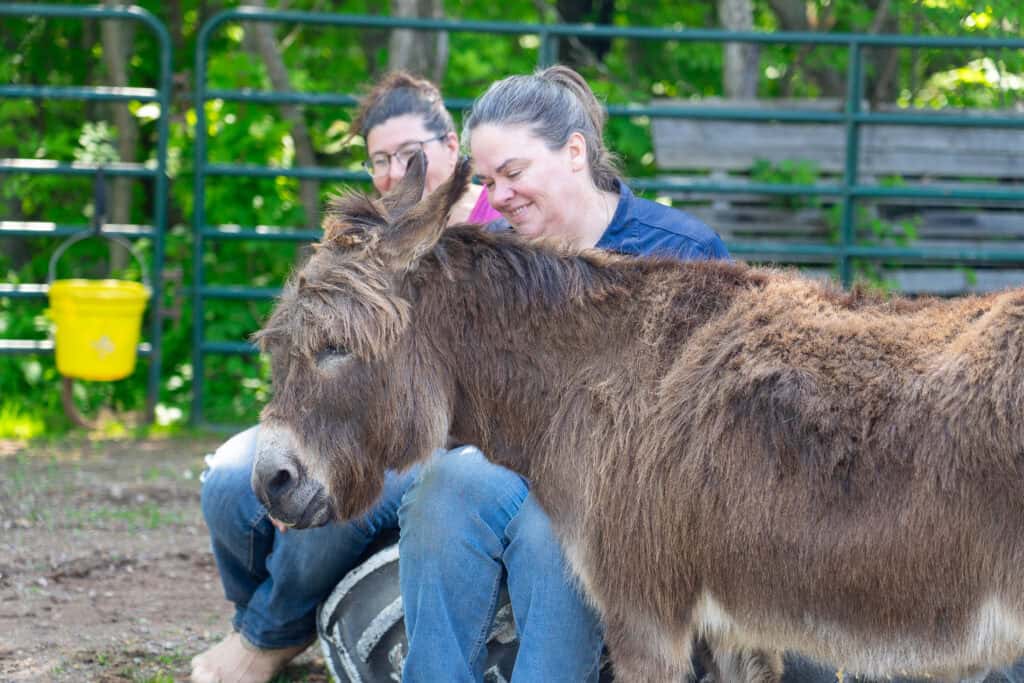
Finding it was “a neat way to be with horses,” Loucks said Rooster was convinced, and they decided to go for it.
“There was just something about it that had [lit] a spark for him, and my initial idea [that] people might pay money to do coaching with horses didn’t seem so crazy to him anymore,” she said.
So, after years of letting the idea “percolate,” Loucks said she pursued certification through the Herd Institute – a program grounded in its founder’s doctoral research on incorporating horses into human services – and launched UP THERE just as the COVID-19 pandemic began.
“I thought it would put things on hold, but it actually did not,” she said. “It really allowed us to serve our community, because everything we do is outdoors – so we were able to social distance really easily, and we had safety [and] sanitization protocols.”
Loucks said UP THERE (upthereatrrhorsehaven.com) even received a grant to help keep the business open during the pandemic.
“We were able to purchase enough items – like halters, lead ropes and grooming supplies – to give every single participant their own kit,” she said. “When they were here, nobody was touching anyone else’s stuff [and] it all got sanitized after they left. We did not have a single person get sick here.”
Unconventional, but rewarding
At times, Loucks said it can be tricky to explain what she does because her service is “not therapy.”
“It can perhaps be challenging to understand [and] see the connection – how working with a horse or a donkey from the ground can create learning or personal growth opportunities for somebody,” she said, “but we’ve seen some really remarkable things.”
Loucks said one of the “wonderful things” about equine-assisted learning is its pacing.
“This creates a place for people to process the things they want to learn, or the areas they need to grow in, in a timeline that isn’t rushed,” she said. “There’s no need to perform in a specific way. They get to learn at their own speed in a way that might create deeper learning than had they been lectured at.”
Loucks said one UP THERE participant – a young woman working on emotion regulation and social awareness – had a goal of taking every horse on a walk.
“She was really interested in the idea of getting to know each horse and being able to take each horse for a walk in the forest at some point in time,” she said.
At one particular visit, Loucks said the participant had already walked “nine or 10” of her 11 horses and donkeys, and one of the remaining horses was signalling “no” to a walk that day.
“A huge part of our program is helping our participants recognize and respond to when the horses are telling us, ‘no,’” she said. “We’re, of course, being mindful of safety and teaching participants about equine body language – [helping them understand] where they can safely be walking around the horses and interacting with them.”
However, during this visit, Loucks said the participant was “not picking up on” the horse’s body language.
“In her mind, she wanted to walk this horse, [so] she was going to take this horse for a walk,” she said. “Part of my role was slowing her [and] that process down so we could talk through ‘what’s happening for the horse right now [and] what’s familiar about that in your own life.’”
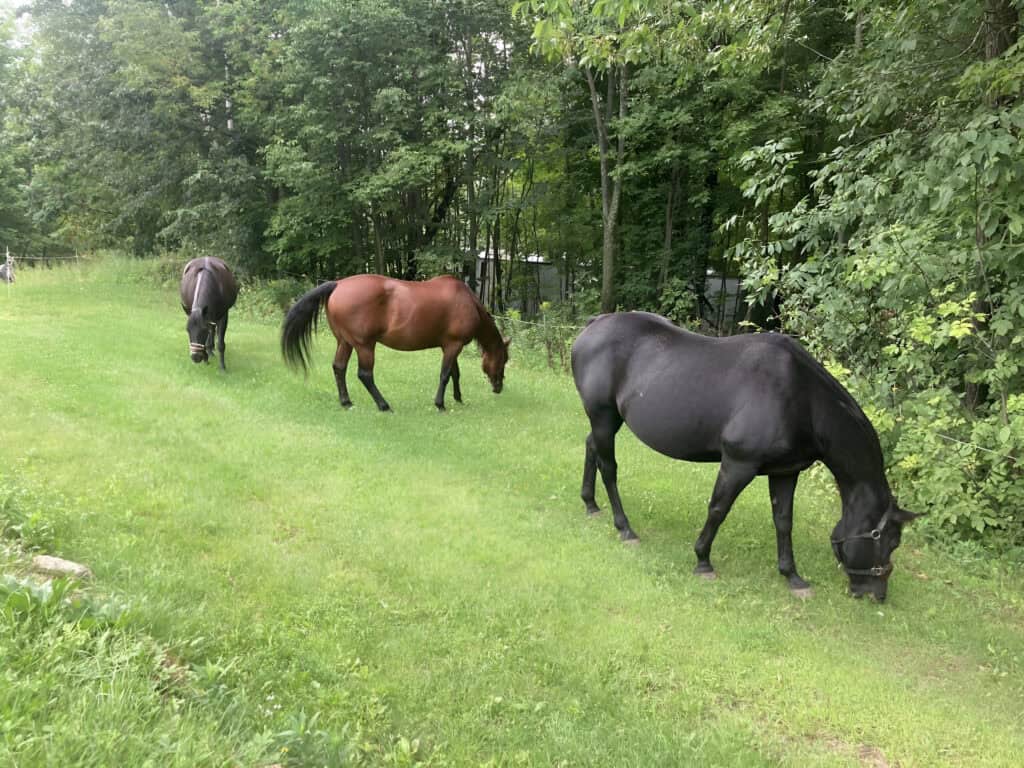
A horse’s “real-time feedback,” Loucks said, can be incredibly helpful in pointing out when participants may be unaware of their actions and their effects.
“[Horses] have to be so cued into body language,” she said. “They have to be able to pay attention to those subtle things that we as humans just often aren’t tuned to, and it creates an opportunity for really valuable feedback [for] the learner.”
After realizing the horse was saying “no,” Loucks said the young woman practiced managing her frustration and chose to move on to a different horse that day.
“She had determined, ‘Well, maybe Cole doesn’t want to take a walk… and I don’t like when my mom asks me the same question over and over, so maybe I should try something different,’” she said. “I did not suggest that… I was being mindful of her safety and talking through the process with her, but [that] was something she came up with totally on her own.”
Stories like this – in which participants learn and grow – Loucks said, are common as UP THERE and Operation Horses Heal mark five years of offering an unconventional but rewarding path to wellness.
For more information on either program, visit their respective, aforementioned websites.